A tube of face wash lasts twelve seconds on a Stories frame. If your shot isn't compelling by second three, the thumb swipes up and the brand never recovers that viewer. This is the operating reality we work inside whenever a FMCG client briefs us on a Stories-format UGC campaign, and it shapes every decision we make before the creator even picks up a phone.
Stories-style video (vertical, full-bleed, 9:16, under fifteen seconds per frame) now runs across Instagram Stories, Instagram Reels previews, Snapchat, YouTube Shorts previews, and Meta's native Stories placements. For FMCG brands selling packaged goods, personal care, home care, foods, beverages, this format is uniquely effective because it mirrors the casual, trustworthy register of a friend recommending a product on their morning routine. Getting that register right requires a specific production methodology, not just a ring light and a willing face.
How We Brief FMCG Creators Before a Single Frame Is Shot
The brief is where most agencies lose the project. We separate our briefs into two documents: a brand brief (claim restrictions, ASCI compliance notes, key visual assets) and a creator brief (the emotional task, the specific hook line, the moment we need captured). For FMCG, the ASCI guidelines are non-negotiable: no before-and-after comparisons that imply clinical outcomes (relevant for skincare, haircare), no claim of "clinically proven" unless the brand has sent us the supporting study, and no misleading demonstrations for food and beverage products. We include a one-page ASCI summary in every creator brief so there is no ambiguity on set.
The creator brief for a Stories format specifies:
- Hook window: the first 2–3 seconds must establish a recognisable situation (waking up, unboxing a delivery, mid-cooking moment), not a product shot
- One claim only: we pick the single most believable claim and ask the creator to say it in their own words, not read from a script
- Product in-hand rule: the product must appear by second five or it feels like a personal vlog that later pivots to an ad
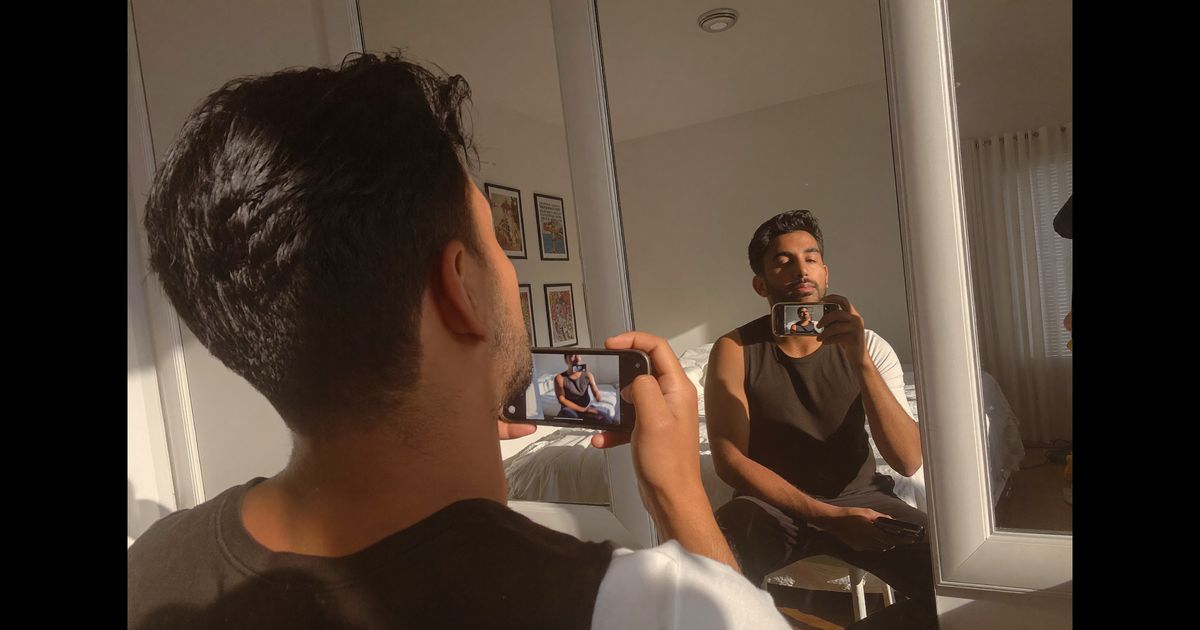
- Authentic environment: we specify the actual room, bathroom shelf, kitchen counter, college hostel room, not a neutral white wall
The Three-Shot Structure We Use for Every FMCG Story
After hundreds of shoots across categories, from Kolkata-based homecare brands to D2C skincare startups in Bengaluru, we have converged on a three-shot structure that consistently clears Meta's creative fatigue threshold across two-week campaign windows.
- Shot 1, The Situation Hook (2–3 sec): Creator is mid-action, ideally with a relatable problem in frame. For a dishwash liquid, this is a pile of oily vessels. For a face wash, it's a close-up of post-gym skin. No product yet. No voiceover. The creator speaks naturally to camera.
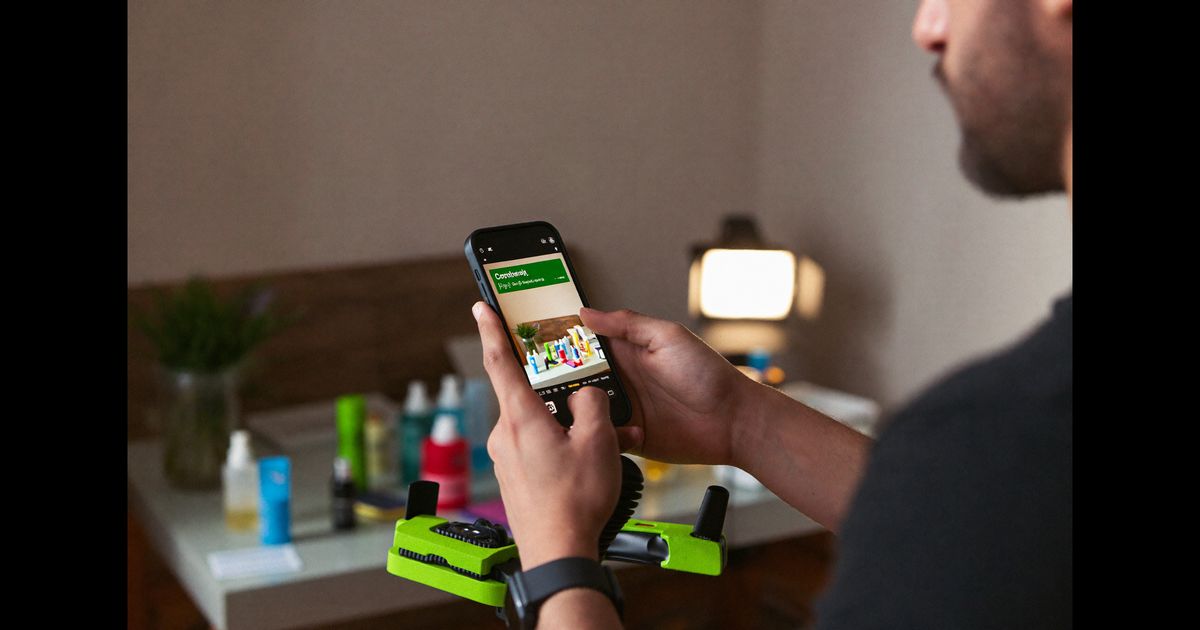
- Shot 2, The Product Moment (4–6 sec): Creator picks up or reaches for the product. We brief creators to hold the product label toward the camera for at least two seconds, not in a staged way, but as a natural "look what I grabbed" motion. For liquid and gel FMCG, we ask creators to show the actual use: lather, squeeze, pour. This is where the one approved claim is delivered, in the creator's own phrasing.
- Shot 3, The Result or Reaction (3–4 sec): Not a transformation claim, just a genuine reaction. Smelling their own wrist after applying a lotion. Showing clean dishes stacked on the drying rack. Tasting a spoonful and nodding. These micro-reactions are what audiences read as authentic and what ASCI allows without requiring clinical substantiation.
The total runtime targets 9–12 seconds for Stories placements. We shoot each shot as a separate clip and edit in CapCut or Adobe Premiere depending on the deliverable spec, not because the creator can't do it in one continuous take, but because three separate clips give the brand editor flexibility to reorder, re-caption, and localise without going back to the creator.
Lighting, Audio, and Phone Settings, The Unglamorous Part
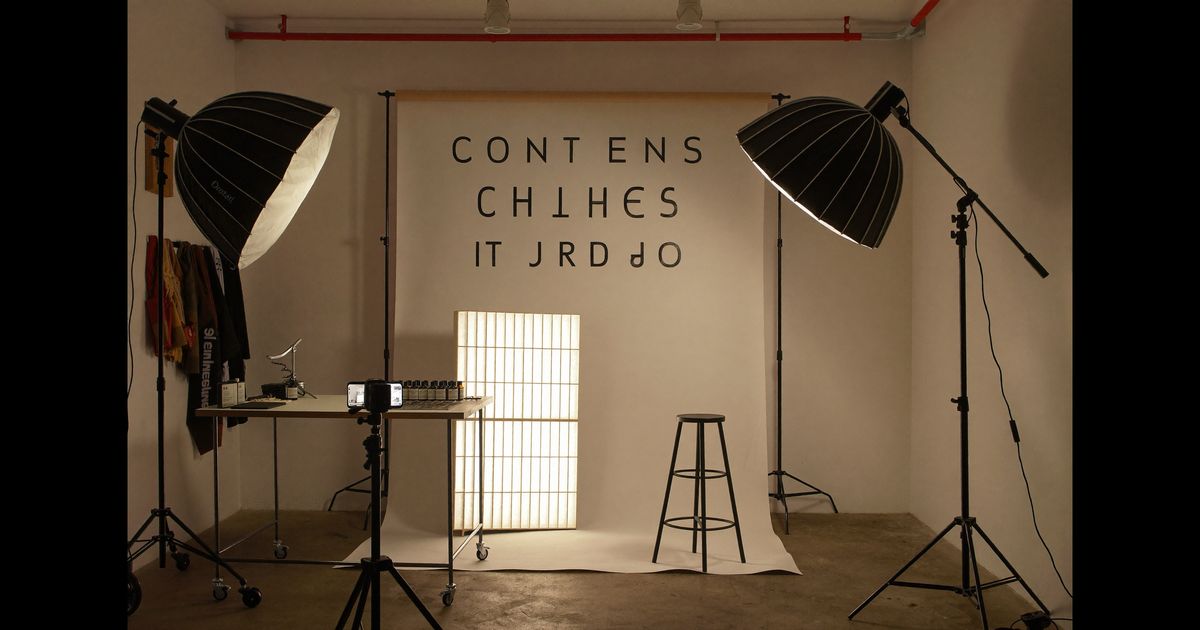
Most FMCG UGC fails not because of weak messaging but because the product looks flat on camera. We send every creator a one-page technical spec sheet. The key points:
- Lighting: natural window light, positioned at a 45-degree angle to the creator's face. We actively discourage ring lights for FMCG, they create a uniform glow that reads as an ad, not a personal video. For bathroom shots (extremely common for personal care), we ask creators to shoot during the day with the bathroom door open to bring in ambient light rather than rely on harsh overhead tube lights, which are standard in Indian bathrooms and turn skin tones sallow on a phone sensor.
- Audio: we require creators to use the phone's built-in microphone at close range (phone held 30–40 cm from face) rather than Bluetooth earbuds, which frequently introduce compression artefacts that make the audio feel "ad-like." Mumbai and Delhi shoots in air-conditioned rooms are generally fine; in Kolkata and Chennai during summer, we note the AC drone in the brief and ask creators to shoot in short takes.
- Camera settings: shoot at 1080p 60fps, Stories format (9:16). We do not ask for 4K, it slows delivery and Meta's Stories compression negates the advantage. Safe zone: keep the creator's face and all text within the central 80% of the frame to avoid being cropped by the Instagram Stories UI or the CTA bar at the bottom.
- Background: real, slightly imperfect environments outperform staged setups. A kitchen counter with some spice jars in the background reads more credible than a wiped-clean surface. We brief this explicitly because creators who have done brand work before often tidy their space too aggressively.
Language and Localisation: What Actually Works in India
For FMCG brands targeting tier-1 and tier-cities across India, we routinely produce the same Stories concept in three or four language variants. The non-negotiable variants for most of our clients are Hindi (for the Hindi belt and national reach), English (for metro audiences and Instagram's educated user base), and one regional language, typically Tamil, Telugu, Kannada, Bengali, or Marathi depending on the brand's geographic priority.
We do not simply translate the script. We re-brief the creator in each language market to use locally resonant situations. A hair oil brand's Stories hook in Tamil Nadu might open with a creator referencing their mother's hair care routine (a culturally specific authenticity trigger) rather than the gym-hair hook that works in Delhi. In Bengali-language shoots for the Kolkata market, we brief creators on the specific colloquial phrases the target audience uses for everyday product categories, "mishti gondho" (sweet fragrance) for personal care, for instance, because platform-native language cues are what distinguish genuine UGC from translated advertising.
For brands with a budget above Rs. 1.5 lakh for a Stories campaign, we typically produce six to eight creator variants across two languages and two creator archetypes (urban professional vs. homemaker, for example). Below that threshold, we prioritise language over archetype diversity, since language mismatch causes the sharpest drop in engagement.
What the Brand Side Gets Wrong (And How We Push Back)
The most common brief we receive from FMCG marketing teams asks for a creator to "show all product variants" and "include the price point" within a 10-second Stories frame. We decline both, and here is why we spend time explaining it in kickoff calls.
Multiple variants fragment the viewer's attention at precisely the moment you need them to form a single association. Stories-format video is a one-idea-per-frame medium. A creator holding one pack and saying one thing is always more effective than a creator juggling three packs and summarising a product line. We consistently deliver this data back to clients from their own Meta ad manager: the single-product variant almost always wins on cost per landing page view and on swipe-up rate.
On price points: in Stories format, mentioning a specific rupee figure ("only Rs. 149!") shifts the register from personal recommendation to promotional announcement, which is exactly the trust deficit UGC is supposed to solve. We advise brands to reserve price claims for the link card or the ad caption, not the creator's spoken content. The exception is when the price itself is the hero claim (e.g., a ₹99 product in a category where competitors charge ₹200+), in which case we brief the creator to deliver it as a discovery moment, not a promotion.
Our internal rule: if the creator sounds like they're reading an ad, we reshoot. The deliverable should feel like something a friend sent you, not something a brand pushed at you.
Reviewing, Approving, and Handing Off the Final Assets
We batch-review Stories UGC in two rounds. Round one is an internal review for technical quality (lighting, audio, safe-zone compliance, ASCI claim check) and for authenticity register, we are specifically looking for scripted cadence, over-enunciation of brand names, and transitions that feel cut-and-dried rather than natural. Round two is the client approval round, where we present the clips alongside the brief's original hook line so the client can verify the creative intent was executed, not just the technical spec.
Final deliverables are exported as MP4 (H.264), 1080x1920, with and without captions. We export captions as a separate SRT file and as burned-in subtitles because Meta's auto-caption accuracy for Hinglish and regional language content is inconsistent, burned-in captions ensure the message lands even when auto-captions fail. Brands running multilingual campaigns receive a separate export per language variant, named with the language code in the filename, to avoid versioning errors when uploading to Meta Ads Manager.
If you are planning a Stories-format UGC campaign for an FMCG product and want to understand what a well-structured production brief looks like for your specific category, book a free consultation, we will walk you through our process and tell you honestly what creator count and language split makes sense for your budget and target geography.