Most SaaS brands that ask us to produce Shorts-style UGC make the same mistake in the brief: they hand over a product demo video and ask creators to "make it feel more organic." That single instruction, applied to software that lives on a screen, produces content that is neither authentic nor useful. The result is a 45-second clip of someone scrolling through a dashboard with cheerful music underneath, watched halfway and forgotten.
Filming Shorts-style UGC for SaaS is a genuinely different craft from filming it for a D2C skincare or food brand. The product cannot be held up to the camera. The transformation is invisible, nobody's face changes colour when they close a deal faster. This article walks through the specific mistakes we see most often, and what to do instead, so your Shorts content actually drives trials and signups rather than passive views.
Mistake 1: Treating the Dashboard as the Hero
Screen recordings belong in product walkthroughs, not Shorts. The vertical format of YouTube Shorts, Instagram Reels, and Google Discover feeds demands a human face in the first two seconds, not a zoomed-in UI. When creators open with a screencast, most viewers scroll past before the product name even appears.
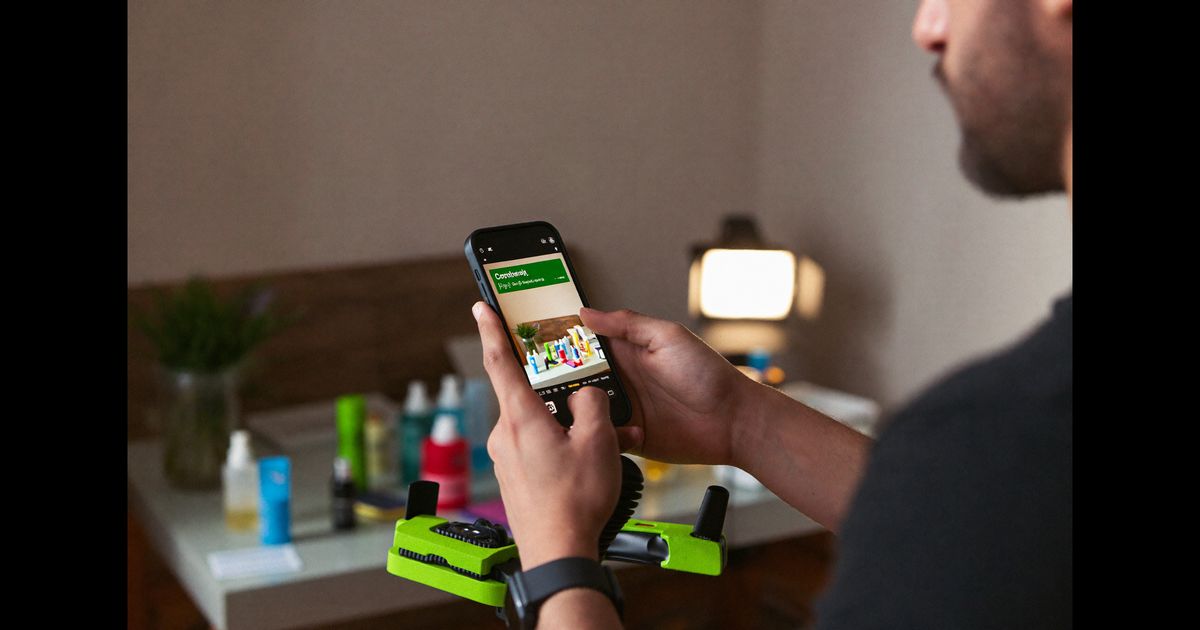
The fix is straightforward: the creator's face and voice carry the hook, and the screen appears only as a supporting prop, either as a phone screen held up briefly, or as a quick B-roll cut that lasts under three seconds. In our production briefs for SaaS clients, we instruct creators to hold their phone screen toward the camera for no more than one cut per video, and only after the hook is already delivered. The human lead is non-negotiable.
- Hook format that works: Creator speaks directly to camera, "I used to spend two hours every Monday just pulling numbers from three different tools. Now I don't." Cut to screen showing the dashboard for 2 seconds. Back to creator. Problem-solution arc completed in under 8 seconds.
- Hook format that doesn't: Screen recording starts, cursor moves around, soft music plays, text overlay says "Game-changing tool!", no face, no voice, no reason to stay.
Mistake 2: Briefing for Features Instead of Frustrations
SaaS marketing teams love their feature lists. Creators briefed this way end up saying things like "This tool has automated workflows, a Kanban view, integrations with 200 apps, and an AI assistant." That is a product spec, not a story.
Shorts-style UGC performs when it names a specific, recognisable frustration before it names the product. For Indian SaaS brands, whether it's a Bengaluru-based CRM, a Mumbai invoicing tool, or a Pune HR platform, the frustrations are very concrete: chasing payment follow-ups on WhatsApp, reconciling GST data across three spreadsheets, coordinating remote contractors across time zones. These are real sentences real users say.
We ask creators to write out one sentence that completes: "Before this tool, I used to _______ which took _______ and I hated it." That sentence becomes the hook. Everything else in the video is the resolution. This approach works in Hindi, Tamil, or English, the frustration is universal even when the language switches.
"A creator who genuinely uses your product and names the exact feature that fixed their specific headache will always outperform a polished spokesperson listing capabilities."
Mistake 3: Ignoring the Credibility Gap Unique to SaaS
When a skincare creator says a serum cleared her skin, viewers can see her face. When a SaaS creator says a tool saved them three hours a week, viewers have no visual proof, and in an era of obvious paid partnerships, credibility is the first thing that gets questioned.
ASCI's guidelines on paid partnerships require disclosure when there is material connection between a brand and a creator. This means SaaS UGC must carry a #ad or #sponsored tag, and the brands that try to hide it end up looking worse when audiences notice. Disclosure, handled well, does not kill performance. What does kill it is when the creator clearly has no relationship with the product.
Credibility fixes for SaaS UGC specifically:
- Cast creators who actually work in the target role, a Hyderabad-based founder for a startup ops tool, a Bengaluru growth marketer for an analytics platform, not lifestyle influencers with no industry context.
- Allow the creator to reference their actual company name or role, even if they don't name the employer. "As someone running a 12-person team in Pune" is more credible than "as a busy professional."
- Let creators include one honest limitation alongside the benefit. A creator saying "the mobile app is a bit clunky but the desktop workflow is genuinely fast" reads as authentic; a creator saying it's perfect in every way reads as sponsored copy.
Mistake 4: Writing Scripts That Sound Like Scripts
SaaS brands often send creators a word-for-word script written by the product marketing team. The script uses brand voice, accurate feature terminology, and careful legal phrasing. It also sounds nothing like how anyone talks in a 30-second vertical video.
For Shorts specifically, the delivery style must match the platform. YouTube Shorts viewers are accustomed to fast cuts, direct-to-camera eye contact, and conversational cadence, the same register as a friend showing you something on their phone. A scripted line like "Leverage AI-powered insights to optimise your pipeline velocity" will always feel mismatched in that context, even when delivered by a skilled creator.
What works: give creators a talking-points brief, not a script. List the frustration to name, the one feature to highlight, any claim that needs qualifying (important for ASCI compliance, measurable claims like "saves 3 hours a week" need substantiation), and the one call-to-action. Let the creator write their own sentences. The brand's job is to fact-check and approve, not to dictate every word.
Mistake 5: Producing One Version and Calling It Done
A single Shorts video for a SaaS product is almost never enough to learn anything useful. The variable space is too large: hook style, frustration angle, creator persona, language (Hindi vs English vs regional), and CTA format (link in bio vs free trial vs demo booking) all affect performance independently.
Yet the mistake we see most often, especially from bootstrapped SaaS startups spending Rs. 80,000–1,20,000 on a content batch, is producing three videos with nearly identical hooks, the same creator, and the same CTA. When none of them converts, the conclusion is "UGC doesn't work for B2B," when the real issue was insufficient variation.
A minimum viable test setup for SaaS Shorts UGC:
- At least two different creators from different professional backgrounds (e.g., one founder-type, one IC/individual contributor)
- At least two different hook angles (frustration-led vs outcome-led)
- At least two different languages or language registers if your product serves both Hindi-belt and metro English-first users
- A clear decision metric before you start, for SaaS, this is usually trial signups or demo requests tracked via UTM, not view count or saves
Mistake 6: Forgetting That SaaS Has a Long Consideration Cycle
Most SaaS tools, especially anything above Rs. 5,000 per month per seat, involve a consideration window of days or weeks, not minutes. A single Shorts video will rarely convert cold traffic directly. Where SaaS brands go wrong is expecting UGC to do the full job: awareness, education, objection handling, and conversion in 30 seconds.
The right mental model is that Shorts UGC is top-of-funnel trust content. Its job is to make the viewer aware of the problem framing and associate your product with solving it, so that when they later see a retargeting ad, a Google search result, or a colleague's recommendation, the brand name already feels familiar and credible.
This changes what you measure. Optimise early Shorts content for watch-through rate and profile visits, not for direct signups. Once you have creators and angles that hold attention, layer in a sharper CTA and retargeting. SaaS brands that expect immediate ROI from cold-audience Shorts end up pulling budget from a channel that was actually working, just on a longer timeline than they expected.
If you want to build a Shorts-style UGC programme for your SaaS product, one designed around the right creators, credibility-first briefs, and testable variation, book a consultation with us. We work with SaaS brands across India and can walk you through what a realistic content test looks like before you commit budget.