A 28-second video of a creator pulling a packet of namkeen from a backpack mid-hike, saying "yaar, this is actually good" in Hindi, and setting it down on a rock, that clip outperformed three months of studio-shot TVC cuts for one of our FMCG clients. No ring light. No script. Just a creator who knew how to use vertical framing, ambient sound, and the first-two-seconds hook that YouTube Shorts and Instagram Reels both reward algorithmically. Getting to that kind of output consistently is a production system, not a lucky accident.
FMCG brands in India, snacks, beverages, personal care, home care, have a specific challenge: their products are low-involvement at the point of decision, but they need to earn attention in a scroll feed where a viewer's thumb moves every 1.5 to 3 seconds. Shorts-style UGC (vertical, sub-60-second, creator-native) is the format that closes that gap. Here is exactly how we approach filming it, from brief to final file.
Why FMCG Needs a Different Brief Than D2C or SaaS
When we brief creators for a SaaS product, the copy has to earn trust. When we brief for a D2C fashion brand, it is about aspiration and fit. FMCG is different: the product is already known to the viewer, often sitting on a shelf in their own home. The job of the video is not to introduce, it is to reframe. A creator holding a bottle of coconut hair oil is not news. A creator showing how she applies it in a moving train in Mumbai at 7 AM, talking about her hair texture in Hinglish, is news because it is a recognisable scene.
So the brief for FMCG UGC is built around context and occasion, not features. We ask creators three things before they touch the camera:
- When do you actually use this product?, Not "morning routine" generically, but: standing at the kitchen counter before chai, after gym at a studio in Bengaluru, in the hostel bathroom. Specificity translates on screen.
- What would you say to a flatmate, not to a brand?, This breaks the testimonial cadence that viewers skip. We tell creators to imagine texting a friend a voice note, not delivering a review.
- What is one thing you genuinely noticed?, Smell, texture, how the packaging opens, whether it leaked in their bag. One real observation beats five marketing claims every time.
The Production Setup We Actually Use on Location
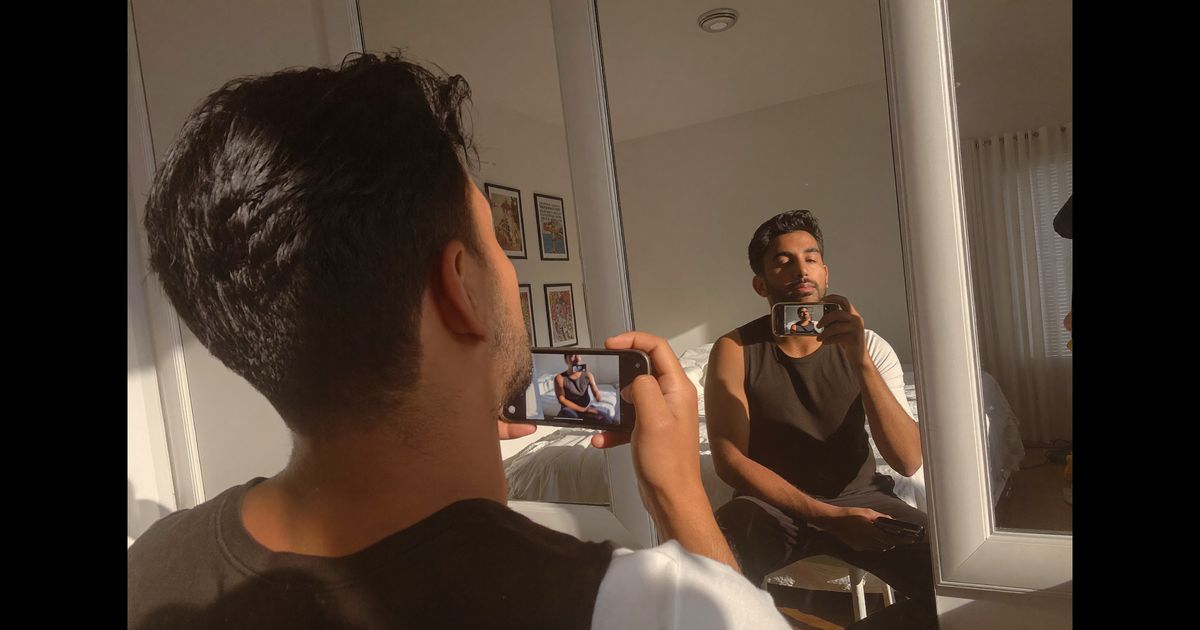
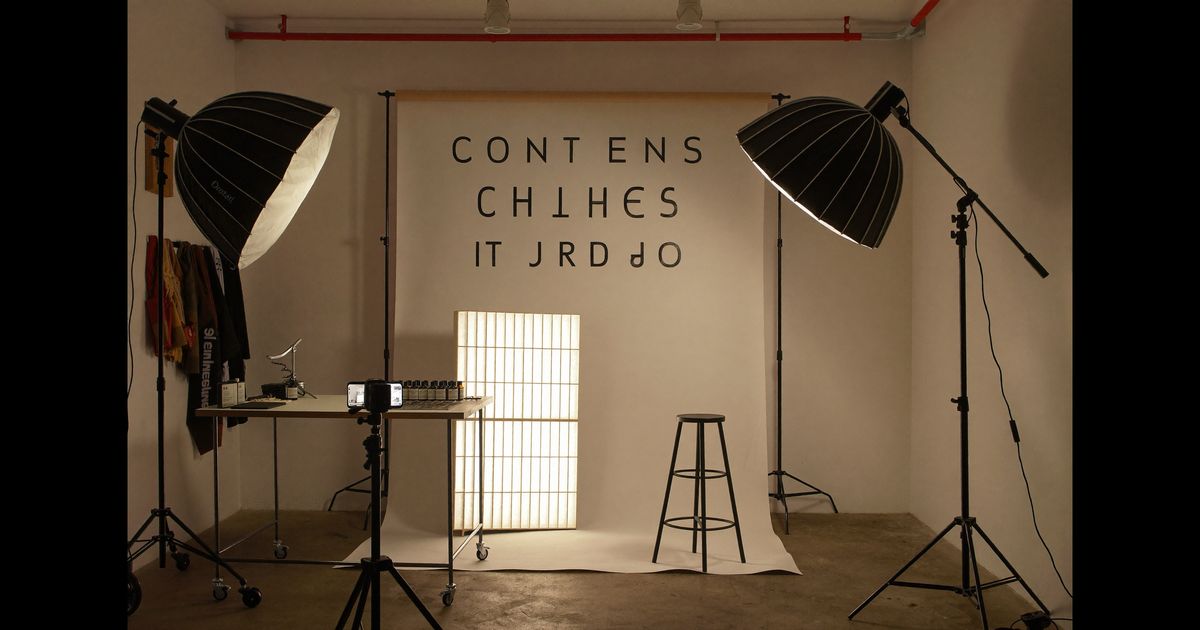
Most Shorts-style UGC for FMCG should be filmed in natural environments, not studio setups. We work with creators in Kolkata, Delhi, Mumbai, Hyderabad, and Pune, and the instruction is always: film where you actually use this. A kitchen, a college canteen, a Zomato-delivery balcony moment, a grocery run.
Equipment guidance we give every creator before shoot day:
- Phone orientation: 9:16 from the first frame. No cropping after the fact, Reels and Shorts penalise re-encoded crops with lower resolution. Lock the phone in vertical before pressing record.
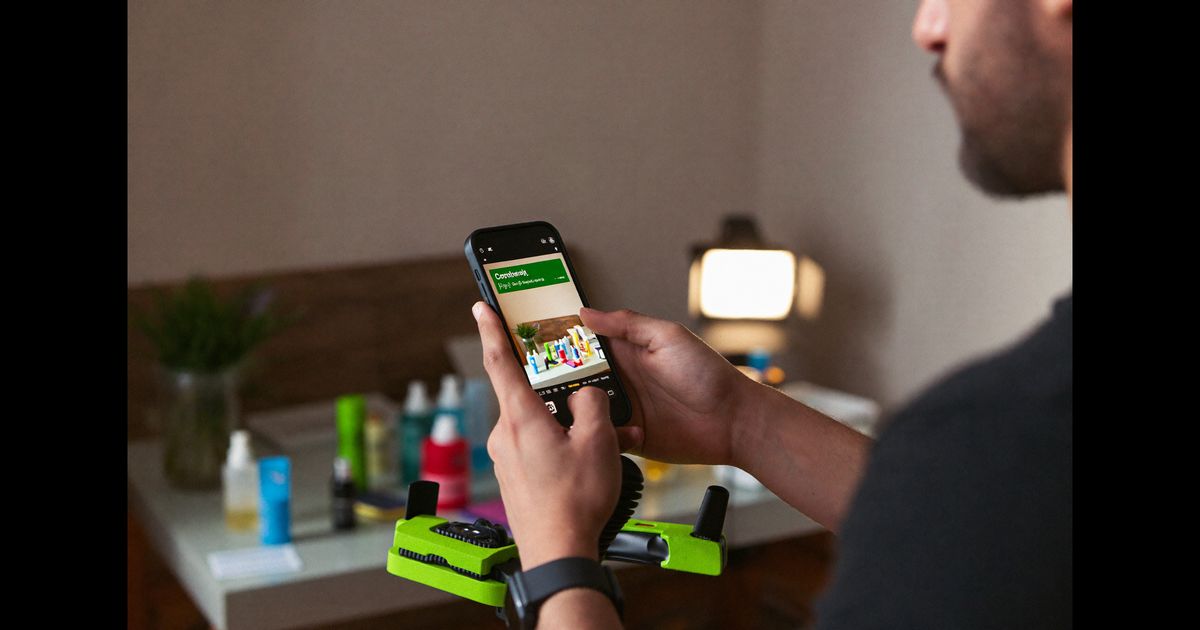
- Lighting: Face a window or open door. No overhead tubelight as the only source, it creates flat, institutional-looking footage. If shooting after dark, a ₹800–1,200 clip-on LED from Amazon (we recommend the Ulanzi VL49) is enough. Ring lights read as "trying too hard" for FMCG naturalness.
- Audio: Either no mic (phone mic in a quiet room works surprisingly well on recent OnePlus, Samsung S-series, and iPhone models) or a Boya BY-M1 lapel (₹1,200–1,500) clipped close. We specifically avoid wireless Bluetooth mics for FMCG creators because latency drift in post is a common problem and most creator editors do not catch it.
- Stabilisation: Phone flat on a surface, propped against a glass, or held at chest height, never arm's-length. Shaky footage on a 28-second video communicates low production quality regardless of content. A ₹400 tripod mini-stand solves 90% of stability problems.
- Resolution and frame rate: 1080p at 30fps for most FMCG content. 4K at 30fps if the creator's phone supports it and storage allows, not 60fps, which makes footage look hyperreal and breaks the casual native feel of Shorts.
Structuring the First Three Seconds: the FMCG Hook Problem
YouTube Shorts and Instagram Reels both surface content based on watch time and swipe-away rate in the first two to three seconds. For FMCG, the product itself is rarely a surprise, a viewer knows what Maggi noodles look like. So the hook cannot be "have you tried this product?" It has to be a moment, a statement, or a visual that creates immediate tension or curiosity.
Formats that consistently retain attention in the first three seconds for FMCG:
- The problem-first open: Creator on screen, no product visible yet, stating a frustration. "Mera baal itna dry kyun hai even after oiling", then the reveal. The product becomes the resolution, not the intro.
- Mid-action entry: Video starts with the creator already doing something, pouring, mixing, applying, rather than holding up the product and beginning to speak. Motion in the first frame stops scrolling reflexively.
- Surprising context: The product in an unexpected but real place. A protein bar on a construction site lunch break. A face wash in a moving car mirror. Context-dislocation creates a half-second of "wait, what is happening?" that translates directly into watch time.
- Text hook layered on video: A caption like "tried this for 7 days" or "brand se seedha likha karo" appearing in the first second adds a scroll-stopping layer without requiring a voiceover. Reels natively supports this without requiring third-party editing apps.
ASCI Compliance: What FMCG Creators Must Disclose
FMCG is the category where ASCI (Advertising Standards Council of India) enforcement is most active for influencer content. Under the 2021 ASCI guidelines (updated with clarifications in 2023), any creator who has received free product, payment, barter, or any material benefit must label the content. The required label is #Ad or #Sponsored, placed at the beginning of the caption, not buried at the end after 15 hashtags. On YouTube Shorts, the "paid promotion" toggle in upload settings must also be activated.
We build ASCI compliance into the creator brief template rather than leaving it to post. Every brief includes: the exact disclosure wording, where to place it in caption, and a note that the platform paid-promotion flag is non-optional. In our experience, FMCG brand legal teams request a screenshot of disclosure placement as part of content approval. Having this as a default habit saves a round of back-and-forth.
One thing brands often get wrong: asking creators to write "in collaboration with [Brand]", that phrasing does not meet the ASCI standard. Only #Ad, #Sponsored, or "Paid Partnership" (Instagram's native label) are unambiguous. Anything softer risks the creator receiving an ASCI complaint, which in FMCG categories has happened to creators with as few as 20,000 followers.
Editing for Shorts: the FMCG Cut Rhythm
Once the creator delivers raw footage, the edit is where Shorts-style UGC either holds attention or loses it. FMCG content tends to have one structural advantage: the product is the physical through-line. Every cut can return to the product, which gives the edit natural anchors.
Our editing guidelines for FMCG UGC:
- Duration: 25–45 seconds is the sweet spot. Under 20 seconds often does not give enough context for FMCG purchase intent. Over 55 seconds starts competing with long-form behaviour patterns. We rarely deliver 60-second cuts for Shorts-specific briefs.
- Cut pacing: One cut every 3–5 seconds for talking-head segments. Product close-up cuts can be faster, 1–2 seconds, because they are visual, not cognitive.
- Captions: Auto-generated captions on both Reels and Shorts are now accurate enough for Hindi and Hinglish at around 85–90%, but always review before publishing. A mispronounced brand name in the caption is a brand safety issue. We use CapCut's auto-caption feature (free, strong on Indian accents) and manually correct the brand name and product terms before delivery.
- Music: For FMCG UGC intended for paid media (boosted posts or whitelisted ads), all music must be either royalty-free or sourced from Instagram's licensed audio library. Creator-used Bollywood tracks are not cleared for paid amplification, this is a frequent error that requires a re-edit. We flag this in the brief: if the creator adds background music, it must be from the in-app library or left to us to add at the edit stage.
- End frame: The last 2–3 seconds should show the product clearly, packaging visible, brand name readable. For FMCG, the purchase trigger often fires at the end, not the middle. Fading to black or ending mid-sentence leaves that moment uncaptured.
Testing and Scaling: How We Build a Bank of Variants
A single Shorts-style UGC clip is not a strategy, it is a data point. FMCG brands that get traction on Reels and Shorts treat it as a content testing operation. We structure deliveries in variant sets: same product, three different creators, three different hooks, two different editing rhythms. That gives a brand six to nine clips to A/B test within a two-week push.
Typical investment at this scale runs between ₹40,000 and ₹80,000 per product SKU for a variant batch, including creator fees, direction, and editing. Brands running three SKUs simultaneously, say a biscuit, a beverage, and a snack, will often find that one SKU's hook structure outperforms and then backport that learning to the others. That cross-SKU learning is only available if you are running enough volume to generate signal.
The two metrics we track first for FMCG Shorts performance are 3-second view rate (did the hook work?) and completion rate (did the pacing hold?). Click-through and conversion are downstream. Getting those two numbers above benchmark, typically 40%+ on 3-second view rate and 30%+ completion for FMCG, is the quality bar before scaling spend.
If your FMCG brand is ready to move from one-off creator posts to a systematic Shorts production programme, our team can handle everything from creator matching to compliance to variant testing. See how we structure engagements at our pricing page or book a consultation to walk through your specific category and brief requirements.