EdTech brands in India have a content problem most won't admit: they keep making UGC that looks like an explainer video. Talking heads in front of whiteboards. Course testimonials that run ninety seconds. Screenshots of certificates. Then they wonder why the scroll-through rate on YouTube Shorts or Instagram Reels is brutal. The format is Shorts. The instinct is webinar. That mismatch is where most EdTech UGC campaigns die.
This piece is about the specific mistakes we see repeatedly when EdTech brands brief creators for short-form UGC, and what to do instead. The stakes are real: India has over 9,000 EdTech startups, and platforms like YouTube Shorts, Instagram Reels, and Moj are how a Tier-2 student in Patna or Coimbatore decides whether to spend ₹15,000 on a course. Get the format wrong and no amount of media spend recovers it.
Mistake 1: Treating the First Three Seconds as an Introduction
The single biggest error: opening with the creator saying "Hi, I'm [name] and today I want to talk about..." On Shorts, that sentence plays to an empty room. Viewers have already swiped.
The first frame needs to be the punchline, not the setup. For EdTech specifically, this means leading with the problem or the transformation, never the product. Formats that actually hold attention:
- The before-state hook: "I failed my UPSC prelims twice before I found this study method", said over B-roll of a frustrated creator at a desk, not a talking head in front of a logo.
- The counter-intuitive claim: "Studying 8 hours a day is why you're not clearing exams", contrarian enough to stop the scroll, grounded enough to be credible.
- The in-progress moment: Open mid-action, the creator circling a concept on paper, mid-sentence in a practice mock test, so viewers drop into a story already happening.
We brief creators to film three different opening takes before anything else. The one that creates the most unease or curiosity gets used. The polished introduction gets cut.
Mistake 2: Shooting Portrait but Thinking Landscape
This is a production mistake that reveals itself in post. A creator films vertically (correct), but they leave too much headroom, keep themselves center-frame the entire time, and never use the lower third or upper third for text overlays. The result is a vertical video that feels like a horizontally composed video turned sideways.
Shorts-native composition means:
- Eyes in the upper third, not center. This leaves room for subtitles and on-screen text at the bottom, non-negotiable because a large share of mobile viewers watch without sound, especially in shared household settings common across Indian metros and smaller cities.
- Movement and gesture matter more than in landscape. A creator who sits still in a 9:16 frame looks like a passport photo. Walking toward the camera, shifting the phone to show a notebook, or cutting between two angles creates the visual rhythm that holds a 45-second view.
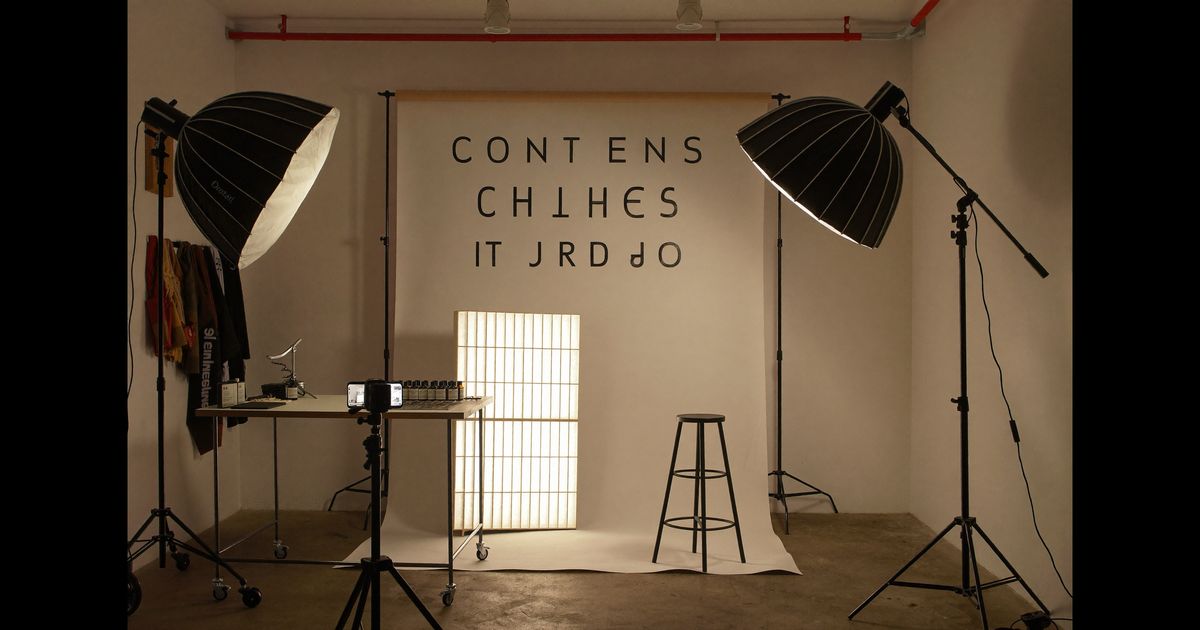
- Lighting for phone-front-camera conditions. Most EdTech creators aren't shooting in studios. A window to the left, a ₹800 ring light for fill, and a clean (not cluttered) background, bookshelf, plain wall, is the standard we recommend. Avoid campus libraries with harsh tube lighting overhead; it creates shadows that read poorly on mobile screens.
Mistake 3: Conflating Authentic with Unscripted
EdTech brands sometimes give creators complete creative freedom in the name of "authenticity" and receive content that wanders, buries the point, or, more dangerously, makes claims the brand cannot substantiate. Under ASCI's 2022 influencer guidelines (and the updated 2023 UGC-specific provisions), all material claims in a creator's video must be verifiable by the brand. If a creator says "I got placed at ₹12 LPA after finishing this course," that claim must be backed by real data the brand holds. Vague transformation claims ("my life completely changed") are lower risk but also lower impact.
Authentic does not mean unstructured. The most effective EdTech UGC we produce follows a tight brief:
- A specific pain point (not generic: "I couldn't understand data structures" not "learning was hard")
- One concrete feature or method from the course, shown or demonstrated, not just named
- A specific, verifiable result ("I cleared the TCS Digital assessment in my second attempt, three weeks after finishing the module")
- A natural CTA, link in bio, comment a keyword, rather than a stiff "use my code"
Authenticity lives in the delivery, the specific details, and the lack of corporate polish, not in the absence of a structure.
Mistake 4: Ignoring Language and Dialect as a Creative Variable
This is the mistake that hurts most in EdTech because the product is inherently about communication and learning. An EdTech brand running only Hindi or only English UGC is leaving entire markets untouched. A creator in Chennai speaking Tamil, not English with a Tamil accent, actual colloquial Tamil, will outperform a Hindi creator targeting Tamil Nadu students by a measurable margin on saves and shares, which are the engagement signals YouTube's Shorts algorithm weights heavily.
Practical approach:
- Cast region-specific creators for each target language: Tamil for TN and parts of Karnataka, Telugu for AP/Telangana, Marathi for Maharashtra Tier-2 (Nashik, Aurangabad, Solapur), Bengali for West Bengal.
- Brief them in the local language. A brief written in English and translated at the last minute produces formal, stilted delivery. Write the hook and the key proof point in the target language from the start.
- For bilingual markets (Bengaluru, Hyderabad), code-switching mid-video is a feature, not a bug. Creators who naturally shift between Kannada/English or Telugu/English often see higher comment engagement because the style mirrors how their audience actually thinks.
Mistake 5: Measuring the Wrong Metric and Pausing Too Early
EdTech brands with ₹30,000–₹50,000 UGC production budgets routinely pause or kill a creator's content after 72 hours if views are under 5,000. This misunderstands how Shorts distribution works. YouTube Shorts has a slower initial push to non-subscribers than Instagram Reels; the algorithm tests a video over 7–10 days across progressively larger audiences before plateauing. Pulling spend or declaring a video dead at 48 hours is almost always premature.
The metric hierarchy for EdTech Shorts UGC, in order of priority:
- Watch percentage and average view duration, if viewers are watching past the 30-second mark on a 45-second video, the content is resonating regardless of view count.
- Saves on Instagram and YouTube (saved to playlist), EdTech content that solves a specific problem gets saved disproportionately. A video with 2,000 views and 180 saves is performing well; a video with 40,000 views and 60 saves is reaching the wrong audience.
- Link clicks and swipe-ups, the actual conversion signal. We track these separately by creator and by hook variant to understand what combination drives course page visits.
- Raw view count, the vanity metric. Look at it last.
A ₹12,000 creator video that drives 40 course page visits from a qualified audience is worth more than a ₹45,000 production that gets 80,000 views from people who will never buy a ₹15,000 course.
Mistake 6: Skipping the "Show, Don't Tell" Principle for Course Content
EdTech UGC that describes the course ("it has 40+ hours of video content, live doubt sessions, and a placement cell") is indistinguishable from an advertisement. EdTech UGC that demonstrates the learning is something else entirely.
"Show, don't tell" in a Shorts format means:
- The creator solving an actual problem from the curriculum on camera, a coding challenge, a GMAT question type, a design brief, and narrating their thought process. This positions the learning as real and accessible.
- Screen recordings of course dashboards (with permission) that show what one module actually contains, not a promotional overview.
- Before/after skill demonstrations: "Three months ago I couldn't read a balance sheet. Here's what I can do now", followed by a thirty-second walkthrough of an actual balance sheet, not a testimonial about how much confidence they've gained.
This type of content is harder to fake, harder to replicate, and significantly more trusted by the exam-prep and skill-development audiences that dominate India's EdTech market, the JEE aspirants in Kota, the NEET students in Chennai, the working professionals in Bengaluru upskilling for a product manager role. They are sophisticated consumers of educational content. They can tell when a creator actually understands what they're describing.
If your EdTech brand is producing Shorts-style UGC and recognising these mistakes in your current output, the fix usually starts with the brief, not the creator. We work with EdTech brands to rebuild their creator briefs and production workflows so that every video is built for the format from the first frame. See how we approach this at our work, or get in touch to talk about a pilot campaign.