Pick up any beauty brand's Instagram Reels feed today and you'll spot a pattern: the videos that stop thumbs aren't polished studio shoots, they're clips that look like a friend just discovered something life-changing in their bathroom. That rough-but-intentional aesthetic is Shorts-style UGC, and for beauty categories like skincare, haircare, and cosmetics, it consistently outperforms conventional ad creative in both watch-through rate and click-to-purchase. The challenge is that "authentic-looking" doesn't mean unplanned. Every viral get-ready-with-me or before-and-after clip that drives conversions is built on a precise set of decisions around lighting, pacing, hook, and sound.
This guide breaks down exactly how to film Shorts-style UGC for beauty brands, from what you need before you press record to how you export for YouTube Shorts, Instagram Reels, and Facebook Reels simultaneously. Whether you're a creator being briefed by a brand or a founder figuring out your own content, these are the practical steps that hold up in real production.
What "Shorts-Style" Actually Means for Beauty
The format has specific technical and visual conventions that differ from standard ad creative:
- Aspect ratio: 9:16, full vertical. No letterboxing, no wasted canvas. The subject should fill 70–80% of the frame.
- Duration: 30–60 seconds performs best for beauty in the Indian market. We've seen 45-second clips outperform 15-second hooks for skincare because the before-and-after payoff needs setup time. YouTube Shorts allows up to 60 seconds; Instagram Reels runs to 90 seconds but algorithm pushback increases after 60 seconds for ads.
- Pacing: One visual cut or transition every 2–4 seconds. Anything slower reads like a traditional TVC. This is non-negotiable for retaining attention past the first 5 seconds.
- No fourth-wall pretense: The creator speaks directly to the camera as if texting a friend on FaceTime. Formal brand language kills the format instantly.
For beauty specifically, the dominant sub-formats are: get-ready-with-me (GRWM), before/after transformation, 3-step routine drop, and reaction/unboxing-into-application. Pick one structure per video, mixing them creates pacing chaos.
Setup: What You Actually Need (and What You Don't)
The most common mistake is over-investing in gear before solving light. Here's the real minimum:
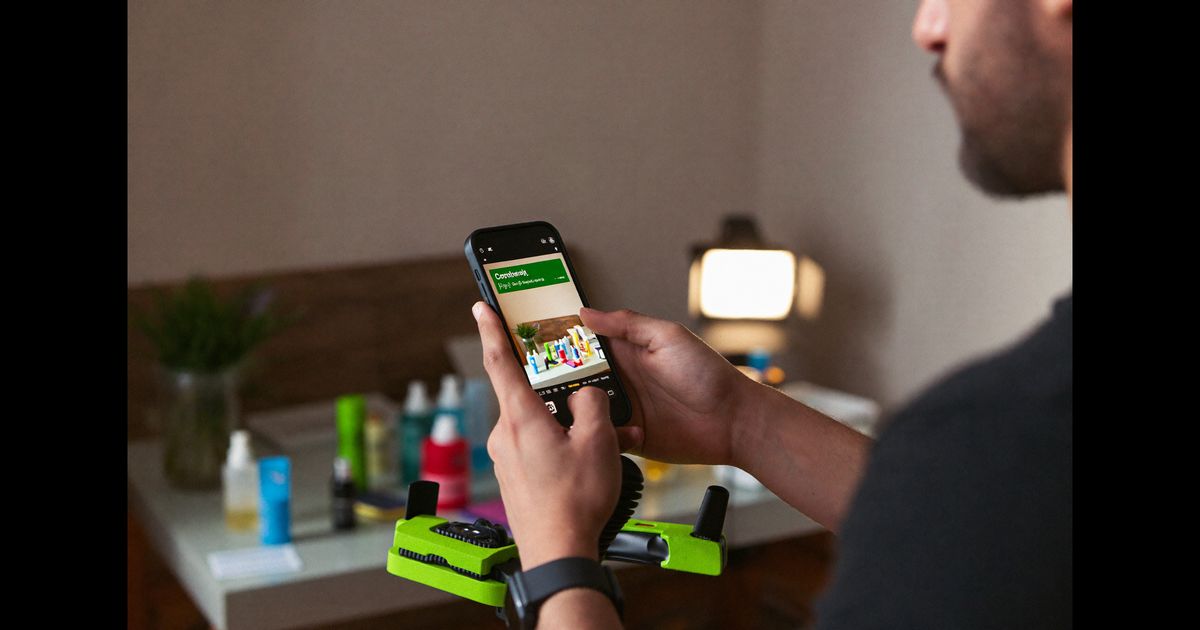
- Phone: Any smartphone from 2022 onwards, iPhone 13, Redmi Note 12 Pro, Samsung Galaxy A54, shoots more than adequate 1080p vertical video. Shoot in the native camera app on the highest available resolution, not through Instagram's in-app camera (it compresses before you can edit).
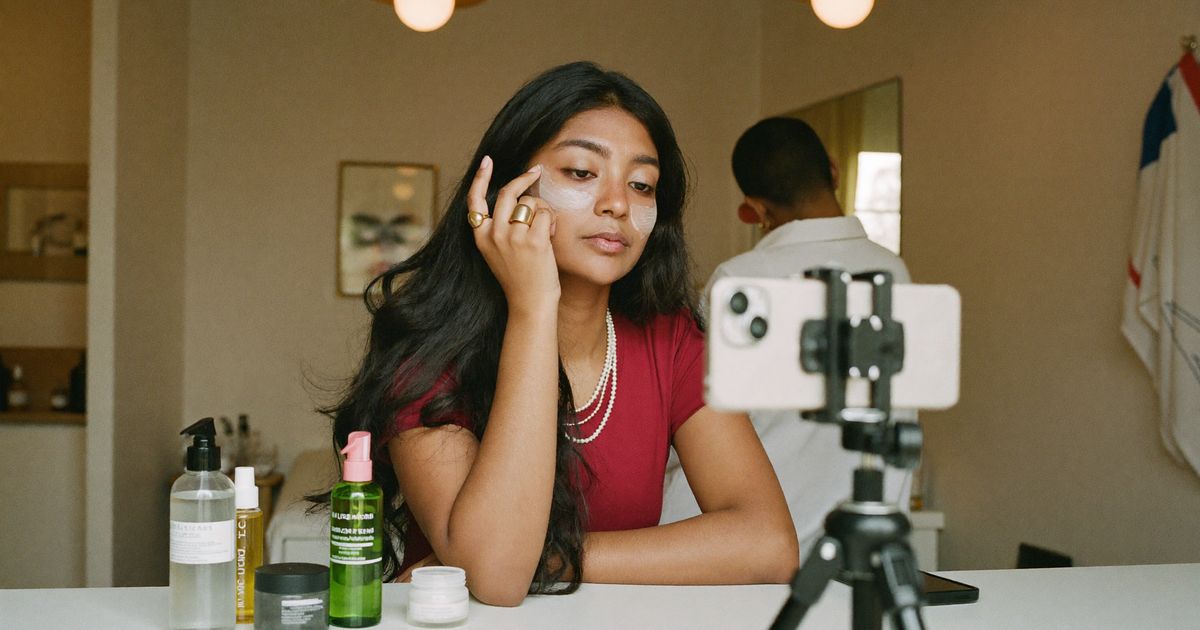
- Light: A single ring light (Rs. 800–1,200 on Amazon) placed at eye level, directly in front of the creator, solves 90% of beauty lighting problems. If you're shooting near a window, face the window, never shoot with a window behind you. For dark skin tones, which are common across Indian creators, move the ring light to roughly 30cm from the face to avoid harsh shadows without overexposing.
- Audio: A clip-on lavalier mic (Rs. 400–600, available on Meesho or Amazon) is enough. Beauty UGC is often narrated over trending audio in post, but if the creator is speaking live, bad audio kills credibility faster than shaky video.
- Background: A neutral wall, a tidy bathroom counter, or a draped dupatta in a brand-matching colour. The background should never compete with the product. Avoid busy printed wallpapers common in many urban Indian apartments, they read as cluttered on vertical crops.
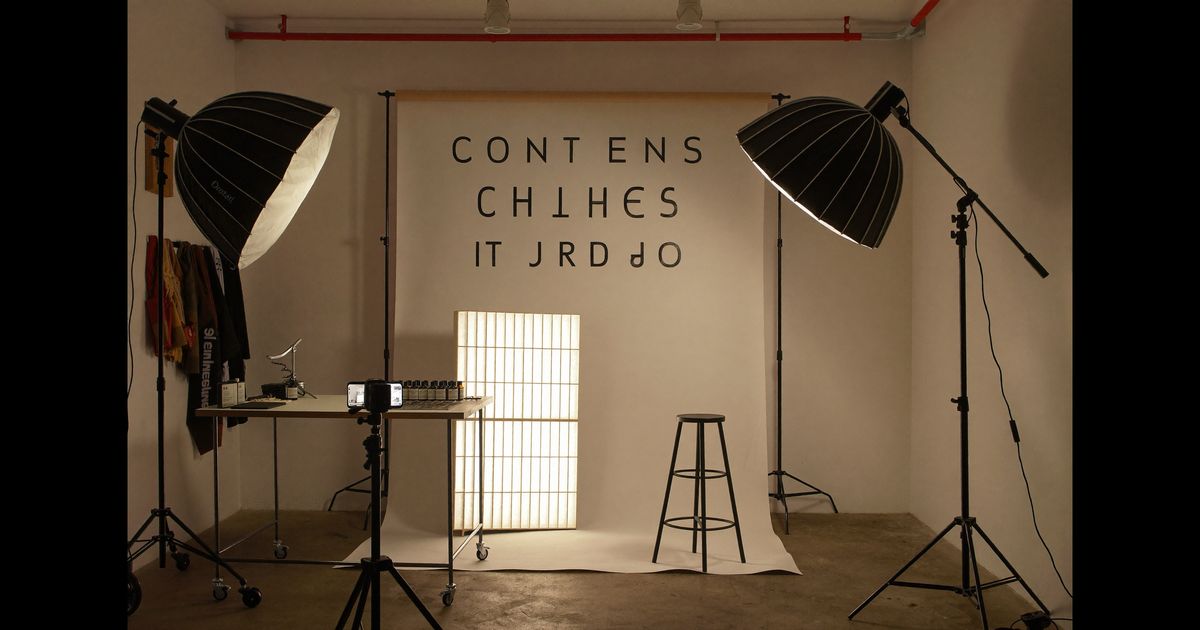
What you don't need: a gimbal, a second camera, a softbox kit, or a professional backdrop stand. Adding this equipment actually works against the authentic aesthetic the format demands.
Filming the Hook: The First 3 Seconds Decide Everything
On YouTube Shorts and Instagram Reels, the algorithm decides whether to push your video based significantly on how many people watch past the 3-second mark. For beauty UGC, the hook must do one of two things: show a visible problem or make a bold claim.
- Problem-first hook: Start mid-action. Creator already applying product, or showing skin close-up before treatment. No intro. No "Hi guys, today I'm going to…" Cut that entirely.
- Claim-first hook: Open with a direct-to-camera statement in the first breath. Examples that work in Indian market context: "Maine 3 hafte yeh lagaya aur meri tan line literally gayab ho gayi" or "This is the one serum I'd keep if I had to throw out everything else." Bilingual hooks (Hindi setup, English punchline or vice versa) consistently outperform either language alone for Hindi-belt audiences on Shorts.
We brief creators to film 2–3 different hook variations for each video. The product application and outro stay constant; only the first 3 seconds change. This A/B capability is standard across any campaign we run for a beauty brand and lets the brand test without reshooting the full video.
Filming the Body: Routine or Transformation Sequences
After the hook, the video body follows a tight sequence. For a GRWM or 3-step routine:
- Film each product application step as a separate clip. Step 1 close-up, cut, Step 2 medium shot, cut, Step 3 reveal. Each clip should be 6–10 seconds raw, you'll trim in editing.
- Narrate while applying, not before. "So I'm pressing this in circular motions, and you can literally see it absorbing" is more compelling than a voiceover explaining what you're about to do.
- Show the product label clearly for at least 1.5 seconds per product. Under ASCI's guidelines for digital advertising in India, influencer-style posts that mention product benefits must not make unsubstantiated health or cosmetic efficacy claims. Stick to sensory descriptions ("smells like jasmine", "feels lightweight") rather than clinical claims ("removes 80% dark spots in 7 days") unless the brand has provided substantiated claim language approved for use.
For before/after formats: film the "before" state at the start of the session, then the "after" state after application (not hours later, this is a short-format video, not a clinical trial). Use the same framing and lighting for both shots. Mismatched lighting between before and after reads as manipulative, and beyond aesthetic quality, it can attract ASCI scrutiny if the difference appears exaggerated.
Sound Design: Trending Audio vs. Original Voice
Sound strategy for beauty UGC splits into two clear paths:
- Trending audio overlay: Pick an audio trending on Instagram Reels India (check the Reels audio tab filtered by "trending") and dub your narration as text captions over it. This is the fastest path to organic reach for a new creator or a brand with no existing audience. The downside: trending audio expires fast, and boosted posts with licensed music can create rights issues, always use audio from Meta's Sound Collection for any paid promotion.
- Original voice: Creator speaks throughout. This is better for conversion-optimised ad creative because it maintains narrative coherence and works with captions on for silent-scroll viewers. For beauty brands running paid Reels or Shorts ads, original voice with burnt-in subtitles is the standard we recommend.
For Hindi or regional-language narration: most Indian beauty brands targeting Tier-2 markets (Jaipur, Lucknow, Coimbatore, Nagpur) see meaningfully better completion rates when creators narrate in the local language. A creator speaking Hinglish with a natural regional accent outperforms a creator doing a forced neutral Hindi voice, audiences in these markets can hear the difference.
Editing for Shorts: The Non-Negotiables
You don't need CapCut Pro or Adobe Premiere. Free CapCut (available in India) handles everything below:
- Trim ruthlessly: Every clip where the creator pauses or looks away should be cut. Shorts pacing tolerates no dead air.
- Captions: Use auto-caption with manual correction. For beauty content, caption every spoken word, many viewers watch on mute while commuting or at work. CapCut's auto-caption in Hindi and English is accurate enough for a starting point; always review before export.
- Text overlays: Product name and key benefit in one text card, shown in the first 5 seconds. Example: "Dot & Key Watermelon Sunscreen" + "Zero white cast". Keep font large enough to read on a 5-inch phone screen.
- Export settings: 1080×1920, MP4, H.264, 30fps. This is the universal safe setting that uploads without re-compression artefacts on YouTube Shorts, Instagram Reels, and Facebook Reels simultaneously.
- Duration check: Final edit should be 40–55 seconds. Trim the outro if needed, end on the product or on the creator's face post-transformation, not on a "that's it for today" sign-off.
Uploading and Optimising Across Platforms
One video, three platforms, but the metadata differs:
- YouTube Shorts: Title must contain the hook line (not just the brand name). Use the description for 3–5 hashtags including #Shorts explicitly. Add a card linking to the brand's full product video or website.
- Instagram Reels: First line of caption is the hook (visible before "more"). Use 5–8 hashtags, mix reach hashtags (#skincareindia, #indianbeauty) with niche ones (#glowserum, #sunscreenforindianclimate). Tag the brand. If the creator has been paid or gifted the product, add the "Paid partnership" label via Instagram's built-in tool, this is required under ASCI's influencer guidelines.
- Facebook Reels: Paste the same caption. Facebook Reels distributes aggressively to non-followers; it's underused by Indian beauty creators relative to its reach potential, especially for Tier-2 audiences.
If you're a beauty brand trying to build a library of this kind of content at scale, multiple creators, consistent quality, platform-ready exports, the briefing, creator matching, and QA process takes more operational effort than most brand teams expect. Our team at The UGC Agency handles end-to-end Shorts-style production for beauty brands across India; see how we structure campaigns on the work page or review our plans starting at Rs. 60,000.