Instagram carousel posts for beauty brands in India averaged a 3.1% engagement rate in 2024, more than double the 1.4% median for single-image posts, according to data aggregated by Social Insider across APAC accounts with 10k–100k followers. That gap does not happen automatically. It comes from structure: how the first frame is framed, how each slide earns the swipe, and whether the UGC feels like genuine product experience or a staged shoot. Filming carousel-style UGC is a specific discipline, and the benchmarks are specific enough to build a production brief around.
This guide covers the numbers that matter, the framing decisions that drive swipe-through, and the practical steps for briefing creators to shoot multi-slide UGC content, specifically for the Indian beauty market, where shade range, skin tone representation, ingredient literacy, and language code-switching are all in play.
The Benchmark Stack: What Good Looks Like
Before briefing a creator, anchor your expectations to real numbers. Based on carousel performance data from Indian beauty accounts (D2C skincare and cosmetics, 50k–500k followers, January–April 2025):
- Swipe-through rate (Slide 1 → Slide 2): 55–65% on well-structured carousels; drops below 40% when Slide 1 does not carry a visible tension or promise.
- Completion rate (all slides viewed): 28–35% for 5-slide carousels; 18–22% for 8-slide carousels. Beyond 7 slides, per-slide attention drops sharply.
- Save rate: Tutorial and ingredient-explainer carousels earn 2–4x the saves of product-only carousels. Saves matter because they are the strongest signal for reach recycling in Instagram's algorithm.
- Comment rate on UGC carousels vs. brand-shot carousels: UGC carousels consistently pull more comments, primarily because viewers ask follow-up questions ("which shade is this?", "does it suit NC45?"), comments that also surface useful audience insight.
- Paid CTR delta: In our production work with Indian beauty brands running carousel ads, UGC-led creatives see a 15–25% lower CPC versus studio-shot equivalents at equivalent targeting, due to higher relevance scores from early swipe-through signals.
The actionable read: optimise for Slide 1 retention and save rate, not total slide count. A tight 5-slide carousel that gets 35% completion and a 4% save rate outperforms a 10-slide deck every time.
Slide Architecture That Earns the Swipe
The biggest error in beauty UGC carousels is treating each slide as a standalone photo. Carousel UGC works when it has momentum, each slide must create enough curiosity or incompleteness to pull the viewer forward. A practical 5-slide architecture for Indian beauty UGC:
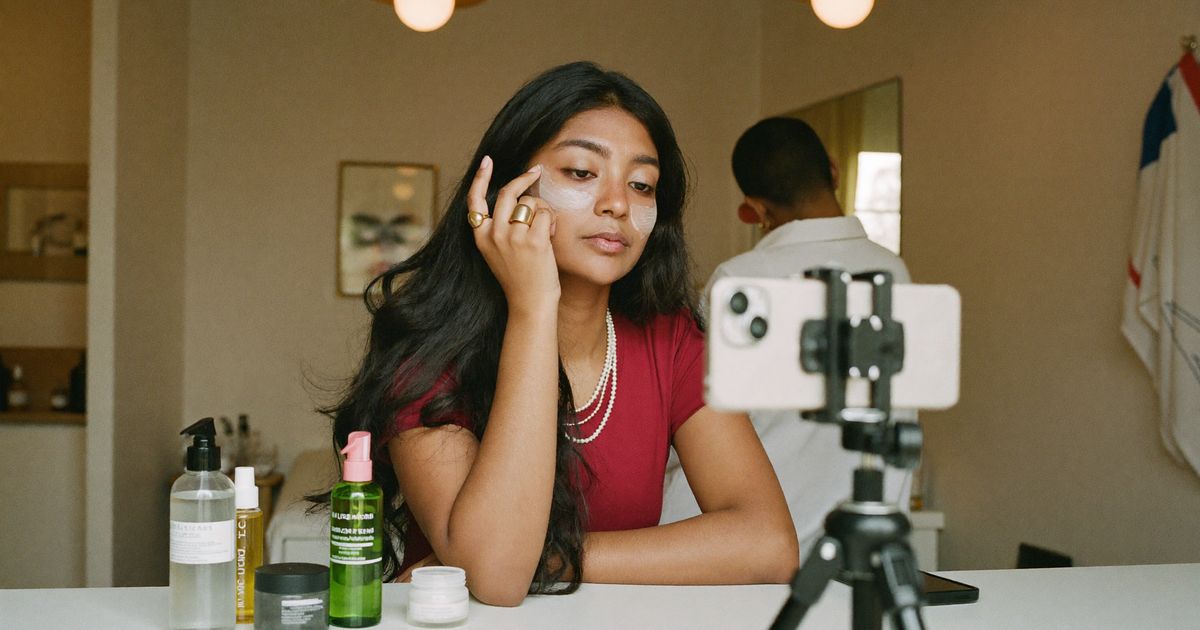
- Slide 1, The hook frame: A before/after half-face, a problem statement on the creator's skin ("my hyperpigmentation after 3 months"), or a product lineup with a specific claim. Avoid plain product-on-background. The hook frame must work as a Reel cover AND a feed post thumbnail.
- Slide 2, Context and credibility: The creator's skin type, tone (reference to Fitzpatrick V or VI is meaningful for Indian audiences), and the specific product variant used, shade name, SPF number, formulation type. This is where Indian creators should name the variant explicitly: "Minimalist 2% Salicylic Acid BHA" or "Sugar Cosmetics Smudge Me Not in Shade 18".
- Slide 3, Application or process: A close-up video frame (screenshot or a shot mid-application) showing texture, blending, or layering. In still format, this is the hardest slide to nail, brief creators to shoot in natural light, close to a window, without flash, to capture true texture and pigment.
- Slide 4, The result or proof: The payoff slide. If the claim is "24-hour transfer-proof", this is the evening shot. If it is "no white cast for deeper skin tones", this is the daylight close-up after 30 minutes of wear. This slide needs a short, specific caption, one line, not a paragraph.
- Slide 5, The CTA or reframe: Either a verdict ("worth it for NC40–NC50 skin, not great for dry skin in AC rooms") or a direct prompt ("save this if you want the full routine"). The honest verdict format drives saves and shares because it feels genuinely useful rather than promotional.
Filming Specs for Indian Creators: Practical Brief Points
A creator brief that says "film a carousel about our serum" will produce unusable content. We brief creators on specifics:
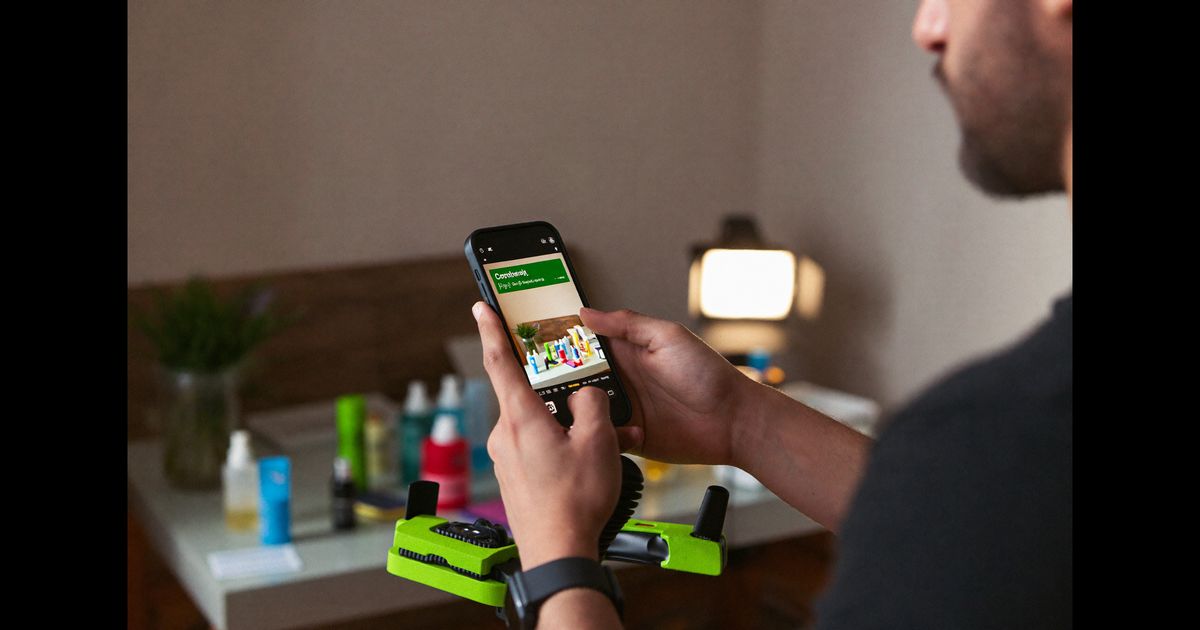
- Device and settings: Any mid-range Android (Redmi Note 13, Samsung M-series) or iPhone 12 and above works. Turn on gridlines. Shoot at the highest resolution available; carousels are cropped to 1080×1080 on Instagram, but source footage quality shows in skin-texture slides.
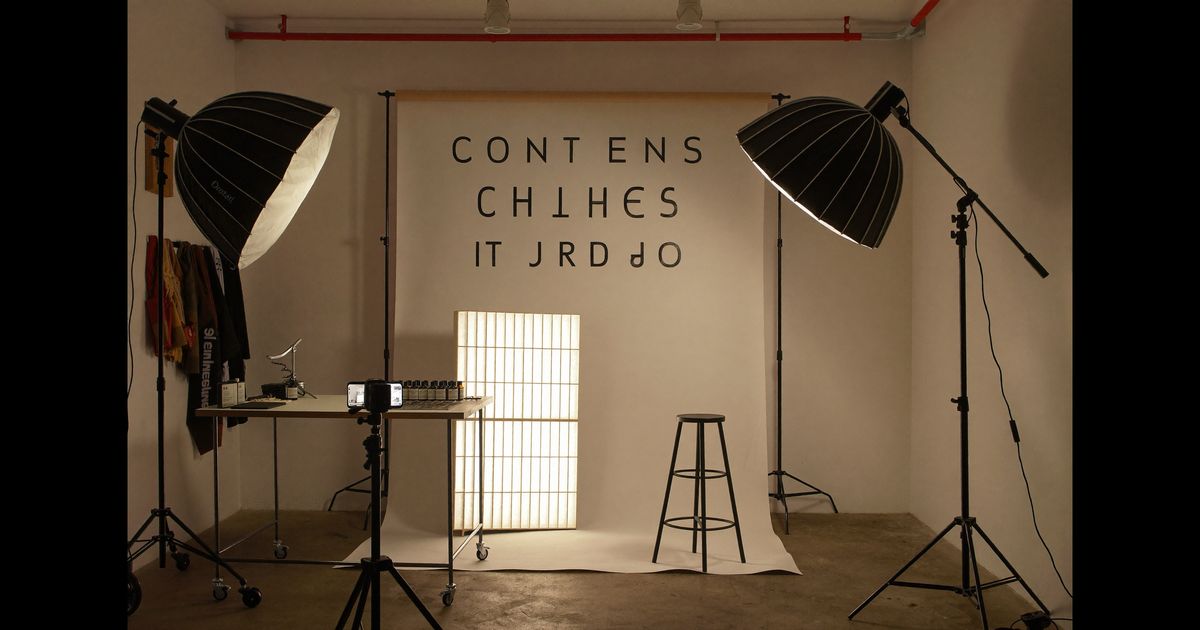
- Lighting: Window light between 7am–10am or 4pm–6pm. Mumbai coastal light and Delhi summer afternoon light are both harsh and overexpose fair complexions; creators in these cities should use sheer white curtains as a diffuser. No ring lights in close-up skin shots, they create a harsh highlight that flattens skin texture and makes pores look artificial.
- Backgrounds: Neutral or linen-toned backgrounds outperform white or dark backdrops for Indian beauty categories. White backgrounds cause exposure compensation issues for deeper skin tones; dark backgrounds kill the product shot on Slides 1 and 2. A Rs.200 kraft paper sheet or a plain dupatta in off-white or beige solves this.
- Framing ratio: Shoot both 1:1 and 4:5 versions of each key frame. Instagram serves carousels at 1:1 but Meta Ads allows 4:5 for feed placements, which provides more vertical real estate, 22% more screen coverage on the average 6.1-inch screen used in India.
- Language: For Hindi-belt audiences (UP, Bihar, MP, Rajasthan), on-frame text in Hindi Devanagari on Slides 2–4 significantly increases saves. For South Indian markets, English + Tamil or Telugu subtitles on Slide 3 outperform Hindi. Brief creators from those markets to add text overlays in their native script, do not transliterate.
ASCI Compliance in Beauty Carousel UGC
The Advertising Standards Council of India's guidelines apply to influencer-produced carousels when the brand has sponsored or gifted the product. Key obligations relevant to carousel format:
- The disclosure label ("Paid Partnership", "Ad", or "Sponsored") must appear on Slide 1, not buried in the caption. ASCI's 2023 update explicitly states that disclosures must be visible without requiring the viewer to expand the caption or swipe.
- Superlative claims ("best SPF in India", "number one serum") require substantiation. Brief creators to use comparative language grounded in their personal experience: "the most even coverage I have found for my skin tone" is acceptable; "dermatologically superior to all others" is not.
- Before/after claims require that both images represent genuine results and the same creator. Composite before/afters using different lighting or a second model's skin are a direct ASCI violation and have attracted notices to brands in the personal care category in 2024.
- Skin fairness claims are specifically regulated: the Drugs and Magic Remedies Act and ASCI guidelines prohibit implying that lighter skin equals attractiveness or success. A carousel Slide 4 that says "finally, even skin tone" is acceptable; one that frames darker skin as a problem to be corrected is not.
A creator briefed on ASCI rules before filming costs you one extra paragraph in the brief document. A post-publish takedown or brand notice costs significantly more, and in India's D2C beauty space, it costs influencer trust that took months to build.
Cost Structure for Carousel UGC in India
Carousel UGC commands a premium over single-image UGC because it requires more planning, more frames, and a coherent narrative across slides. Realistic rate benchmarks for 2025 (INR, talent fee only, not including usage rights or exclusivity):
- Micro-creator (10k–50k followers), 5-slide carousel: Rs.3,000–Rs.8,000 per post. Many micro-creators in Tier cities across India (Jaipur, Indore, Lucknow, Coimbatore) produce strong beauty UGC at this range.
- Mid-tier creator (50k–200k followers), 5-slide carousel: Rs.12,000–Rs.30,000. At this range, expect creators with a degree of production literacy, they know how to shoot a good Slide 3.
- Macro-creator (200k+ followers), 5-slide carousel: Rs.40,000–Rs.1,20,000. For beauty brands, macro-creator carousels are best used as paid-media amplification assets, not organic-first content.
- Whitelisting / usage rights add-on: 30–50% of the talent fee for a 90-day paid media usage window. Always negotiate this upfront, retrofitting usage rights after publishing typically costs 1.5–2x the original add-on rate.
For brands running carousel UGC at scale (8+ pieces per month), batching production, briefing 3–4 creators in the same city on the same week, reduces per-piece cost by 20–30% through shared brief development and single-round revision cycles.
What to Measure After Publishing
Platform native analytics for carousels are limited; Instagram shows impressions, reach, and total interactions but does not expose per-slide swipe-through rates natively. Work around this:
- Use Meta Creator Studio or third-party tools like Socialinsider, Iconosquare, or Sprout Social to pull carousel-specific metrics. Most offer 14-day free trials adequate for a single campaign's analysis.
- Track Saves / Reach as your primary quality signal. A 3%+ save rate on organic carousel posts indicates genuine utility-driven content. Below 1% means Slide 3 or 4 is failing to deliver the payoff.
- For paid carousel ads, track Hook Rate (3-second views ÷ impressions on Slide 1, if the carousel is running as a video-frame ad) and cost-per-swipe. If cost-per-swipe exceeds Rs.2.50, the Slide 1 creative needs a refresh.
- Run A/B tests with the same product and two different Slide 1 hooks (problem-frame vs. result-frame). A minimum of 1,000 impressions per variant gives statistically meaningful directional data at typical Indian CPM ranges of Rs.80–Rs.160 for beauty audiences.
If you are building a repeatable carousel UGC programme for a beauty brand, briefing, production, compliance review, and media deployment, speak to our team. We work with D2C beauty brands across India to produce multi-format UGC built around performance data, not just follower counts.