A dermatologist in Bengaluru once told us something that stuck: "Patients trust other patients more than they trust me." That is the precise reason behind-the-scenes UGC works so well for healthcare brands, it replaces the polished clinic brochure with the messy, believable texture of real experience. But filming this category is genuinely different from shooting a D2C skincare haul or a food delivery unboxing. Get it wrong and you end up with content that either violates ASCI's healthcare advertising guidelines or looks so sterile it defeats the whole point.
This guide walks through exactly how to plan, shoot, and package BTS-style UGC for healthcare brands, whether you are a wellness supplement company in Mumbai, a tele-health platform targeting Tier-cities across India, or an ayurvedic personal-care label in Pune. We have structured this as a production workflow, because that is how you actually execute it consistently at scale.
Understand What ASCI and the Drugs and Magic Remedies Act Actually Permit
Before any camera rolls, the compliance brief has to be airtight. India's ASCI Healthcare Advertising Guidelines prohibit creators from making therapeutic claims that are not backed by evidence, even in "authentic" first-person storytelling. The Drugs and Magic Remedies (Objectionable Advertisements) Act, 1954 further bars claims of cure for scheduled diseases (diabetes, cancer, asthma, epilepsy, and several others) in any form, including creator-led content.
What this means in practice for BTS UGC:
- Creators can show process, not promises. Filming a morning wellness routine, the act of consulting a doctor, or the packaging of an ayurvedic supplement is fine. Saying "this product cured my acne" or "I reversed my PCOS" is not, unless supported by substantiated clinical evidence that your brand actually holds.
- Disclosure is non-negotiable. The ASCI influencer guidelines (updated 2021) require a visible "#ad" or "#sponsored" label. For healthcare specifically, ASCI expects the disclosure to appear within the first two lines of any caption or within the first three seconds of a video.
- Testimonials for Rx products are off-limits entirely. If your brand sells any prescription-category product, creator-led personal testimonials, BTS or otherwise, are prohibited. Limit UGC to OTC wellness, nutraceuticals, ayurvedic products, medical devices that do not require prescriptions (thermometers, BP monitors), and health-tech services.
We always send creators a one-page compliance brief alongside the creative brief. Building this habit eliminates the back-and-forth when a video has to be pulled before publishing.
Choose the Right Creator Profile for Healthcare BTS
Healthcare UGC demands a particular kind of creator, not necessarily a medical professional, but someone whose daily life context makes the content credible. The most effective profiles we have worked with fall into three types:
- Lifestyle micro-creators with a documented health journey. Someone who has publicly shared dealing with PCOS, thyroid issues, chronic stress, or digestive problems over several months. Their audience already follows them for honest health updates, so a sponsored product fitting into that journey reads as natural rather than transactional. Nano creators (10,000–50,000 followers) on Instagram Reels in this niche typically charge Rs. 8,000–25,000 per deliverable in Tier-cities across India.
- Fitness and nutrition creators in regional languages. A Tamil-language fitness creator on YouTube Shorts or a Marathi wellness creator on Instagram often has audience trust that a pan-India English creator does not. For a brand selling protein supplements or ayurvedic haircare, a creator speaking in the viewer's own language makes the BTS footage feel like a peer recommendation.
- Healthcare adjacent professionals. Registered dietitians, yoga instructors, and physiotherapists who create content are exceptionally well-suited for brands in the nutraceutical and physiotherapy device categories. Their authority blends with the informal BTS aesthetic, a dietitian filming what she actually eats for breakfast while mentioning the supplement she uses fits the format precisely.
Plan the Shot List Around the BTS "Reveal Moment"
BTS content works because it gives viewers access to something ordinarily private. For healthcare, that private moment is usually one of three things: the daily health ritual, the product discovery process, or the consultation/test result context. Plan every shoot around one of these three anchors.
The Daily Ritual Arc (most used in our production work for wellness supplement brands):
- Open with the creator's morning context, the kitchen, the bathroom shelf, the bedside table. No product in frame yet.
- Show the problem or intention organically: "I've been trying to fix my sleep cycle for the last few months" works; "I had chronic insomnia and nothing worked" is a claim that requires substantiation.
- Introduce the product as part of an existing routine, not as a miraculous addition. The unpacking or measuring shot (pouring a scoop, opening a bottle) is the BTS "access moment."
- End with a brief present-state check-in, how the creator feels today, without attributing it directly to the product.
The Product Discovery Arc (works well for health-tech apps and tele-health platforms):
- Creator films themselves navigating the app or platform for the first time, reacting genuinely to features. Screen recordings spliced with face-cam footage create an authentic BTS of the onboarding experience.
- A consultation call (with appropriate permission from both parties and with any identifying patient information blurred or omitted) can be powerful content for tele-health brands looking to reduce apprehension about online doctor visits.
Technical Setup: Shooting on a Smartphone Without Looking "Produced"
The visual language of BTS UGC is deliberately imperfect, but there is a difference between "authentic imperfection" and "unwatchable footage." For healthcare brands specifically, excessive shakiness or dim lighting can accidentally read as unsanitary or untrustworthy. We brief creators to follow these specific technical parameters:
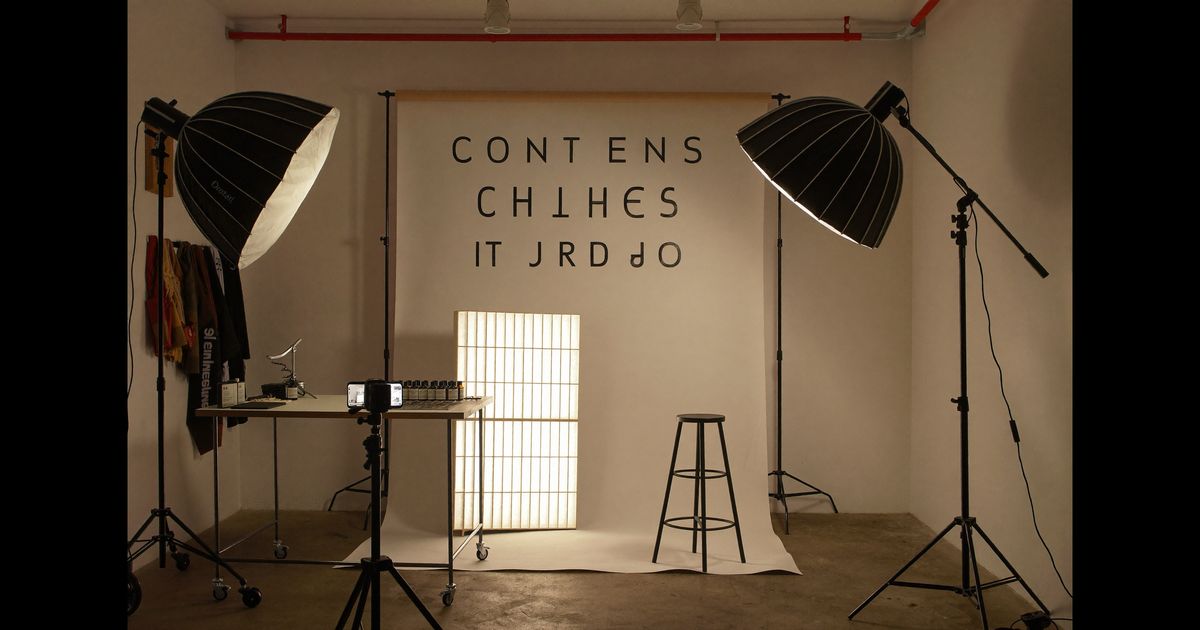
- Lighting: natural light or a small ring light set to warm-white. Avoid harsh overhead fluorescent lighting common in bathroom and kitchen environments, it makes skin look unwell, which is the opposite of what a wellness brand needs. A small Rs. 800–1,500 ring light (available on Amazon India) used off-axis creates enough warmth without looking like a studio shoot.
- Camera: 1080p at 30fps, shot vertically for Reels/Shorts. We ask creators to enable the Grid overlay and keep the subject in the upper two-thirds of the frame so text overlays and captions have space below without covering faces.
- Background: contextually believable but intentionally tidy. A counter with a few skincare products, a kitchen with visible ingredients, a desk with a laptop, these read as real spaces. A bare white wall reads as a green-screen setup; a cluttered, messy counter reads as unprofessional for healthcare.
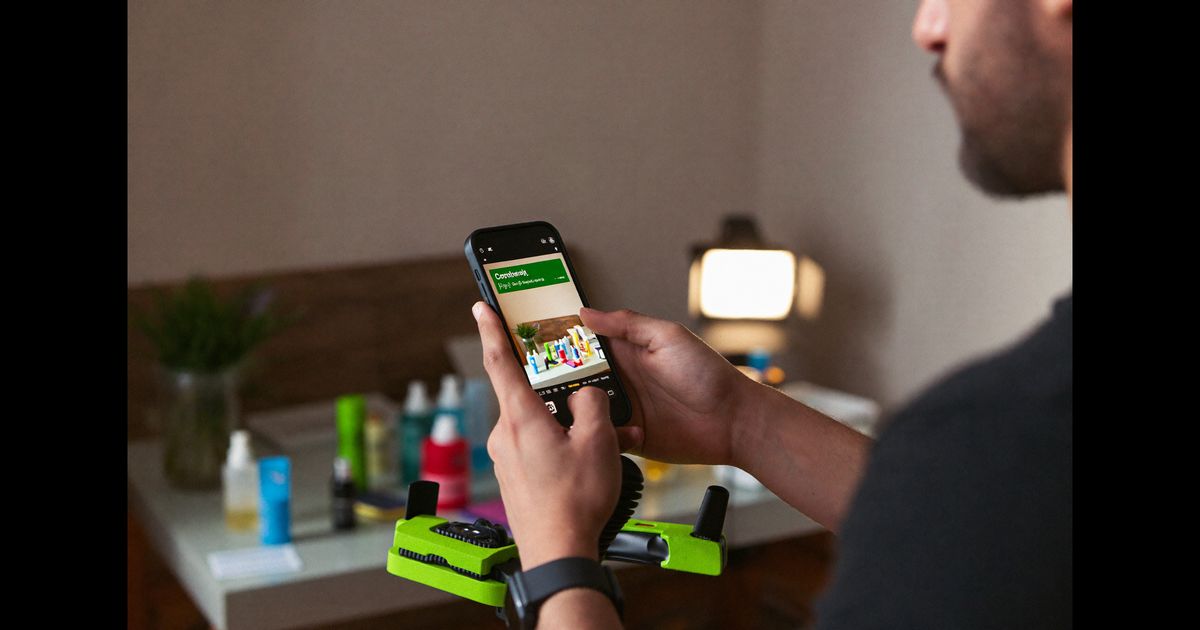
- Audio: clip-on lav mic or the creator's own earphone mic. Healthcare content often involves the creator speaking directly to camera about their experience. Clear audio is non-negotiable. Bluetooth mics like the Boya BY-M1 (Rs. 750–900 on Flipkart) work reliably with most Android and iOS phones.
Structure the Edit for Instagram Reels and YouTube Shorts
Most healthcare BTS UGC performs best as 45–75 second Reels or Shorts. The edit structure that consistently performs in our experience:
- Seconds 0–3: the context hook. A text overlay like "What my morning routine actually looks like with PCOS" over a real kitchen shot. No product, no logo. The goal is the scroll-stop, and in healthcare, personal health context is the most reliable hook.
- Seconds 3–25: the BTS access sequence. Three to five clips showing the genuine daily process, getting up, making a drink, checking a health app, opening the supplement. Voiceover works better than on-camera talking for this segment because it keeps the visual variety high.
- Seconds 25–50: the product integration. The creator is now on camera, speaking naturally about why they use the product, being careful not to make therapeutic claims. Phrases like "I've been consistent with this for about six weeks and I wanted to share what that actually looks like" are safe and authentic.
- Seconds 50–75: the soft close. A call to action that directs to the brand's website or a link-in-bio, with the disclosure remaining visible. For tele-health brands, CTAs like "first consultation is free" work better than product-push CTAs.
One thing we have found across multiple healthcare brand campaigns: creators who mention a specific habit change ("I take this at 8 PM, right after dinner, every single day") consistently outperform creators who make vague lifestyle statements. Specificity signals genuine use.
Distribution: Where This Content Actually Works in India
Instagram Reels remains the primary distribution channel for healthcare BTS UGC in India, especially for the 22–38 age bracket that brands in the wellness, nutraceutical, and women's health categories are typically targeting. YouTube Shorts is a strong secondary channel because search intent is high, people actively look for "my morning routine with hypothyroidism" or "ashwagandha supplement routine" on YouTube, which means organic shelf-life is longer than on Instagram.
WhatsApp Status (not WhatsApp Channels, which are broadcast-only) is genuinely underused for healthcare BTS content. For brands targeting Tier-2 and Tier-cities across India, Nashik, Coimbatore, Bhopal, Rajkot, where WhatsApp is often the primary digital touchpoint, a creator sharing a 30-second BTS clip to their Status with a link to the brand can outperform an Instagram Reel. This requires creators with engaged WhatsApp contacts in the right demographic, which is a different kind of creator brief entirely.
For paid amplification, healthcare brands should note that Meta's ad policies prohibit targeting based on health conditions. BTS UGC repurposed as paid ads must be whitelisted through the creator's account (dark posting) and targeted by interest and demographic only, not by implied health condition.
Briefing Creators: The One-Page Document That Prevents Reshoots
Healthcare brand briefing errors are the most common reason UGC content needs a reshoot. A creator who has filmed dozens of skincare or food hauls will instinctively reach for performance language ("this totally changed my skin!") without realising it violates the brief. The briefing document we use for healthcare clients includes:
- An explicit "Do Not Say" list: specific phrases that constitute prohibited therapeutic claims for that product category. Generic guidance is not enough, the creator needs to see exact examples.
- The approved claim set: the precise language the brand has substantiated and approved. Typically two or three sentences the creator can adapt naturally.
- The disclosure placement requirement: a screenshot example showing where the "#ad" label must appear in the caption and at what timestamp in the video.
- Shot list with reference content: two or three example BTS videos (from non-competing categories) that illustrate the aesthetic and pacing the brand wants.
If you are setting up an ongoing healthcare UGC programme, three to five creators per month, consistent output across Instagram and YouTube, the briefing, compliance review, and performance tracking quickly become the bottleneck. That is where working with a production partner changes the equation significantly.
At The UGC Agency, we manage end-to-end healthcare UGC production, creator sourcing, compliance briefing, shoot oversight, and post-production, for brands starting from Rs. 60,000 per month. If you are a healthcare or wellness brand looking to build a library of authentic BTS content without the compliance risk, book a free consultation to talk through what a programme would look like for your category.