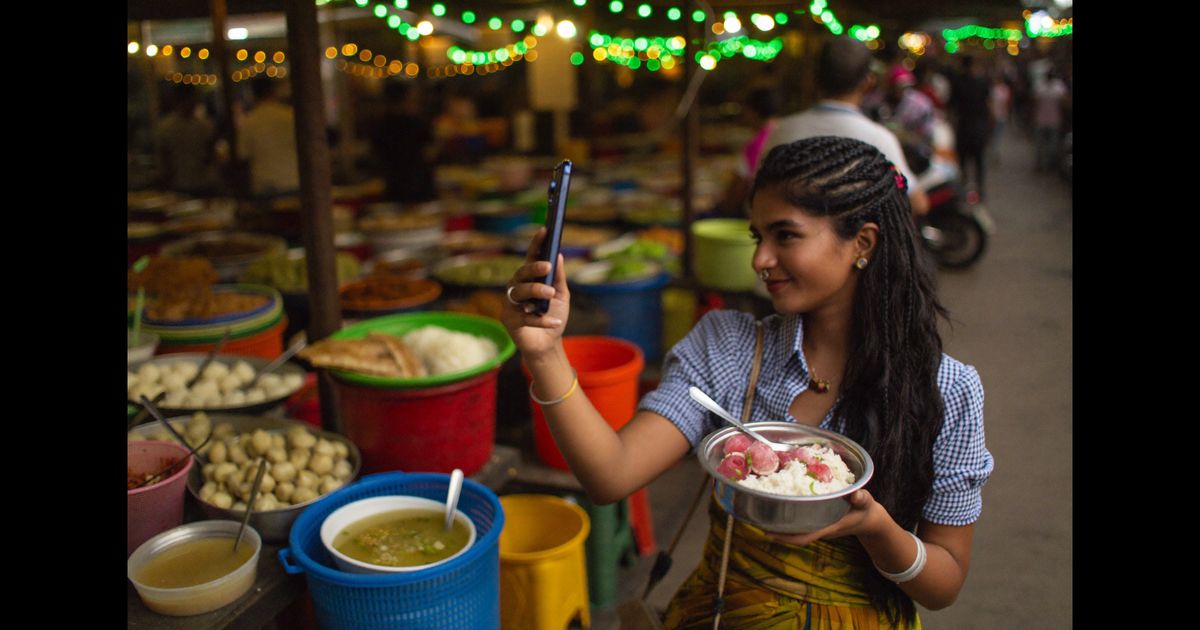
Nykaa's "Try Before You Buy" Instagram filter campaign in 2023 generated over 12 million filter trials in six weeks, and more than 40% of users who tried the lipstick shade AR filter visited the product page within 24 hours. That is not a coincidence. It is the result of deliberately pairing augmented reality placements with creator-made UGC to close the loop between discovery and intent.
If your brand is still treating AR filters as a novelty and UGC as a separate content bucket, you are leaving the most powerful combination in your toolkit untouched. This guide walks you through a practical, replicable process for fusing the two, from filter concept and creator brief to ASCI-compliant disclosure and performance measurement.
Step 1: Define What the Filter Must Do Before You Build It
The most common mistake Indian brands make is commissioning a filter because a competitor has one. Filters should solve a specific user action problem, not just look good. Before briefing a filter studio (Meta Spark developers typically charge Rs. 25,000–Rs. 80,000 for a custom effect), answer these three questions:
- What is the try-on or transformation moment? A skincare brand might show a before/after hydration glow; a D2C apparel label can overlay print patterns on clothing; a SaaS product can visualise a dashboard on a user's desk.
- What behaviour do you want immediately after the filter is used? Link sticker to PDP, swipe-up to trial sign-up, or save-to-camera-roll for resharing, each requires a different filter mechanic.
- Which platform hosts the filter? Meta Spark (Instagram/Facebook) and Snap Lens Studio cover the widest Indian audience. Snapchat over-indexes on Tier 1 metro youth; Instagram Reels filters now reach vernacular audiences in Tamil Nadu, Maharashtra, and Bengal. Choose based on where your core buyer already scrolls.
Step 2: Build the Creator Brief Around the Filter, Not Alongside It
When we brief creators for AR+UGC campaigns at The UGC Agency, the filter is not an afterthought, it is the creative centrepiece. A creator showing a face filter for three seconds and then talking to camera for ninety is wasting both assets. The brief should specify:
- Filter entry moment: Exactly when in the video the creator activates the AR effect (typically 2–4 seconds in, after a verbal hook, not after a long intro).
- Verbal + visual pairing: Creator narrates what the filter is showing them. For a hair colour try-on, we instruct creators to say the shade name aloud while the filter is live, this reinforces recall and makes the content more searchable via audio indexing.
- Reaction authenticity: Brief creators to show a genuine reaction (surprise, approval, comparison) rather than a scripted read. Audiences detect scripted reactions in AR content because the timing is visibly off.
- Screen-recorded B-roll: Ask creators to capture a screen-record of the filter experience as supplementary content for Stories and WhatsApp Status repurposing.
ASCI's guidelines (updated 2023) require all sponsored content, including filter-based posts, to carry a #Ad or #Sponsored disclosure that is prominent, above the fold, and not buried in hashtag clusters. The disclosure must appear in the same language as the main caption. A Tamil creator posting in Tamil must add the disclosure in Tamil (a plain "விளம்பரம்" is acceptable). Brief creators on this explicitly; do not leave it to their judgment.
Step 3: Choose the Right Creator Tier for Each Objective
AR filters perform differently across creator tiers, and matching tier to objective is where many brands lose efficiency.
- Nano creators (5K–20K followers): Best for filter seeding. Their audiences are tightly knit and the filter feels like a genuine discovery, not a brand push. Typical engagement rate on filter content: 8–14%. Effective in regional markets, a nano creator in Coimbatore or Nagpur carries filter content to audiences most macro influencers never reach.
- Micro creators (20K–100K followers): Best for demonstration content. They have enough production polish to show the filter clearly without it looking rough, and their audiences trust their opinions on product performance.
- Mid-tier (100K–500K): Best for reach amplification once the filter has social proof from nano/micro activity. A mid-tier creator posting a filter video that already has hundreds of saves from smaller accounts carries an implicit endorsement signal.
- Macro and celebrity: Use sparingly and only if the filter itself is visually spectacular, a try-on effect for a jewellery brand at a macro creator's scale can drive filter installs in volume. But the cost-per-filter-trial is almost always higher than micro seeding.
Step 4: Set Up Measurement Before the Campaign Goes Live
AR+UGC campaigns produce data at two levels, filter analytics and creator content analytics, and they must be tracked together to extract real insight.
Filter-level metrics (Meta Spark Analytics or Snap Lens Studio dashboard):
- Impressions (how many times the filter was seen in someone else's content)
- Opens (how many users activated the filter themselves)
- Captures (how many users recorded a video or photo using the filter)
- Shares (how many captured moments were posted, this is the true virality indicator)
UGC content metrics:
- Watch-through rate on Reels (benchmark: 45%+ for a well-constructed AR demo is strong)
- Saves-to-views ratio (saves signal future-purchase intent; anything above 4% on a product demo is worth noting)
- Comment sentiment, especially questions about where to buy or how to access the filter, these are bottom-of-funnel signals
Track the link between filter opens and site sessions using UTM parameters on any link stickers or bio links attached to the campaign. For Instagram, use a dedicated landing page slug so organic and paid attribution stay clean.
One practical note: if your brand runs a Google Ads or Meta Ads remarketing pool, feed the filter's "captures" audience, users who interacted with the AR effect, as a custom audience segment. This group has already invested 15–30 seconds of physical interaction with your product concept. Their retargeting conversion rates in our experience run 2–3x higher than standard interest-based audiences.
Step 5: Repurpose the UGC Across the Full Funnel
A single creator video featuring your AR filter has at least five downstream uses if you plan the rights clearance upfront. Include a standard content usage clause in your creator agreement, specify that the brand can use the content in paid social, website embeds, email campaigns, and WhatsApp Business broadcasts for a period of 12 months.
- Instagram Reels ads: The best-performing organic filter UGC almost always outperforms studio-produced creative in paid campaigns. The informal, filter-in-use aesthetic reads as native content and benefits from lower CPMs in the auction.
- Website try-on widget: Embed a version of your Meta Spark filter as a web AR experience on your product detail pages using Spark AR's Web API. Several Indian D2C beauty brands have deployed this to reduce return rates from online purchases of colour products.
- WhatsApp Status / Business Broadcast: A screen-recorded 15-second filter demo is a high-click-through asset for WhatsApp Business broadcasts, particularly in Tier cities across India where WhatsApp is the primary discovery channel before Instagram.
- Email GIFs: Convert a 3–5 second filter loop into an animated GIF for email headers. Especially effective for festive season mailers (Diwali, Pongal, Eid) when the filter has a seasonal visual theme.
- Retail display: If you have a physical retail presence in metro malls or general trade, a QR code on the shelf pointing to the filter gives offline shoppers a digital try-on moment. We have briefed this for a haircare brand in Chennai whose general trade stockists saw measurable uplift in dwell time at the shelf.
Step 6: Iterate Using Filter Variant Data
After the first flight, most brands treat the filter as done. The high-performing brands treat it as a living asset. Meta Spark allows you to update a filter's visual parameters, colour palettes, overlay elements, seasonal badges, without creating a new effect from scratch. The update pushes to all existing users who have saved the filter.
Run at least two variants of your filter concept and compare their capture-to-share ratios. In our production work, filters that include a countdown or progress mechanic (a fill bar, a spinning wheel) consistently outperform static overlays in share rate because users want to show the completion moment. Simple beauty overlays without any interactive element plateau faster.
Plan a 90-day filter roadmap at the start of the campaign: launch version, 45-day seasonal refresh, 90-day product extension. This keeps the effect relevant in the algorithm and gives creators a reason to post again without your brand having to re-pitch the brief.
If your brand is ready to build a full AR+UGC campaign, brief to creator selection to post-campaign repurposing, the team at The UGC Agency offers a free strategy consultation to scope what a filter-led campaign looks like for your category and budget.