Snapchat's short-form vertical video surface, called Spotlight, reached over 400 million monthly active users globally by mid-2024, with India ranking among its fastest-growing markets. What most creators in Mumbai, Bengaluru, and Tier-cities across India still do not realise is that brands are actively licensing high-performing Spotlight and Story clips as paid ad creatives, cutting media budgets and bypassing in-house production entirely. The licensing fee for a single well-structured 30-second clip typically runs between Rs.8,000 and Rs.25,000 for a 90-day usage window, and brands that run performance campaigns can renew at 60–70% of the original fee.
This article breaks down the specific benchmarks, formats, and compliance rules that determine whether a brand's media buyer flags your clip as "licensable" or scrolls past it.
Why Snapchat Spotlight Clips Enter Brand Licensing Pipelines at All
Brands license UGC Spotlight clips primarily because of their completion rate advantage. Internal data from performance agencies running D2C skincare and apparel accounts in India shows Spotlight creative consistently achieving 60–75% video completion rates at the 15-second mark, roughly 1.8x the completion rate of the same brand's own studio-produced vertical ads. When a media buyer sees that number in a test, the question shifts from "should we license this?" to "how quickly can we get usage rights?"
The licensing pipeline typically works like this:
- A brand's performance team spots an organic or gifted creator clip via Snapchat's Creator Marketplace or through a UGC production agency brief.
- They pull the clip into a paid Snap Ad creative rotation as a dark post (no public attribution to the creator's handle required).
- If CPMs stay below Rs.120–160 (the typical Indian benchmark for Snap awareness placements) and the CTR clears 1.2%, the clip gets renewed or becomes the control creative for A/B testing.
The Benchmarks Brands Actually Filter On
Understanding what a media buyer's checklist looks like changes how you shoot. Based on briefs we have processed for FMCG and D2C clients, these are the hard numbers that matter:
- Hook retention at 3 seconds: Brands want to see at least 70% of viewers reach the 3-second mark in organic testing before licensing. If your clip's first frame is a static logo card or a slow zoom, it almost never clears this bar.
- Audio-on watch rate: Snapchat's audience is predominantly audio-on (unlike Instagram Reels, where 60%+ of views are muted). Clips where the creator's voice or a trending audio drives the narrative typically post 15–20% higher completion rates than text-overlay-only content.
- Aspect ratio compliance: 9:16 at a minimum 1080×1920 resolution. Clips shot on anything below 720p are rejected at the upload stage by Snap's ad system. Every clip should be captured at the highest resolution the device supports, on a mid-range phone like a Redmi Note 13 or Samsung Galaxy A54, that means 1080p at 30fps minimum.
- Duration sweet spot: 21–34 seconds. Clips shorter than 15 seconds rarely carry enough narrative to include a product demonstration and a call-to-action. Clips over 45 seconds see a sharp drop in completion rate for Indian audiences, which reduces the license value.
- Safe zone discipline: Snapchat's UI places the creator handle, caption bar, and engagement icons across the bottom 20% and top 15% of the frame. Any key visual, the product name, a price callout, a transformation moment, placed in those zones will be obscured in the ad unit.
Structuring the Clip for Licensability: The 5-Beat Format
We brief creators on a five-beat structure specifically because it maps to the way performance marketers storyboard paid video. A clip built to this structure is easier for a brand to "lift and run" without re-editing:
- Beat 1, Pattern interrupt (0–2 sec): Start mid-action or mid-sentence. A creator holding a tube of sunscreen and saying "I stopped spending Rs.2,000 a month on this" before showing the product performs dramatically better than an intro with the creator's name.
- Beat 2, Problem or context (3–8 sec): One specific problem. Not "pollution and sun damage," but "I was getting tan lines on my forearms just from my morning commute in Pune." Localised, sensory, relatable.
- Beat 3, Product introduction (9–18 sec): Show the product in natural light. Hold it for at least 2 seconds so the label is readable. Unboxing theatre is fine but do not let packaging take more than 4 seconds, brands have found that Indian audiences on Snapchat skip past lengthy unboxing sequences faster than on YouTube.
- Beat 4, Proof or reaction (19–28 sec): A before-and-after, a visible texture change, a swipe of product on skin. If the product is digital (SaaS, fintech), show a real screen recording. Screenshot-of-a-screenshot is a red flag for brand reviewers.
- Beat 5, CTA (29–34 sec): A spoken call-to-action lands better than on-screen text alone. "Link in my bio, or just search [brand name] on Snapchat" closes the loop for the media buyer who needs a functional CTA in the ad unit.
ASCI Compliance: What Brands Reject and Why
The Advertising Standards Council of India (ASCI) guidelines apply to paid licensed content just as they do to conventional ads. Brands with legal teams in Delhi and Mumbai will reject clips that carry any of the following:
- Unqualified superlatives: "Best sunscreen in India" or "the only product that actually works" without substantiation. Replace with: "my go-to for the last six months", experiential language that ASCI treats as personal testimony.
- Before-and-after for cosmetics with exaggerated transformations: ASCI's 2023 guidelines on misleading cosmetic claims are strict. If you show a skin transformation, it must be achievable within the product's stated timeframe and cannot use lighting tricks that a reasonable viewer would not have access to.
- Missing disclosure on gifted products: Per ASCI's influencer guidelines (updated 2023), any content involving a free product must carry a "Gifted by [Brand]" or "Paid Partnership" label. For licensed UGC, the brand's legal team checks for this before signing the usage rights agreement. A clip without a disclosure label will need a re-shoot or a visible on-screen overlay added in post, either increases cost or causes delays.
- Health or efficacy claims for regulated categories: Ayurvedic, nutraceutical, or dermatology products face additional scrutiny. Claims like "clears acne in 3 days" require clinical substantiation that the brand must provide, and most will not, making such clips un-licensable by default.
Lighting, Audio, and Environment: The Production Floor Minimums
Brands frequently cite poor production quality as the single biggest reason they do not proceed with an otherwise well-structured clip. These are the floor minimums that separate a licensable clip from a rejected one:
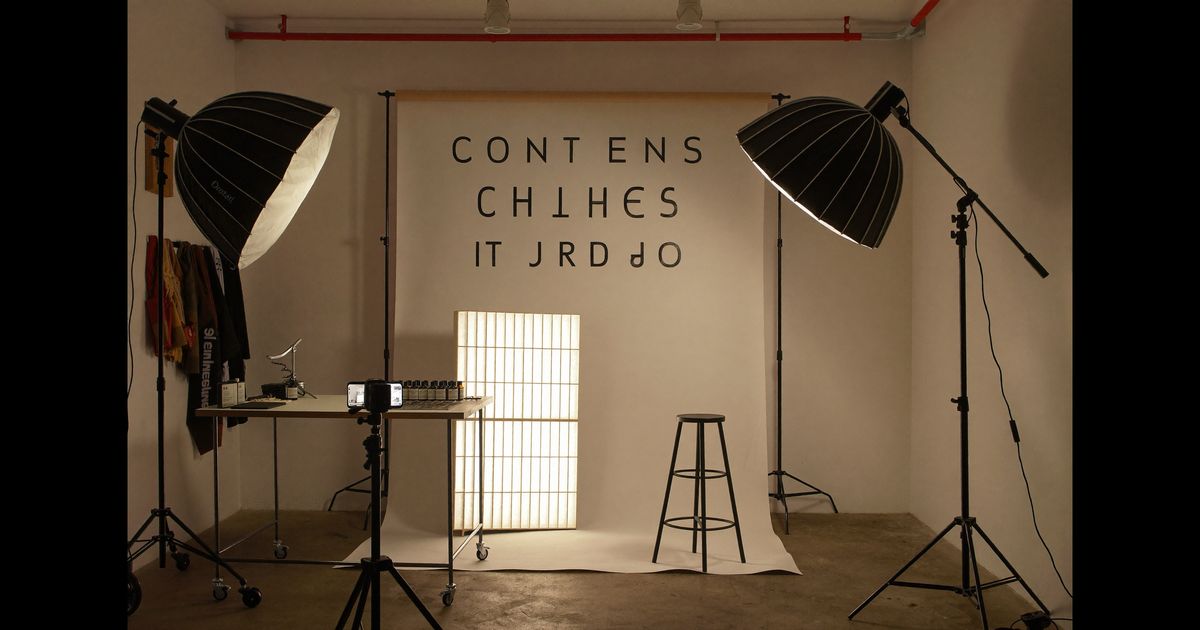
- Lighting: Natural light from a window (not backlit) or a single ring light placed at eye level. In cities like Chennai or Hyderabad where midday light is harsh, shoot between 7–9 AM or 5–7 PM. Colour temperature should be consistent throughout, switching from warm indoor to cool window light mid-clip signals an amateur edit to brand reviewers.
- Background: Clean or intentionally styled. A cluttered background reads as low-investment to a media buyer. We have seen clips rejected specifically because a brand's competitor's product was visible on a shelf behind the creator, an obvious liability for a paid ad.
- Audio: Record in a small, soft-furnished room (bedroom, walk-in wardrobe) rather than an open living room. The reverb in large tiled spaces, common in Indian apartments, makes voice-overs sound like they were recorded in a bathroom and gets flagged in Snapchat's automated audio quality check.
- Subtitles: Always burn in Hindi or English subtitles (or both, in 70% opacity white with a black stroke) for the first 10 seconds. Brands targeting multilingual markets in Maharashtra, Karnataka, or Tamil Nadu increasingly require this as a condition of the license agreement.
Pricing Your Clip: What the Market Actually Pays in India
License fees in the Indian market are lower than US benchmarks but have risen sharply since 2023 as D2C brands have moved budget from static to video creative. Current realistic ranges:
- 30-day single-platform usage (Snapchat only): Rs.5,000–Rs.10,000 for a creator with under 10,000 followers. Rs.12,000–Rs.20,000 for 10K–50K.
- 90-day multi-platform (Snapchat + Meta): Rs.15,000–Rs.35,000, depending on category. Beauty and personal care command the upper end; SaaS and fintech tend to pay 20–30% less for the same duration.
- Perpetual license (unlimited usage, no expiry): Rs.40,000–Rs.80,000 is the range we see for a genuinely strong clip. Perpetual licenses are rarely offered speculatively, a brand typically upgrades from a 90-day agreement after the clip has proven performance.
- Usage rights for paid amplification (whitelisting): This is an add-on charge of Rs.8,000–Rs.15,000 on top of the base license. Whitelisting allows the brand to run paid ads from the creator's Snapchat account directly, which tends to deliver 15–25% lower CPMs than ads run from the brand's own account.
Always sign a written license agreement, even for short-term usage, that specifies the platform, duration, exclusivity terms, and whether the brand can alter the clip (add text overlays, cut the duration, dub in a different language). A verbal agreement has no standing if the brand runs your content beyond the agreed window.
Getting Your Clips in Front of Brand Buyers
Most licensing opportunities do not come from creators pitching brands cold. They come through structured brief pipelines. Practical routes for Indian creators:
- Register on Snapchat's Creator Marketplace: Available to creators with 1,000+ Snap subscribers. Brands search this directory when sourcing UGC for specific categories, languages, and audience demographics.
- UGC agencies and production briefs: Agencies aggregate creator talent and deliver licensed clips at scale to brand clients. Working with an agency means predictable brief delivery, faster payment cycles (typically 7–15 days post-delivery versus 30–60 days when dealing directly with brand procurement teams), and feedback on technical specs before you shoot.
- Portfolio hygiene: Maintain a shareable drive folder of your best clips in their original resolution, not Snapchat-compressed exports. Include a one-page rate card with your licensing tiers in INR. Brands shortlist creators faster when pricing and specs are immediately visible.
- Category specialisation: Creators who build a body of clips in one vertical (skincare, kitchen appliances, EdTech apps) get repeat briefs. Generalist creators compete on price; specialists compete on category expertise and audience trust.
If you are building your portfolio and want access to paid brand briefs across Snapchat, Instagram, and YouTube Shorts, speak to our team, we work with creators across India and match them to brand campaigns that fit their niche and production setup.