Most LinkedIn content from Indian D2C and SaaS brands looks the same: a polished carousel, a thought-leadership post, maybe a founder quote on a cream background. Then a creator posts a 90-second vertical video showing a chaotic packing station in a Bengaluru warehouse, workers joking in Kannada, boxes stacked floor to ceiling, and the post pulls 40,000 impressions organically. The brand's marketing head DMs the creator within 24 hours asking: can we license this?
That scenario plays out in our production queue more often than you'd expect. LinkedIn's algorithm increasingly favors native video, and behind-the-scenes (BTS) content sits at the intersection of authentic storytelling and professional credibility, a combination that performs on this platform in ways it simply doesn't on Instagram Reels or YouTube Shorts. But creating BTS that a brand actually wants to pay to license, versus BTS that just generates likes, requires a specific production discipline. Here is how we approach it.
Understand Why LinkedIn BTS Is Different From Other Platforms
LinkedIn's audience is in a professional headspace. They are not scrolling to be entertained at midnight, they are looking for signal: business lessons, proof of craft, evidence of scale, or human texture behind a company. BTS content that works on this platform tends to carry an implicit business narrative. It is not just "look how we pack orders", it is "look at the operational sophistication behind your delivery experience."
This matters for licensing because brand procurement teams and marketing managers are the ones approving licensed content on LinkedIn. They need to feel proud showing it to their CEO or their sales team. The bar is higher than TikTok-style raw footage. At the same time, over-produced content collapses the authenticity signal entirely. The sweet spot is structured spontaneity: real environments, real people, real moments, but shot with deliberate framing, good ambient audio, and a throughline that carries a business idea.
The Brief We Give Creators Before a BTS Shoot
We brief creators to arrive at a shoot location, a fulfillment center in Bhiwandi, a design studio in Hauz Khas, a cold-press kitchen in Hyderabad, with three things pre-defined:
- The professional insight the viewer should leave with. Not "we work hard." Something more specific: "how we maintain cold-chain integrity on last-mile deliveries in June heat" or "how a two-person Pune team quality-checks 300 SKUs a day without dedicated QC software." That single insight anchors the edit and makes the video licensable as thought leadership.
- One genuine moment of difficulty or tension. A batch that had to be redone, a tool that broke, a step that looks inefficient on purpose because faster alternatives compromise quality. Without friction, BTS reads as a PR video. With friction, it reads as honest content a brand can stand behind under ASCI guidelines, because it is true.
- One human face who can speak naturally, not to camera. Not a spokesperson, not someone doing a to-camera testimonial. Someone who is doing the actual work and can answer one question mid-task. This is the difference between content a brand licenses and content a brand thanks you for but passes on.
Technical Setup That Keeps Costs Within Licensing Budgets
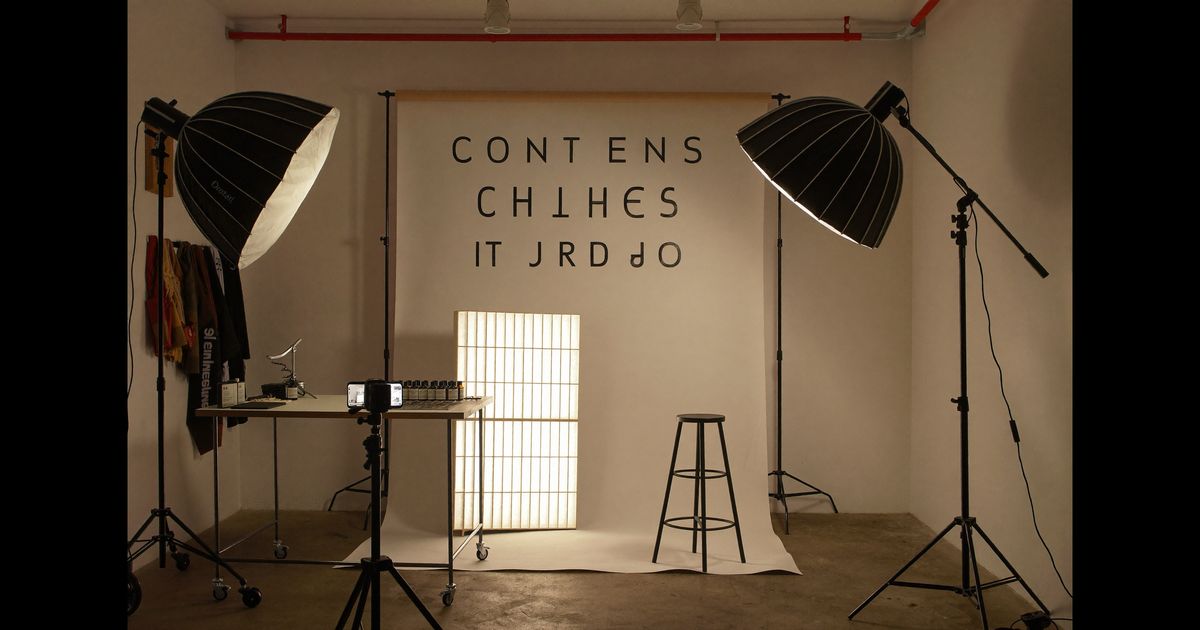
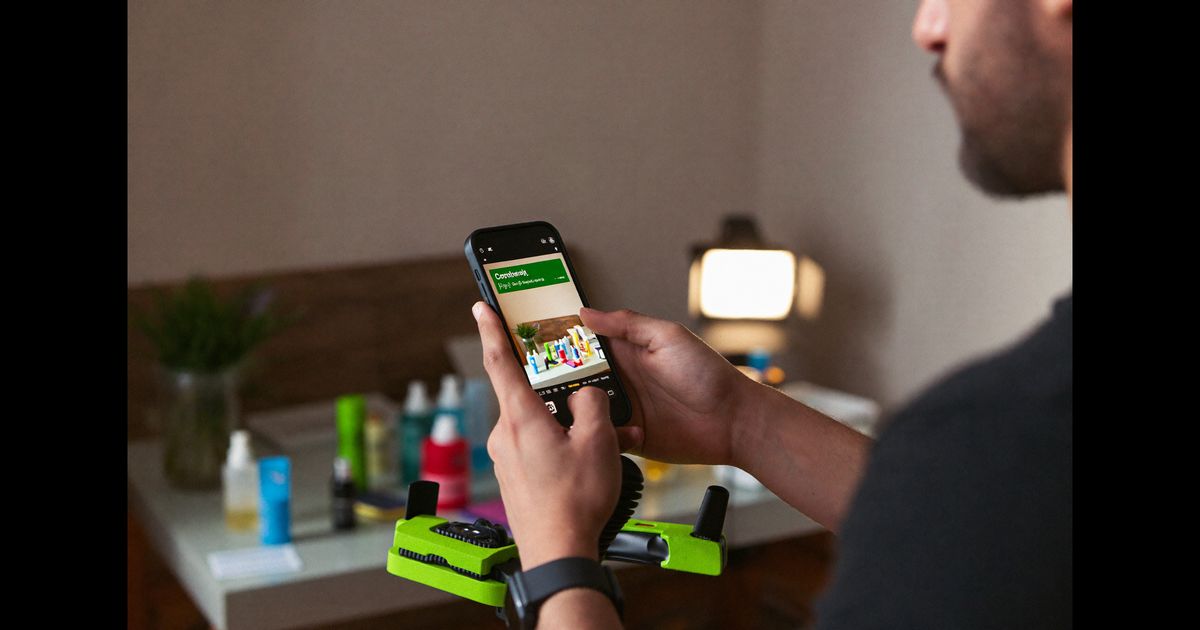
LinkedIn native video plays in the feed at a 1:1 or 4:5 ratio on mobile and 16:9 on desktop. We shoot everything at 4:5 to maximize mobile real estate, which is where 70%+ of Indian LinkedIn usage happens. For BTS specifically, we use a two-device approach: one camera operator handling primary coverage, one creator holding a second phone for incidental POV shots, hands unboxing, a close-up of a label, a quick pan of a stockroom. The POV footage is what makes the final cut feel unscripted.
Audio is where most BTS fails. Ambient factory or kitchen noise is not a problem, it actually adds texture, but the person speaking needs to be audible over it. We use a Rs.3,500–5,000 clip-on lavalier mic (Boya or Hollyland) connected to whichever device is doing primary capture. Total additional gear cost for a half-day BTS shoot: under Rs.8,000 including a small LED panel for darker warehouses. This keeps the production cost low enough that licensing fees, typically Rs.12,000–25,000 per video for LinkedIn usage rights, remain attractive to mid-market brands.
What Makes a BTS Video Licensable Versus Just Shareable
Creators often conflate viral reach with licensing value. They are not the same. A video can get 80,000 organic impressions on a creator's personal LinkedIn and still be unlicensable because it contains elements a brand cannot legally or reputationally attach themselves to. We have seen this repeatedly in production, and it shapes every brief we write.
Specific things that kill licensability:
- Competitor products visible in background. A BTS shoot at a skincare brand's lab where a rival's packaging is sitting on a shelf is immediately unusable. We do a quick location scout and remove or obscure competitive artifacts before rolling.
- Unlicensed music or third-party brand logos. LinkedIn's own ad policies and ASCI's guidelines both require that licensed content does not carry third-party IP without clearance. We use only royalty-free tracks (Artlist or Epidemic Sound subscriptions cover this) or no music at all, ambient sound often works better anyway.
- Claims that cannot be substantiated. If a creator says on camera "we use 100% organic ingredients," the brand must be able to prove it. ASCI's 2023 influencer guidelines (applicable to paid amplification of creator content) require that factual claims in sponsored content be truthful and capable of substantiation. We flag any such claims in the edit before delivering to client review.
- Staff who haven't signed release forms. This sounds obvious but is skipped constantly on informal shoots. We carry a one-page consent form in Hindi and English that covers image rights for commercial use. Without it, a brand's legal team will kill the license.
The LinkedIn-Specific Edit: Duration, Caption Strategy, and Native Upload
LinkedIn's algorithm penalizes external links in the caption, a well-known quirk that forces a different content strategy than Instagram. For BTS videos, the caption is where the business insight lives in full. The video hooks attention; the caption delivers the payoff. A BTS clip from a Jaipur block-printing workshop might be 75 seconds of visual texture and ambient sound, with a 200-word caption explaining why handmade block prints take 4x longer per meter than screen printing and why that matters for a brand's pricing story.
On duration: LinkedIn's internal data (published in their 2024 video creator resources) shows videos between 1–2 minutes perform best for reach on Indian professional audiences. We cut BTS to 60–90 seconds for feed posts, then retain a longer 3–4 minute version for the brand to use in their own content or pitch decks, that longer cut is often what pushes a brand to pay the licensing fee because it has utility beyond social posts.
Upload natively. Always. A video uploaded directly to LinkedIn gets significantly higher organic distribution than a YouTube or Vimeo link. We deliver all licensed content as MP4 files (H.264, up to 5GB) with captions as a separate .SRT file so the brand can customize them for their own audiences in Hindi, Tamil, or Marathi as needed.
Licensing Structure: How to Price and Protect Your Work
Most first-time creators undercharge on LinkedIn BTS licensing because they price based on follower count rather than content utility. LinkedIn BTS that documents a brand's operations or product process has evergreen value, a brand might use it in investor decks, sales enablement materials, and LinkedIn ads running for 6–12 months. That usage profile justifies different pricing than a one-time Instagram Reel.
A practical pricing framework for Indian creators:
- Organic post only (30 days): Rs.8,000–15,000 depending on creator profile strength
- Paid LinkedIn amplification rights (90 days): Rs.18,000–30,000, this is the tier most brands actually want
- Full buyout (12 months, all platforms, paid and organic): Rs.35,000–60,000 for an established creator with 5,000+ LinkedIn followers in a relevant niche
Protect the work with a simple licensing agreement, not a WhatsApp voice note. Specify platforms, duration, whether the brand can modify the video (most brands will want to add their logo or a CTA), and whether the creator's name/handle remains visible. We use a three-page template we developed for our creator network that covers these points without needing a lawyer for standard deals under Rs.50,000.
The brands that come back for repeat licensing are invariably the ones who licensed content they could use across multiple internal touchpoints, not just a LinkedIn post. Structure your shoots and your agreements with that in mind from the start.
Building a Repeatable BTS Production System
The creators in our network who earn consistently from LinkedIn licensing are not the ones with the most followers, they are the ones who have a repeatable system. They have a shortlist of 8–10 businesses in their city (a Coimbatore textile mill, a Chennai cloud kitchen, a Pune logistics startup) who have agreed to periodic access in exchange for organic content. Each quarter they revisit these locations and capture what has changed: a new machine, a new team member, a process upgrade. This creates a library of licensable BTS that compounds over time.
They also maintain a simple shot list template, seven standard shots that travel to every BTS location: wide establishing shot, tight process detail, over-the-shoulder POV, one human face mid-task, product or output close-up, team interaction, and one imperfection that gets acknowledged. With those seven shots in every video, any editor can assemble a coherent 90-second BTS piece in under two hours.
If you are building this capability as a creator or exploring how to integrate BTS content production into your brand's LinkedIn strategy, our team works with both sides of that equation. Take a look at how we produce creator content for brands across India, or reach out if you want to discuss a brief.