Instagram Live viewership in India peaked at roughly 11.4 million concurrent viewers during the IPL 2024 season, according to Meta's internal publisher data, yet the vast majority of those streams disappeared within 24 hours because creators never saved them as licensable assets. That gap between reach and revenue is exactly where brand licensing money gets left on the table.
For creators who want brands to actively seek out their Live footage, and pay for the right to use it in ads, social content, and retail media, the benchmark numbers are clear: streams that hit certain structural and quality thresholds command licensing fees between Rs. 8,000 and Rs. 35,000 per clip for D2C and FMCG brands in India, based on what we see in our production briefs. This article breaks down precisely what drives those numbers and how to engineer your Live sessions to hit them consistently.
The Benchmarks Brands Actually Use to Evaluate Live Clips
When a brand's media team decides whether to license a Live clip, they are not watching it for entertainment. They are running it against an informal scorecard. Knowing that scorecard is the first step to hitting it.
- Peak concurrent viewers (PCV): Most mid-tier D2C brands in India set a minimum PCV of 200–400 for an organic Live clip to be worth licensing. Premium skincare and nutraceutical brands push this to 800+. A stream with 50 concurrent viewers and strong product commentary can still be licensed for testimonial use, but at a much lower fee (typically Rs. 3,000–6,000).
- Save and replay rate: Instagram allows creators to save a Live as a Reel or download the video file. Brands want clips where the save-to-view ratio is above 2%, meaning at least 2 in 100 live viewers cared enough to bookmark it. Streams with high save rates signal that the content is genuinely useful, not just reactive chatter.
- Comment density per minute (CDM): This is the number brands proxy for "energy." A CDM above 8–10 is considered high-engagement for a 20-minute stream. We brief creators to build a structured Q&A segment specifically to spike CDM in the middle third of the stream, which is the clip brands most often want to license.
- Audio clarity score: Not a formal metric, but brands consistently reject clips where ambient noise exceeds spoken audio. A ₹1,200 clip-on lavalier or a directional mic solves this; shooting in a bathroom or tiled kitchen without acoustic treatment does not.
- Brand mention placement: ASCI guidelines (updated 2023) require that paid or barter product integrations be disclosed in the Live session itself, not just in the caption. Clips with a clear, verbal "collab with [Brand]" disclosure in the first 90 seconds are licensable with zero legal friction. Undisclosed integrations get flagged during brand legal review and are often unusable even when the footage is excellent.
Stream Architecture: The 25-10-5 Framework
Most creators go Live without a script, which is fine for audience-building but terrible for producing licensable clips. A simple architectural framework, 25 minutes total, 10-minute core segment, 5-minute close, solves this without making the stream feel scripted.
- First 5 minutes (hook and ASCI disclosure): Welcome viewers, name the product or brand you are featuring, state the disclosure ("I'm doing this in collaboration with X brand, details in caption"). Keep it conversational. This segment is almost never licensed, its purpose is to set up what follows.
- Minutes 5–15 (the licensable core): This is where you do the demo, review, or experience segment. Real-use conditions matter here: if it is a skincare product, use it on camera with decent side lighting. If it is a food product, cook or taste it. If it is a SaaS tool, screencast from your phone. The goal is 3–4 natural sentences per feature that could stand alone as a 30–60 second clip. Do not read off a brand brief; say it the way you would explain it to a friend in Bengaluru or Pune who speaks Hindi and English interchangeably.
- Minutes 15–20 (Q&A spike): Ask your audience a question. "Tell me in comments, do you already use this or would you try it?" The comment surge in this window raises your CDM, which shows up in the metrics screenshot brands ask for before licensing.
- Final 5 minutes (close and CTA): Repeat the disclosure, share a link or discount code if agreed, thank viewers. Save the Live immediately when you end it, the "Save to Camera Roll" prompt is easy to dismiss and harder to recover after the fact.
Production Setup for a Licensable Live in India
Brand licensing teams in India, especially those running performance-first D2C labels out of Delhi NCR, Mumbai, and Bengaluru, increasingly ask for clips shot at a minimum of 1080p with stable framing. Instagram Live defaults to variable bitrate, which means your internet connection is the ceiling.
- Connection: Use 4G LTE or Wi-Fi with at least 8 Mbps upload. Run a speed test immediately before going Live. Airtel and Jio both support this in Tier-cities across India reliably; in Tier-cities across India, test from the specific room you plan to shoot in, not just your building.
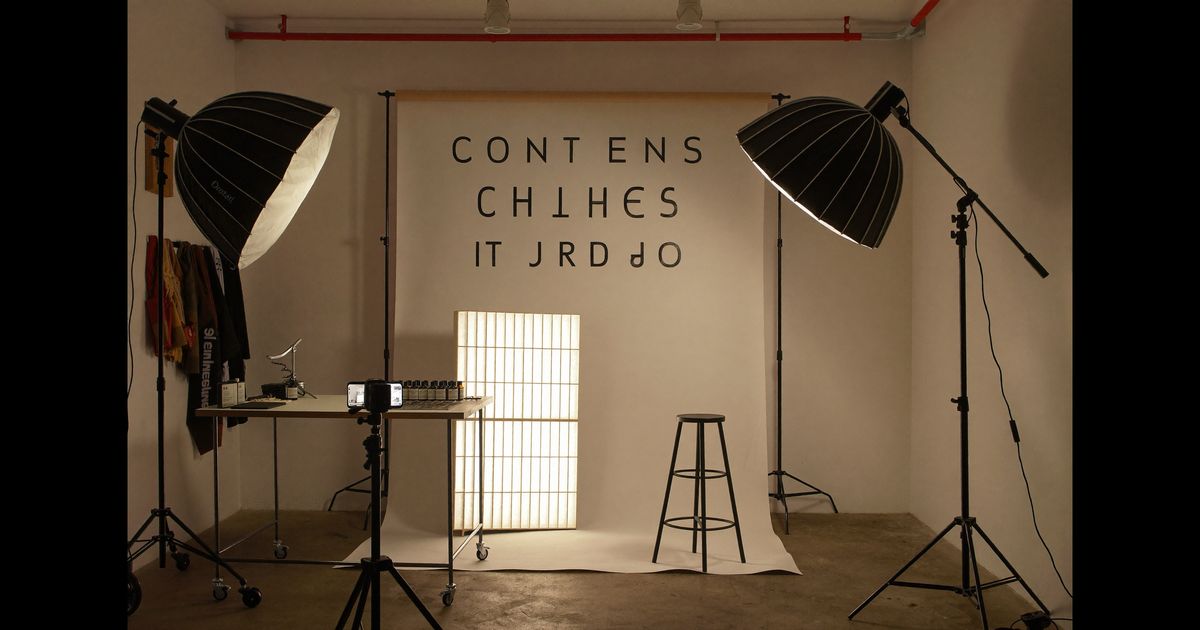
- Lighting: A single Rs. 1,500–2,500 ring light (18-inch, 5500K) placed at eye level eliminates the single most common rejection reason for Indian creator footage, harsh overhead or yellow incandescent lighting that makes skin tones look unnatural and products look unappealing. If you are shooting a product unboxing or demo, add a secondary fill light aimed at the product surface.
- Background: Plain white, soft grey, or a branded prop shelf all work. Cluttered home backgrounds with laundry or construction noise in the distance cost you licensing deals, we have seen brands specifically cite background quality as a rejection reason in written briefs.
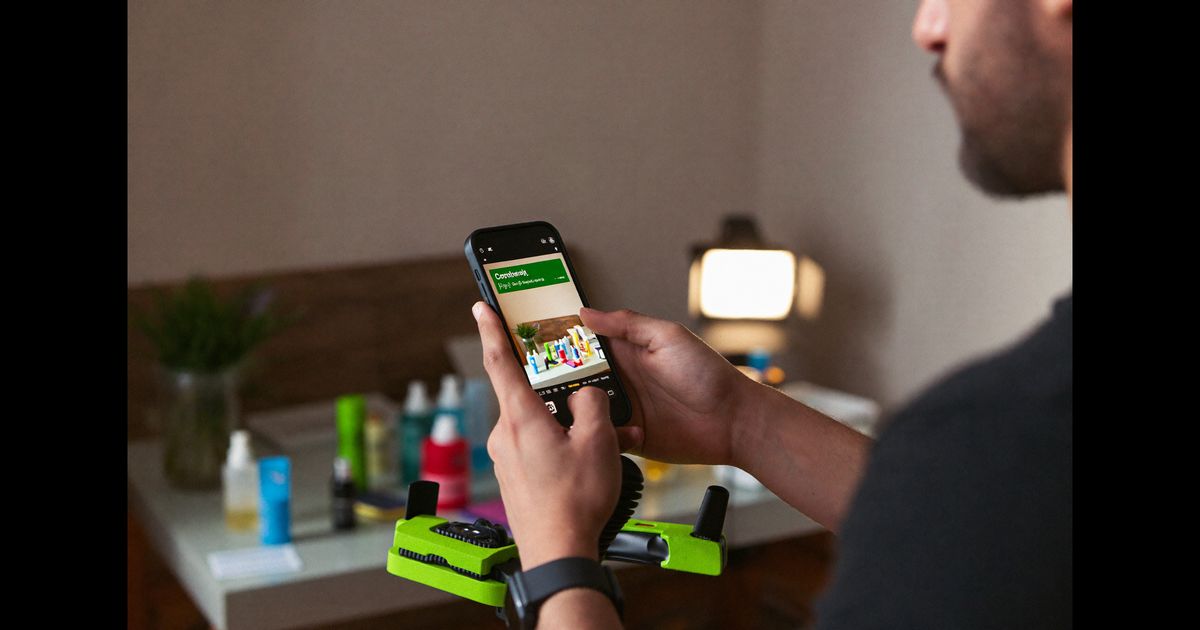
- Phone mount: A Rs. 800–1,200 tripod with phone clamp. The difference between handheld and mounted footage is the difference between a clip that looks user-generated in the wrong way versus one that feels authentic but professional.
Language and Audience Mix: What Brands in India Want
Here is a data point that surprises most creators: according to a 2024 survey of 120 D2C brand managers by Inc42, 67% said they prefer Hinglish Live content over pure English or pure Hindi for licensing in pan-India campaigns. Pure regional language content (Tamil, Bengali, Kannada, etc.) is highly valued for regional campaigns but commands a narrower licensing window because fewer brands can use it across markets.
The practical implication is this: if you want maximum licensing optionality, anchor your Live in Hinglish, Hindi sentence structure with English product terminology. Reserve pure regional language streams for brands that are explicitly targeting that market, and negotiate the licensing fee accordingly. A Tamil-language Live stream demoing a Chennai-headquartered skincare brand is extremely licensable for that brand's regional campaigns; it is less useful to a Bengaluru-based brand running national Meta ads.
"The clips we license most often are the ones where the creator clearly knows the product, not just the talking points but the texture, the smell, the real experience. That specificity is what makes paid media feel non-paid."
- Brand manager, mid-tier Ayurvedic skincare label, Bengaluru (shared in creator feedback session)
Saving, Clipping, and Delivering a Licensable Asset
Going Live without a post-production plan is like cooking a meal and not plating it. The licensing opportunity exists only if the footage is in a form the brand can use.
- Save to camera roll immediately: Instagram saves Lives at their broadcast resolution, do this before ending the session or from the Live archive within 30 days.
- Clip the core segment: Use CapCut (free, widely used across India) to trim the 5–10 minute core segment into a standalone clip. Export at 1080p, 30fps. Add captions using CapCut's auto-caption feature and correct any Hindi or brand name errors manually, brands will ask for captioned versions because Meta's ad placement increasingly requires them for muted-autoplay delivery.
- Create a metrics screenshot: Before the Live archive expires, screenshot your Instagram Insights showing PCV, total views, saves, comments, and reach. Brands will ask for this as proof of performance before signing a licensing agreement.
- Licensing rate card: Set your rates before a brand asks. A suggested starting structure for Indian creators with 10K–50K followers: Rs. 8,000 for a single-use 30-day organic post license; Rs. 15,000–20,000 for a 90-day paid amplification license; Rs. 25,000–35,000 for a perpetual license with paid media rights. Above 100K followers, multiply these by 1.5–2x. These are not ceiling figures, they are floor figures for quality clips that meet the benchmarks above.
Common Reasons Indian Brands Reject Live Clips (and How to Pre-empt Each)
In our production work, brand rejections of creator Live footage cluster into five recurring categories. Pre-empting them before you go Live is far more efficient than renegotiating after the fact.
- No ASCI disclosure on camera: Fix this in the first 90 seconds as described above. A caption disclosure alone does not satisfy ASCI 2023 guidelines for paid partnerships.
- Competitor product visible in background: Clear your shoot space. A rival brand's bottle or package in the background is an automatic reject, even if the clip is otherwise excellent, the brand's legal team will not approve it.
- Unverifiable performance metrics: If you cannot share Insights screenshots, the brand cannot justify the licensing fee internally. Archive your metrics proactively.
- Clip too long for ad formats: Brands need 15s, 30s, and 60s cuts. Deliver pre-trimmed versions at each length from your source footage. Do not make the brand's editor do this work, the friction alone causes deals to stall.
- Audio levels uneven between creator speech and background music: If you played background music during the Live, it will be flagged by Meta's Rights Manager when the brand tries to boost the clip as an ad. Either go music-free or use royalty-free tracks from Instagram's built-in audio library, which are cleared for paid promotion.
If you are a creator who wants to build a consistent pipeline of brand licensing deals, or a brand looking for Live content that is already production-ready and metrics-verified, talk to our team at The UGC Agency. We match brands with creators who have already been briefed on these benchmarks, which cuts the licensing negotiation cycle from weeks to days.