A thirty-second Facebook video of someone holding a bottle of face wash and saying "it's nice" will never get licensed. Brands pay to use creator content when it does a specific job, it has to replace something a paid studio shoot would cost them lakhs to produce. Understanding that one shift in perspective is the real starting point for making review videos worth licensing.
Facebook Reviews, as a content type, sit in a particular sweet spot on the platform. They live on the creator's personal profile or a public Facebook page, they accumulate real reactions and comments, and they travel natively into Meta's ad ecosystem. When a brand picks up the licensing rights, they can run the exact video as a Facebook or Instagram ad without re-editing it. That means your video needs to function as both authentic user content and a performance-ready advertisement, often at the same time.
What "Licensing" Actually Means on Meta's Platform
Before you record a single frame, it helps to understand the mechanics. When a brand licenses your Facebook Review, they are typically using Meta's Creator Licensing or Partnership Ads feature (previously called Branded Content). This allows the brand to run your video from your handle as a boosted ad, or pull it into their own ad account and run it with paid spend behind it.
From a practical standpoint, this means:
- Your video will be shown to audiences who don't follow you, often lakhs of cold-traffic users in cities like Mumbai, Bengaluru, Hyderabad, or Jaipur.
- The brand's media buyer will be watching your video's hook rate (what percentage of viewers watch beyond three seconds) and completion rate. These numbers determine whether they spend more money on your video or pause it.
- ASCI guidelines and Meta's ad policies both apply. Under ASCI rules, paid promotions must be disclosed using hashtags like #ad or #sponsored, this applies even on Facebook. Brands cannot ask you to hide the commercial relationship.
Knowing this changes how you approach every review. You are not writing for your existing followers. You are producing a short-form performance asset for strangers.
The Structure That Actually Gets Licensed
Most unlicensed review videos fail in the first four seconds. The creator holds up the product, says their name, and explains what the product is. By the time they get to the opinion, half the audience has already scrolled away.
A licensable Facebook Review follows a different rhythm. Think of it in three beats:
- The problem hook (0–4 seconds): Lead with the problem, not the product. "My skin was breaking out every time the Mumbai humidity hit" or "I've tried five different protein powders and every single one tasted like chalk mixed with regret", these are hooks because they are specific and the viewer immediately checks if they share the problem.
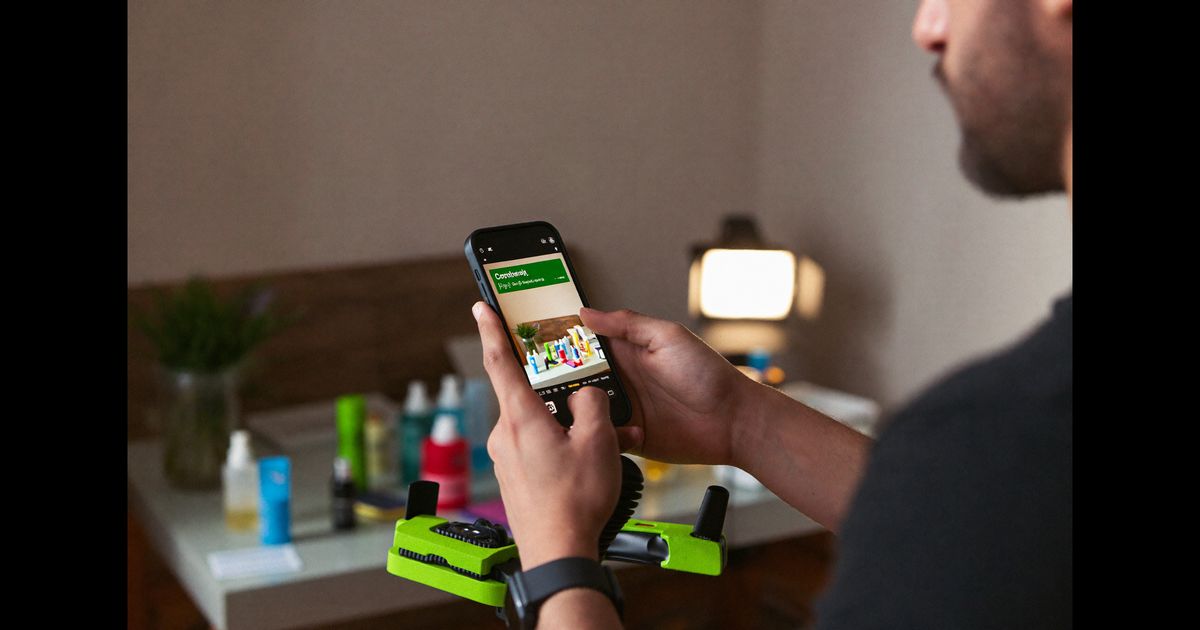
- The transformation moment (5–25 seconds): Show the product in real, imperfect use. On a table, in natural light from a window, being applied, being consumed. Not held up like a model on a plinth. Brands in the skincare, FMCG, and D2C nutraceuticals space, which make up a significant portion of licensing demand in India, want to see the product being actively used. Say what changed, specifically: "my redness was noticeably down in about a week" is more useful than "my skin is better now."
- The call-to-action close (26–30 seconds): Don't force a scripted "link in bio." A natural close sounds like: "If you have the same issue, it's honestly worth trying once." This is soft enough to feel genuine and specific enough to guide an interested viewer.
Thirty seconds is a reliable target length. Sixty-second versions work for more considered purchases (supplements, SaaS tools, baby products), but most FMCG and beauty brands on Facebook want shorter cuts for ads.
Technical Basics That Non-Negotiable for Ad Use
Brands will not license a video that needs re-editing before it can run as an ad. This is a common reason videos get passed over, even when the content itself is good.
- Aspect ratio: Shoot in 9:16 vertical (portrait mode on your phone). Facebook and Instagram both run vertical placements natively, and ads shot in 16:9 landscape lose significant screen real estate on mobile.
- Clean audio: Record in a quiet room, early morning before ambient noise builds up. A lapel mic costing Rs.800–Rs.1,500 from Amazon India eliminates almost all echo problems. Do not record near a fan or AC unit.
- No background music you don't own: If your video has a Bollywood track or any copyrighted music playing in the background, brands cannot legally license it for paid ads. Use royalty-free music from platforms like Pixabay Audio or Uppbeat, or record without music entirely. Many of the most effective review videos run with no background track.
- Stable framing: Use a tripod or prop your phone against a stack of books. Shaky handheld footage that works on casual Stories does not work in an ad context, viewers lose trust in the product when the video looks accidental.
- Text-safe zones: Leave the top 15% and bottom 20% of your frame free from your face or key product moments. Brands may need to overlay their logo, a discount code, or a "Shop Now" button in the ad version.
Language, Tone, and Regional Context
India's licensing market is not a single audience. Brands running Facebook ads in Tamil Nadu want different content from brands targeting Tier-cities across India in UP. If you speak a regional language fluently, this is not a limitation, it is a specific capability that commands a premium.
Hindi-language review content is the highest-demand category by volume, but Tamil, Telugu, Kannada, Malayalam, Bengali, and Marathi all have active demand from brands selling into those linguistic markets. We brief creators on multi-language deliverables precisely because a single English review cannot serve a campaign targeting Coimbatore and Lucknow simultaneously.
On tone: Facebook's audience skews slightly older than Instagram Reels viewers. Reviews for Facebook specifically should sound considered and honest rather than hype-driven. Phrases like "I was genuinely surprised" or "I'll be honest, I wasn't expecting much" tend to perform better than "Oh my god, this is literally the best thing ever." The latter reads as scripted to a Facebook audience and drives ad fatigue faster.
One pattern we see consistently across licensed content: the reviews that get renewed for multiple campaigns are the ones where the creator sounds like they are talking to a friend, not performing for an algorithm.
Pricing Your Review Content for Licensing
If you are new to content licensing, the numbers can feel confusing because you are essentially selling usage rights, not just your time. Here is a simple mental model for the Indian market:
- One-time organic use (brand reposts your video on their page): Rs.2,000–Rs.5,000 for nano creators (under 10,000 followers), Rs.5,000–Rs.15,000 for micro creators.
- Paid ad licensing, 30 days: Add a 50–100% premium on top of organic rates. A video running as a Facebook ad is doing commercial work; it should be priced accordingly.
- Paid ad licensing, 90 days or perpetual: For D2C brands that want evergreen ad assets, Rs.8,000–Rs.25,000 per video is realistic at the nano/micro tier. Larger consumer brands routinely budget Rs.50,per creator video for perpetual licensing when the content performs well in testing.
Always specify licensing terms in writing before you shoot. A simple WhatsApp message confirming "this video can be used as a paid Facebook/Instagram ad for 60 days" protects both parties and is standard practice even for informal brand deals in India.
Getting Found by Brands Who License
Most first-time creators wait to be discovered. That is not a strategy. Brands that license UGC content at scale, particularly D2C brands in beauty, health, and home care, are actively looking for creators who can demonstrate they understand the ad format.
Practical steps that work in the Indian market:
- Post two or three spec review videos (made without a brand deal) of products you already use. This gives brands something to evaluate. A good spec video of a skincare product you bought yourself is worth more than no portfolio at all.
- List your work on Indian creator marketplaces like Plixxo, OPA (One Plus Agency), or Winkl. These platforms specifically surface creators to brand marketing teams running Meta campaigns.
- In your outreach emails, explicitly mention that your videos are shot in ad-ready format, 9:16, clean audio, no copyrighted music, and are available for paid ad licensing. Most brands assume they will need to re-edit creator content; telling them upfront that yours is ready to run saves them a step.
- If you speak a regional language, lead with it. "I produce Facebook review content in Tamil, optimized for Meta ad placement" is a more specific, more valuable pitch than a generic "lifestyle creator" bio.
Building a licensed content portfolio takes a few months of consistent work, but the economics shift significantly once brands see repeat ad performance from your videos. If you want to get into this side of content production properly, with access to real brand briefs, structured feedback on your videos, and introductions to marketing teams actively licensing creator content, the consultation process at The UGC Agency is a direct route in. The briefs we work with are built specifically for Facebook ad use, which means the content you create goes to work immediately rather than sitting in a brand's content library.