A brand manager at a Bengaluru skincare label once told us she licensed 11 UGC carousels in a single quarter, and every one of them followed the same structural logic, almost by accident. That pattern is not an accident anymore. Facebook carousel ads remain one of Meta's highest-ROI formats for D2C brands because each swipeable card carries its own hook, its own proof, and its own CTA. If you are a UGC creator, understanding how to build carousels that brand teams actually want to license is the difference between a one-off payment and a steady licensing income.
This guide walks you through the full process, from pre-shoot planning to card sequencing to the compliance details that Indian brand managers will check before cutting a purchase order.
Understand What a Brand Needs From a Carousel
Before you film a single frame, internalise the brand's use-case. Facebook carousels are used for two dominant objectives in the Indian D2C space: product education (how a face serum works, what makes a supplement different from a pharmacy brand) and social proof stacks (multiple real-person testimonials in one scrollable unit). Each card must earn its swipe.
When a brand licenses a carousel, their media buyer needs:
- Card 1, a thumb-stopping visual or claim that performs as a standalone image ad if Meta trims the carousel to one card in low-budget placements.
- Cards 2–4, progressive benefit or proof delivery. Each must make sense if a viewer enters mid-carousel (Meta's algorithm does not always serve card 1 first).
- Final card, a clear call-to-action. For Indian audiences, "Shop Now" with an INR price point consistently outperforms vague "Learn More" copy.
- Loose crop room, every card must have at least 15% visual buffer on all sides so the brand's design team can add text overlays without cropping your face or the product.
Plan Your Cards Before You Shoot, Not After
Most creators make one critical mistake: they shoot a long video and chop stills from it. Brand-ready carousel cards need to be composed individually, not extracted. Here is the pre-production checklist we brief creators on before a carousel shoot:
- Write a card map. A five-card carousel has five distinct story beats. Write one sentence per card before you pick up the phone. For example, a card map for an ayurvedic hair oil might read: (1) Problem hook, oily scalp after one day; (2) Ingredient close-up, cold-pressed bhringraj; (3) Application demo, fingertip section technique; (4) Day-3 result, visual comparison; (5) Price anchor + CTA, "₹349 on the brand website."
- Shoot in 1:1 square or 4:5 portrait. Facebook carousel cards display at 1:1 for feed and 4:5 on mobile placements. Shoot all cards in the same aspect ratio so the brand's design team does not have to reframe inconsistently.
- Keep your background consistent. Swapping from a white wall to a kitchen mid-carousel signals "unplanned shoot" to a media buyer. Pick one environment and stay in it, unless the card map explicitly calls for a scene change (e.g., a before/after location shift).
- Capture one clean static and one micro-motion version of each card. Animated carousels (using short looping clips per card) are increasingly favoured by Meta's algorithm. Deliver both options so the brand can A/B test.
Write on-Camera Copy That Survives ASCI Review
Indian brands licensing UGC for paid Facebook ads must comply with ASCI (Advertising Standards Council of India) guidelines. If your on-camera script includes claims the brand cannot substantiate, they will not use the content, or they will face a complaint. Common triggers to avoid:
- Superlatives without qualification: "India's best moisturiser" requires documented market data. Say "one of my favourite moisturisers" instead.
- Medical or health claims: "cures acne" is prohibited. "Visibly reduced my breakouts in four weeks" is permissible as a personal experience claim.
- Before/after imagery: ASCI allows it, but the brand must retain proof of the genuine result. If you are doing a hair or skin transformation card, disclose the timeframe clearly on screen, "12-week result", so the brand has your stated disclosure as part of the asset.
- Influencer disclosure: even in licensed UGC (where you are technically a creator-for-hire rather than an organic influencer), the brand will add "#Ad" or "Paid Partnership" as per ASCI's 2021 influencer guidelines. Make sure your script does not say "I am not paid to say this", it puts the brand in a compliance bind.
A media buyer in Mumbai told us their in-house compliance team now runs a two-minute ASCI checklist on every UGC asset before approval. Creators who script within the guardrails from day one almost always get reorders; those who require heavy post-shoot re-scripting rarely get a second brief.
Lighting and Audio Specifics for Multi-Card Consistency
A carousel that changes white balance between card 3 and card 4 will be rejected at the design review stage, it looks like multiple creators shot it on different days. Practical rules:
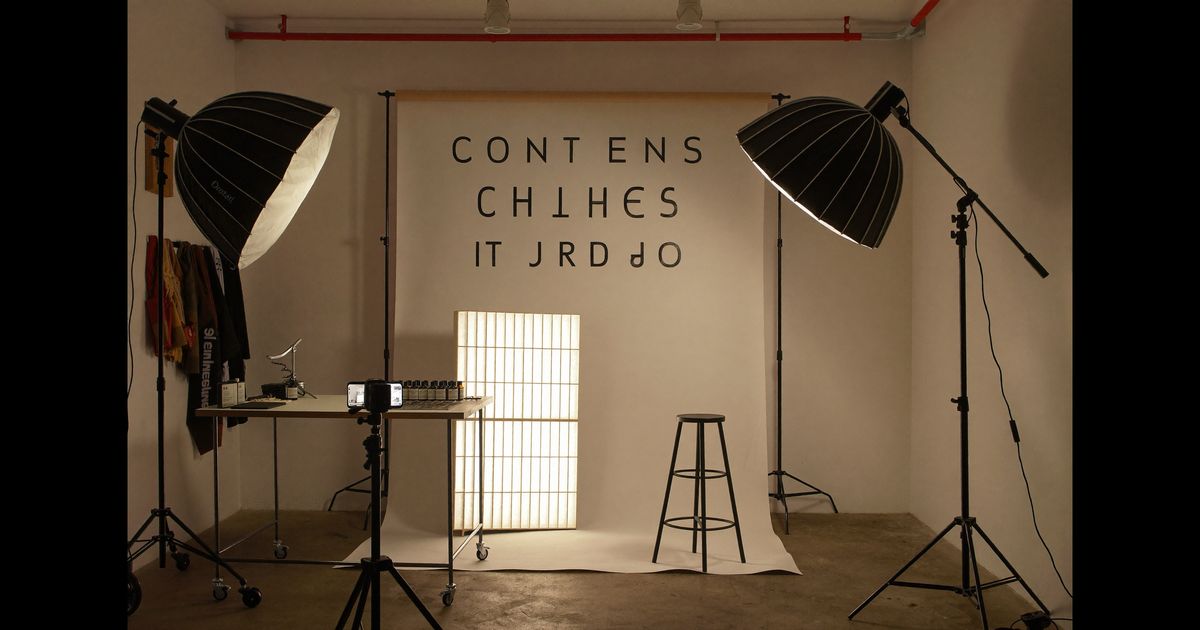
- Lock your light source. Shoot all cards in a single session under the same natural light window or your same ring-light setup. If you shoot across two days, reshoot card 1 to match the new lighting rather than delivering mismatched cards.
- Colour temperature consistency. In Indian homes, tube lights and LED panels often clash. Use a daylight-balanced LED panel (5600K) as your key and switch off room lights during the shoot. Cities like Chennai and Kolkata often have warmer ambient indoor light, a cheap daylight bulb in a desk lamp is enough to correct this.
- Audio for video cards. If any card includes a talking-head clip, ensure the audio is recorded on a wired lapel mic or a phone held close. Carousel ads autoplay muted on Facebook; captions must be legible on the card itself. Script short, punchy phrases (under 7 words) that work as visible on-screen text, not just spoken audio.
Deliver Files the Brand's Design Team Will Actually Use
Your creative work ends with the shoot. Your professional reputation is built in the delivery stage. Here is the standard delivery format that gets carousels licensed faster in the Indian market:
- Folder structure: Name each file with the card number and variant,
card-01-static.jpg,card-01-motion.mp4,card-02-static.jpg, and so on. Brands working with multiple UGC creators receive dozens of assets; a clear naming convention puts yours at the top of the review pile. - Resolution: Static cards at minimum 1080×1080 px (1:1) or 1080×1350 px (4:5), JPEG at 90% quality. Video cards at 1080p, H.264 encoded, under 4 GB per clip (Meta's hard limit is 4 GB but brand servers often struggle above 500 MB, keep video cards under 30 seconds and under 200 MB).
- Caption file: Include a plain-text
captions.txtwith the spoken line for each video card. Brands doing multilingual campaigns, Hindi for UP/Bihar, Tamil for TN/Kerala, Kannada for Karnataka, can quickly hand this to a translator. This small extra step significantly raises your licensability in regional campaigns. - Usage rights statement: A one-paragraph email or PDF stating: "I grant [Brand Name] a non-exclusive, worldwide licence to use the attached assets for Facebook and Instagram paid advertising for a period of 12 months from [date], with the option to renew." Keep it simple. Indian brand legal teams do not need a 20-page contract for a carousel set; they need a dated, signed statement.
Price Your Carousel Work for Repeat Licensing
In the Indian UGC market, a five-card carousel set (with both static and motion variants, plus caption file) from a mid-tier creator typically ranges from ₹8,000 to ₹18,000 for initial production. Licensing fees are separate and are often quoted as a 6-month or 12-month rate. A realistic licensing bracket for a D2C brand spending ₹2–5 lakh per month on Meta ads:
- 6-month licence (one platform, India only): ₹4,000–₹8,000 per carousel set
- 12-month licence (all Meta platforms, India only): ₹8,000–₹15,000 per carousel set
- Whitelisting add-on (brand runs the ad from your handle): add 30–50% to the base licence fee
Keep your production rate and your licensing rate separate on every invoice. Brands that see the two lines itemised understand what they are paying for and are far more likely to return for renewals, which, over 12 months, can triple your effective income per client.
Getting Your Carousel in Front of Brand Licensing Teams
Creating a great carousel set is table stakes. Getting it licensed requires you to be discoverable. Build a dedicated "carousel portfolio" page on your creator website or Notion profile that shows three to five completed carousel sets, each with the card map you used, the brand category it was built for, and the licence fee you charged. Indian brand managers browsing for UGC creators on LinkedIn or through agencies like ours explicitly shortlist creators who show past carousel work, not just Reels or talking-head testimonials.
Tag your carousel samples with the product categories you have shot: skincare, supplements, fashion, SaaS tools. A brand manager at a Pune-based athleisure label searching for "carousel UGC creator" should land on your work in seconds, not scroll through 40 Reels to find the one carousel buried in your grid.
If you want structured briefs, brand introductions, and a licensing framework that handles the paperwork automatically, see how The UGC Agency connects creators with Indian D2C brands, we run dedicated carousel campaigns for clients across categories and actively brief creators who meet our quality bar.