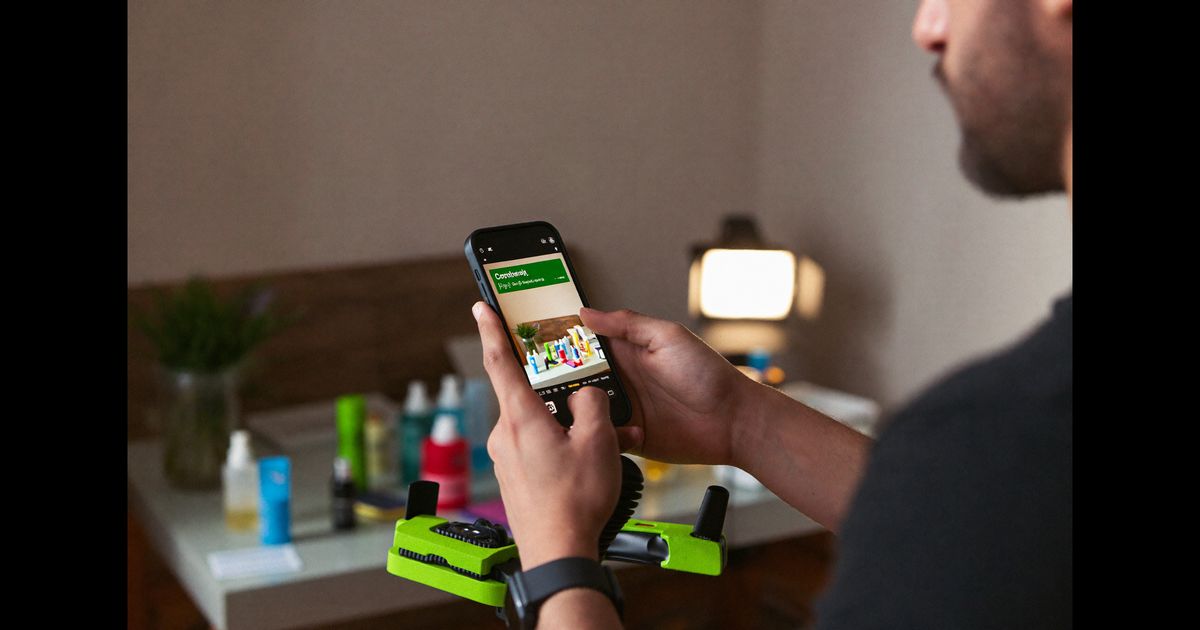
A Bengaluru-based skincare brand recently hired a full-time "creator manager," rented a 400 sq. ft. shoot space near Indiranagar, and signed twelve micro-creators on monthly retainers. Their agency-produced TV spots still run, but this parallel machine now generates 60–80 short-form videos per month, entirely in-house. If you have been noticing similar moves from D2C brands on Instagram and YouTube Shorts and wondering what is actually going on, this article explains it from the ground up.
We are going to cover what an in-house UGC studio is, why brands are building them, what it costs in Indian rupees, where the approach has real limits, and how to think about the decision if you are a brand marketer encountering this idea for the first time.
What "In-House UGC Studio" Actually Means
The phrase sounds more complicated than it is. A brand's in-house UGC setup has two parts:
- The studio: A dedicated physical space, sometimes a corner of a warehouse, sometimes a rented studio in Andheri or Sector 44 Gurgaon, fitted with good lighting, a neutral backdrop, product props, and a smartphone or mirrorless camera. No broadcast equipment needed. The entire setup can cost Rs. 80,000–1,50,000 one time.
- The creator network: A roster of freelance or retainer creators, real people who have audiences or at least convincing on-camera presence, who visit the studio (or shoot from home) and produce content on briefs the brand provides.
Together, these replace the one-off "shoot and pray" model, where a brand books a production house every quarter, with a content assembly line that runs week after week. The output looks like user-generated content (casual, first-person, authentic) but is planned, brief-driven, and brand-controlled.
Why Brands Are Actually Doing This Now
Three forces converged in the Indian market over the past two years to make this approach economically sensible for mid-size brands:
- Meta and Google's algorithm shift toward short-form native video. Reels on Instagram and Shorts on YouTube now routinely outperform polished brand videos in both organic reach and paid cost-per-result. A brand that needs 40+ creatives per month for A/B testing cannot afford a production house for each one.
- ASCI's influencer guidelines (effective 2021, updated guidance 2023) created compliance risk in outsourced influencer work. Under ASCI rules, every paid post must be clearly labelled "#Ad" or "#Sponsored" regardless of follower count. When a brand uses an external influencer agency, the chain of accountability for labelling is longer and harder to enforce. An in-house network, where creators are directly contracted and briefed, gives the brand a cleaner compliance paper trail.
- Creator costs in Tier 2 and Tier cities across India are far lower than in metros. A nano-creator in Jaipur, Coimbatore, or Indore with 8,000–25,000 followers on Instagram typically charges Rs. 3,000–8,000 per Reel. Brands that built networks across multiple cities can produce multilingual content (Hindi, Tamil, Telugu, Marathi, Kannada) at a blended cost that no single Mumbai-based creator could match.
What "Data-Driven" Looks Like in Practice
When brands describe their in-house UGC approach as "data-driven," they generally mean one or more of these three things, not a vague nod to analytics dashboards.
- Creative testing at volume. Meta's Ads Manager gives creative-level performance data: hook rate (how many people watched past 3 seconds), thumb-stop ratio, and cost-per-add-to-cart. Brands with an in-house creator network can test 8–12 hook variations per week and kill underperformers within 72 hours. An external production model, where each video costs Rs. 25,000–60,000, does not allow this cadence.
- Brief optimisation from past winners. Brands that have been running in-house programs for 6+ months typically build a "brief library", categorised by format (problem-agitation-solution, demo, before/after, testimonial-style) and by what worked in which language and city. New creators are briefed from proven templates, not from scratch.
- Audience-segment matching. A pet care brand in Delhi, for example, might have creators segmented by city-type (metro vs. Tier 2), pet type (dog vs. cat owners), and language. When they launch a new product, they can target specific audience segments with creators who mirror those demographics, which is a more precise match than running a generic influencer post.
In our production work, we have seen brands reduce cost-per-creative from Rs. 28,000 (production-house model) to under Rs. 6,000 (in-house creator network) within four months of setting up a proper brief system and creator roster. The quality gap, when briefs are tight, is minimal for performance-focused content.
The Real Costs: A Beginner's Breakdown
If you are a brand marketer evaluating this for the first time, here is an honest cost picture for a functional in-house setup in India:
- Studio setup (one-time): Rs. 80,000–2,00,000 depending on city and size. Bengaluru and Mumbai will cost more than Pune or Ahmedabad for equivalent rental. Key items: LED ring lights or softbox panels, a sturdy tripod, one Sony ZV-E10 or similar APS-C camera (Rs. 40,000–55,000), and a backdrop kit.
- Creator retainers (monthly): A roster of 6–10 creators on monthly retainers of Rs. 5,000–15,000 each (for 4–6 videos per month per creator) will cost Rs. 40,000–1,20,000/month. Nano and micro creators, not macro celebrities, are the workhorses of these networks.
- Creator manager or coordinator (monthly): Rs. 18,000–35,000 for a junior in-house role, or 15–20% of creator spend if outsourced to a UGC agency. This person handles briefs, approvals, scheduling, and the ASCI disclosure labelling.
- Editing and post-production: Rs. 500–1,500 per video for basic edit + captions + aspect-ratio cuts, often handled by a freelance editor on Upwork India or Kaam.com.
Total operating cost for a brand producing 40 videos per month: approximately Rs. 1,20,000–2,00,000/month, all-in. Compare that to a four-video quarterly brand film shoot that costs Rs. 3,00,000–5,00,000 and you begin to see the unit economics.
Where the In-House Model Has Real Limits
This is important for a beginner to understand, because the trend gets oversimplified in marketing Twitter threads. In-house UGC networks are not a universal solution.
- Discovery and reach are not the same as content production. A creator on retainer producing 5 Reels per month for your brand is not the same as an influencer with a large, trusted audience posting organically. In-house content is primarily a paid-ads asset, not an organic discovery channel. Brands that confuse the two end up disappointed.
- Compliance requires actual systems, not good intentions. ASCI guidelines require disclosure even on content posted from brand-owned accounts if it features paid creators. Without a documented brief-and-disclosure workflow, a brand is exposed, especially as ASCI has been increasingly monitoring Instagram and YouTube Shorts. A spreadsheet tracking every post's disclosure status is a minimum.
- Creator fatigue and brief drift are real. Creators on long retainers with a single brand tend to produce increasingly formulaic content after 3–4 months. Brands that do not rotate briefs, formats, and creators see performance decay. The management overhead of refreshing the network is underestimated by most brands starting out.
- Regional-language content needs regional creators. A Hindi-speaking creator in Noida cannot authentically produce Tamil content for an audience in Chennai, not just linguistically but in terms of cultural references, idioms, and relatable scenarios. Brands that build multilingual reach need to genuinely recruit in those language communities, which takes time.
How to Think About Starting One
If you are a brand marketer who has read this far and is wondering whether to start building an in-house setup, here is a simple decision filter:
- Are you already spending Rs. 1,00,000+ per month on Meta or Google performance ads and finding that creative refresh is your bottleneck? If yes, an in-house UGC network pays for itself quickly.
- Do you sell a product or service that benefits from demonstration, testimonial, or "day in my life" style content, i.e., anything in beauty, food, fitness, home, or D2C categories? UGC formats are natively suited to these categories.
- Do you have someone, internal or outsourced, who can manage briefs, creator relationships, and compliance tracking? Without this, a roster of creators produces inconsistent or non-compliant content.
If all three are true, building an in-house creator network is worth a 90-day pilot. Start with 4–5 creators, a clear brief template, and a defined performance metric (hook rate or cost-per-click on paid posts). Evaluate at the end of the pilot before scaling the roster.
If you want a faster path, an agency that already has a vetted creator roster, brief systems, and compliance workflows in place, exploring what a managed UGC program looks like is a sensible first step. You can see how we structure these programs, including pricing for different content volumes, on our pricing page.