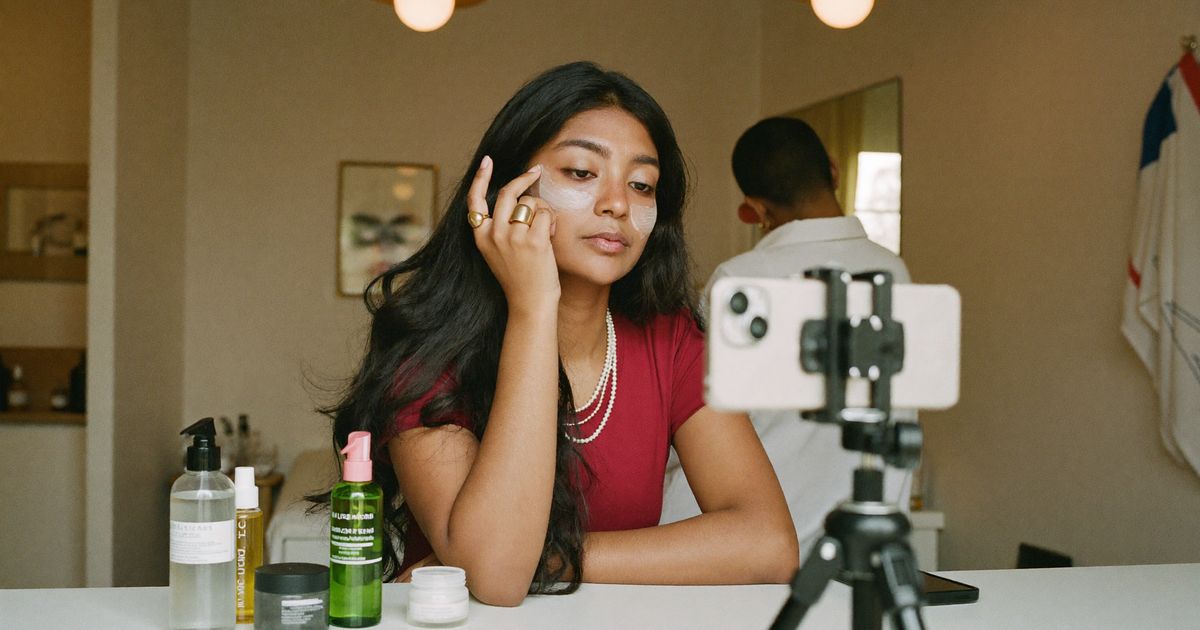
Skincare is now the most UGC-saturated category on Indian Instagram and YouTube Shorts, and that saturation is exactly the problem for brands that have been running creator programmes for more than a year. Your first batch of before-and-after videos got strong CPCs. Your second batch performed worse. Your third barely broke even. The issue is not the format; it is that your entire programme is still structured the way it was when UGC was new to your category. This playbook is for brands past that inflection point.
What follows is grounded in where Indian skincare UGC is heading in 2026, the formats gaining traction, the compliance shifts ASCI is enforcing, and the operational moves that separate programmes averaging 2–3x ROAS from those plateauing at 1.2x.
Move from Skin-Type Briefs to Skin-Concern Briefs
Most brands still brief creators by skin type: "oily skin," "dry skin," "combination skin." This segmentation made sense when you were building awareness. At scale, concern-based briefs outperform because they match search intent and scroll context far more precisely.
- Hyperpigmentation from sun exposure is the single highest-volume skincare search in Tier cities across India (Mumbai, Bengaluru, Chennai). A creator video titled "how I reduced sun tan from beach trips" converts 40–60% better in Meta cold audiences than a generic "vitamin C serum results" video.
- Post-acne marks in 20s pulls strongly on YouTube Shorts and Instagram Reels among college-aged audiences in Pune, Hyderabad, and Delhi NCR. The brief should specify the creator's age bracket, not just skin type.
- Bridal skin prep is a 90-day concern arc. For this segment, we brief creators to produce a 3-part series, 90 days out, 30 days out, wedding week, which gives brands retargeting assets at each stage rather than a single viral video that exhausts quickly.
The operational shift is small: add a "primary concern" field to your creator brief alongside the existing skin-type field. The content performance delta is substantial.
Regional Language UGC Is No Longer Optional at Scale
If your programme is running only Hindi and English content, you are functionally excluding roughly 40% of your addressable premium skincare audience. Tamil, Telugu, Kannada, and Bengali audiences on Instagram now have enough creator supply to staff serious programmes, and because fewer brands have activated this market, CPMs are 25–35% lower than equivalent Hindi Reels inventory.
- For Tamil Nadu audiences, creators in Chennai and Coimbatore who code-switch between Tamil and English tend to outperform pure-Tamil content for skincare because product ingredient claims (niacinamide, retinol, peptides) land better in English within an otherwise Tamil narrative.
- Bengali creators in Kolkata have built a niche around adda-style skincare content, conversational, unhurried, detailed, which suits higher-AOV serums and treatments being explained at length rather than quick transformation videos.
- Telugu content works especially well for clinical-adjacent skincare (dermatologist-recommended, SPF, acne treatment) because the creator ecosystem in Hyderabad skews toward educated, employed women 25–34 who distrust over-hyped results claims.
When we brief regional creators, we provide the claim language in English and ask creators to translate into their natural speech rather than script every word. Forced translations sound exactly like that.
ASCI Disclosure Is Now a Production Checkpoint, Not an Afterthought
ASCI's Influencer Guidelines (updated 2021, enforced more aggressively since 2023) require paid skincare promotions to carry a visible disclosure, #Ad, #Sponsored, or "Paid Partnership", that is legible for at least one-third of the video duration for embedded text, or spoken clearly at the start for audio. Brands that treat this as a creator's problem are accumulating compliance risk.
In our production workflow, disclosure verification is a line item on the QA checklist before any asset is approved for paid amplification. Missing or illegible disclosures are sent back for re-edit, not published and corrected later.
- For Instagram Reels used as paid ads, the native "Paid Partnership" label is not sufficient under ASCI guidance, the creator must also include a verbal or text disclosure within the video itself.
- Skincare claims that mention specific percentages ("reduces dark spots by 40%") require substantiation and are flagged under ASCI's misleading advertising guidelines. Brief creators to use outcome language ("my dark spots look noticeably lighter") rather than quantified claims unless you have clinical data you can share.
- Dermatologist-approved claims need the dermatologist on screen or in documentation. If you are passing the claim through a creator who is not a dermatologist, the claim must reference the source explicitly.
Brands running more than 20 creator activations per month should build a compliance checklist into their content management system or briefing tool, not rely on creator education alone.
The Format Ladder: Matching Asset Type to Funnel Stage
Mature UGC programmes fail when every asset is built for the same purpose. In skincare specifically, a full-funnel content ladder looks different from what most brands are producing.
- Top of funnel (cold audiences, Meta and YouTube): Problem-agitation videos, 30–45 seconds. A creator describes the problem, not the product, in vivid, relatable terms. "This is what my skin looks like in Delhi winters" works better than "I tried this moisturiser." The product appears in the last 8–10 seconds.
- Middle of funnel (retargeting warm audiences): Detailed how-to and routine integration videos, 60–90 seconds on Reels or YouTube Shorts. Show exactly where the product sits in a 5-step routine, including what it is layered under and over. This addresses the "how do I use this" objection that kills conversions on skincare PDPs.
- Bottom of funnel (cart abandoners, lookalike audiences of purchasers): Social proof testimony, kept under 30 seconds. The creator states the specific concern they had, names the product, and gives a time-bound result ("6 weeks in"). No story arc needed, this is evidence, not entertainment.
- Post-purchase retention (email, WhatsApp Business broadcasts): Tutorial content repurposed from your creator library. A "how to get the most from your serum" video sent 7 days post-purchase reduces returns and increases LTV. Most brands produce this content for ads and never activate it in CRM flows.
Advanced Iteration: Versioning Rather Than Replacing
A common mistake at scale is retiring underperforming videos and briefing entirely new content. In many cases, the hook is the variable, not the content. Versioning, creating 3–4 hook variants on the same core video, is 4–5x cheaper than commissioning new shoots and often recovers a tired asset.
- Have your creator re-shoot only the first 3 seconds with different openers: a question hook, a bold statement hook, a visual-only hook (product being opened, texture shown), and a "results first" hook where the transformation appears at the start.
- Test versions in a Meta A/B experiment with equal budgets for 3 days. The winner becomes your lead asset; the others are banked for future retargeting audiences who have not seen the winning variant.
- Seasonal re-cuts extend asset life significantly. A moisturiser video shot in winter can be re-topped with a summer-specific 3-second hook referencing AC skin or humidity without a new shoot.
We track versioning ROI separately from new content ROI across all client campaigns. In skincare, versioning consistently delivers lower CPA than equivalent spend on fresh briefs, because the underlying performance signal (what this creator, this product, this audience responds to) is already validated.
Emerging Formats Worth Prioritising in 2026
Two formats are gaining disproportionate traction in Indian skincare UGC right now and are not yet overcrowded:
- Ingredient-education Reels: 60-second videos where a creator explains one ingredient, retinol, azelaic acid, tranexamic acid, without hard-selling a brand. These build owned-audience trust and rank well in Instagram Search. Brands that seed these with subtle product mentions (creator uses the product mid-video, does not centre it) generate long-tail discovery traffic at near-zero incremental production cost.
- Skin diary series on YouTube Shorts: A creator commits to a 30-day logging format, posting 3–4 times a week, showing their skin without filters and documenting changes. The format works because it is inherently honest, daily documentation is hard to fake, and it gives brands 12–16 assets per creator engagement instead of the usual 1–3. Production cost per asset drops dramatically; authenticity signal rises.
Both formats require brief discipline: ingredient-education videos must not become advertorials, and skin diary series must allow creators to report neutral or slow progress without brand pressure to oversell. The constraint is the point.
If your skincare UGC programme has been running for more than six months and you are seeing diminishing returns on existing formats, these are the levers worth pulling, not a higher creator count or a larger budget allocation to the same playbook. For brands ready to restructure their creator programme with this kind of precision, our team at The UGC Agency works with skincare and beauty brands from brief architecture through to paid amplification. Start with a consultation to audit what you have and map what comes next.