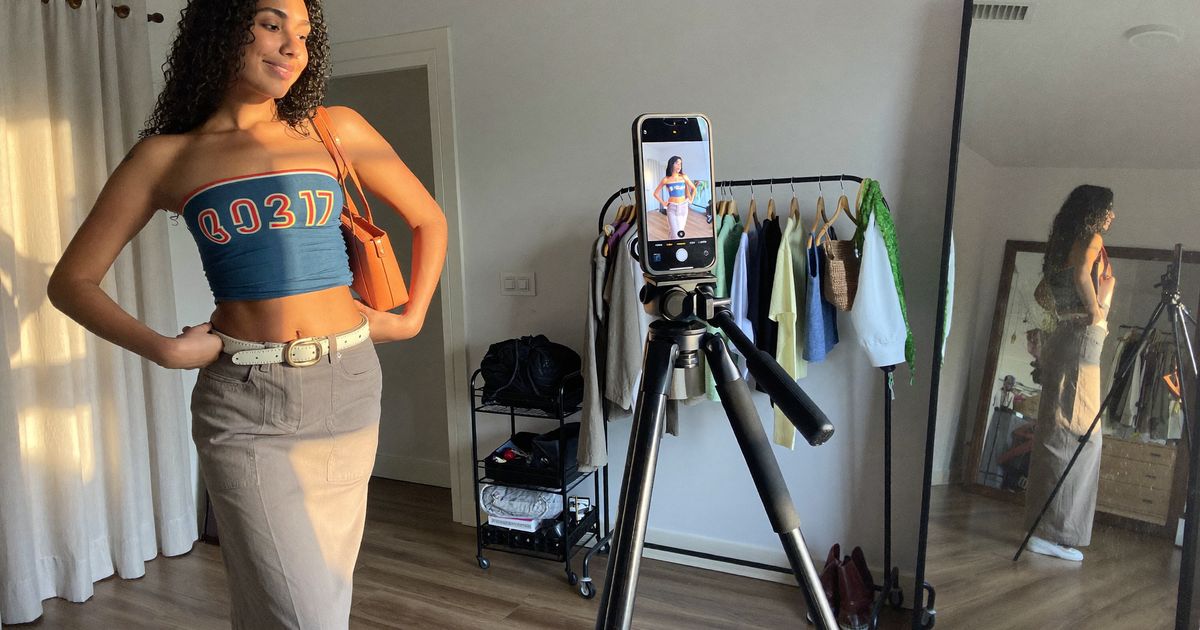
Hermès does not run giveaways. Tanishq does not ask followers to duet a reel for a discount. Yet both brands now benefit from a surge of organic creator content, first-time Birkin-buyer vlogs, wedding jewellery try-ons, unboxing videos from Mumbai's Jio World Drive, none of it commissioned, all of it working harder than any polished campaign. The luxury segment's relationship with user-generated content is no longer accidental. In 2025, it has become a deliberate strategy, and the brands executing it well are doing it with a very specific playbook.
This article walks through that playbook step by step: how Indian luxury and premiumised brands can identify the right creator tier, structure briefs that protect brand equity, stay on the right side of ASCI guidelines, and measure what actually matters. The advice applies whether you are a homegrown luxury label like Sabyasachi or Forest Essentials, an international brand with an India presence, or a D2C brand operating in the premium-aspirational bracket (Rs. 3,000–15,000 per unit) that wants to borrow luxury's trust signals.
Step 1: Decide Which UGC Trigger You Are Activating
Luxury UGC does not work the same way as FMCG UGC. There are two distinct triggers worth understanding before you brief anyone:
- Aspiration UGC: The creator does not own the product yet. They visit a flagship store, do a "store tour" or "what I would buy" video, or attend a brand event. This drives discovery among non-buyers. It is most effective on Instagram Reels and YouTube Shorts.
- Ownership UGC: The creator actually owns or has just purchased the product. First-wear reels, 6-month reviews, "is it worth it?" formats. This drives conversion among in-market buyers who are hesitating. It performs well on YouTube long-form and Instagram Saves.
Decide which trigger serves your current campaign objective before selecting creators or writing a brief. A brand that commissions aspiration UGC when it needs conversion content will get vanity metrics and no sales lift.
Step 2: Choose the Right Creator Tier, and Why Micro Often Wins
The instinct in luxury marketing is to reach for macro-influencers (500K+ followers) because reach feels safe. Our production experience suggests this is often the wrong call for conversion-focused campaigns. Here is how the tiers actually perform in the Indian luxury context:
- Nano creators (5K–30K followers): High trust, highly niche. A Mumbai-based personal finance creator who films her Tanishq Rivaah purchase outperforms a pan-India lifestyle macro in driving "is this store worth visiting" searches. Cost: Rs. 5,000–20,000 per deliverable.
- Micro creators (30K–150K followers): The sweet spot for most Indian luxury brands. Enough reach to matter, enough specificity to carry credibility. A Bengaluru-based skincare creator reviewing Forest Essentials' Kumkumadi range has an audience that is already in the consideration phase. Cost: Rs. 20,000–80,000 per deliverable.
- Macro and celebrity tier: Best reserved for brand-building moments, a new store launch in Delhi or Hyderabad, a collection drop, a flagship event. Not the right tool for sustained UGC output because the authenticity premium disappears at scale.
For premiumised D2C brands, a roster of 8–12 micro creators publishing consistently across a quarter will outperform a single macro burst in both recall and return on ad spend when the content is also used as paid creative.
Step 3: Write a Brief That Protects Brand Equity Without Killing Authenticity
This is where most luxury brands get it wrong in one of two directions: they either over-script (the creator sounds like a press release) or under-brief (the creator films in bad light with a sloppy caption). The brief needs to hold both concerns simultaneously.
We brief creators working on premium and luxury accounts with a three-layer structure:
- Non-negotiables (hard rules): No competitor mentions, no price negotiations on camera, no jokes about the brand being "overpriced", no filming in cluttered or low-light environments. For jewellery and fashion, natural light or warm studio light only. These are binary, the content is rejected if violated.
- Brand voice guardrails (soft rules): The tone should be considered and personal, not hype-driven. No "OMG you NEED this" energy. The creator should speak from their own experience, not perform enthusiasm. Phrases like "I've been using this for three weeks and here is what I actually noticed" are on-brief. "This is the best product I've ever tried" is not.
- Creative latitude (encouraged): Own storytelling structure, own framing, own environment (within aesthetic guardrails). A Delhi creator filming in their South Delhi apartment is more credible than one filming against a generic backdrop. The brief should name what the brand wants to communicate, not how the creator should communicate it.
The goal is content that feels like a trusted friend's recommendation, not a testimonial from a brand ambassador. The brief's job is to remove the risks without removing the voice.
Step 4: Navigate ASCI Disclosure Rules Without Friction
India's Advertising Standards Council of India (ASCI) guidelines require that any material connection between a brand and a creator be disclosed clearly. For luxury brands, this is not just a compliance checkbox, mishandling it creates reputational risk that outweighs whatever reach the post generates.
The practical requirements as of 2025:
- Disclosures must appear at the start of the caption or within the first three seconds of a video, not buried after "read more". "#ad" or "#collab" placed at the end of a 12-hashtag caption does not comply.
- For gifted product (brand sends product, no fee), ASCI still requires disclosure. A common compliant format: "In partnership with [Brand]" or "Gifted by [Brand]" as the opening line of the caption.
- For paid collaborations, use "#PaidPartnership" or the platform's native paid partnership tag (Instagram's collab tag qualifies). Both are acceptable under ASCI's 2023 guidelines.
- Barter deals, where a creator receives a product worth Rs. 10,000 in exchange for a post, are treated identically to paid deals under ASCI. Brief creators on this explicitly, because many nano and micro creators are unaware.
For luxury brands, transparent disclosure rarely hurts conversion. Audiences in the premium segment are sophisticated enough to understand partnerships; what destroys trust is the appearance of hidden endorsements discovered after the fact.
Step 5: Select the Right Formats for Each Platform
Luxury UGC in India has settled into a set of formats that consistently outperform generic content. Knowing which format to commission for which platform saves both budget and revision cycles.
- Instagram Reels (15–45 seconds): First-wear and first-use moments, store visit walkthroughs, "what I bought and why" formats. Keep cuts sharp, use natural audio where possible. Avoid heavy text overlays, they read as low-quality to premium audiences.
- Instagram Carousels: Underused for luxury UGC. A 6–8 slide carousel showing an Ayurvedic skincare product's ingredients, texture, and before/after (within ASCI's permissible claims framework) saves significantly on production and has high save rates.
- YouTube long-form (8–15 minutes): "Is it worth Rs. 8,000?" review formats perform extremely well for luxury personal care, jewellery, and accessories. Audiences researching high-consideration purchases watch to completion. This is where conversion happens.
- YouTube Shorts: Works as a discovery layer, clip the most compelling 45 seconds from a long-form review and push it as a Short linking back to the full video.
- WhatsApp Status and Broadcast channels: Increasingly relevant for luxury brands with existing customer lists. A brief testimonial clip from a satisfied buyer sent via broadcast channel to past purchasers drives repeat purchase and referral. This is earned UGC at its most efficient.
Step 6: Measure the Metrics That Map to Luxury Purchase Behaviour
Luxury purchase cycles are long, weeks or months between first exposure and transaction. Measuring UGC success purely on 30-day ROAS will give you a misleading picture. The metrics that actually matter:
- Saves and shares (Instagram): High saves indicate in-market intent, the user is bookmarking for a future purchase decision. For a premium skincare brand, a post with 2,000 saves from a micro creator is more valuable than one with 20,000 likes and no saves.
- View duration (YouTube): Average view duration above 50% on a 10-minute review indicates the audience is genuinely evaluating. Below 30% means the hook worked but the content did not build trust.
- Branded search lift: After each UGC burst, track whether searches for "[Brand name] India review" or "[Brand name] price" increase. This is the clearest signal that content is moving people down the funnel even before they click anything.
- UTM-tagged link clicks from bio or swipe-up: Track separately from paid traffic so you have a clean read on organic creator traffic.
- Repeat purchase rate among UGC-exposed cohorts: If your CRM allows segmentation, compare repeat purchase behaviour between customers who engaged with creator content and those who did not. In our experience across premium personal care accounts, the gap is material.
Report these metrics to luxury brand stakeholders at the 45-day mark, not the 7-day mark. Setting that expectation upfront is part of running a credible programme.
What the Next 18 Months Look Like for Luxury UGC in India
Three shifts are already visible and will accelerate through 2026. First, regional-language luxury content is coming: Tamil, Telugu, and Kannada creators covering premium purchases in Tier 1 South Indian cities are still largely untapped, and the audiences they command have significant disposable income. Second, brands are beginning to formally license creator content for paid media, a 45-second creator video running as a YouTube pre-roll consistently outperforms brand-produced creative in A/B tests for premium personal care. Third, long-form YouTube reviews are being structured almost like editorial: Indian creators in the fashion and wellness space are building audience trust over years, and a single positive review from an established creator can outperform months of display spend.
The luxury brands that build systematic UGC programmes now, with clear creator tiers, compliant briefing processes, and realistic measurement timelines, will have a compounding advantage over those still treating creator content as a last-minute activation. If you want help building that programme for your brand, speak to our team about what a structured UGC strategy looks like at the premium end of the market.