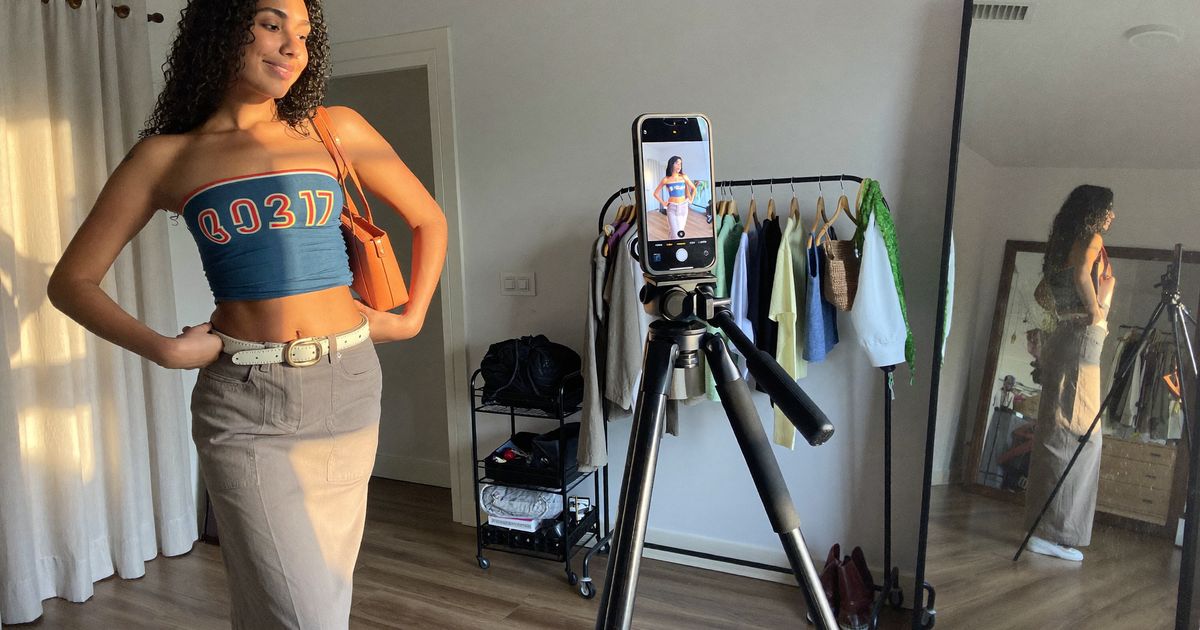
India's personal luxury goods market crossed Rs. 1.8 lakh crore (approximately USD 21 billion) in 2024 according to Bain & Company's India Luxury Report, growing at roughly 12–14% annually, faster than most mature Western luxury markets. What makes this number striking is not its size but its composition: nearly 38% of luxury buyers surveyed were under 35, and 61% said they discovered a new luxury brand through social media before ever visiting a boutique or brand website. This convergence of affluence and digital-first discovery is forcing luxury marketers to rethink a foundational assumption, that carefully controlled brand imagery must never be touched by "ordinary" consumer voices.
That assumption is collapsing. Not because luxury brands are abandoning aesthetics, but because the data now shows that aspirational peer content outperforms polished campaign creative at the discovery stage, even in categories like premium skincare, fine jewellery, and luxury hospitality. Here is what the numbers actually say, and how Indian luxury marketers are adapting their UGC strategies to stay compliant, on-brand, and effective.
Where Indian Luxury Buyers Are Being Discovered: Platform Benchmarks
A 2024 Kantar India study on luxury brand discovery found that Instagram Reels accounted for 44% of first-brand-awareness touchpoints among urban affluent millennials (household income above Rs. 15 lakh per annum), far ahead of traditional print (11%) and OOH (9%). YouTube long-form reviews contributed another 21%, particularly for big-ticket purchases like luxury watches, premium audio, and business-class travel.
- Instagram: Highest reach for aspirational lifestyle content; Stories and Reels both index well. Average CPM for luxury targeting in Mumbai and Delhi on Meta ranges from Rs. 280–420, roughly 2.5x the FMCG average, reflecting the premium audience.
- YouTube: Unboxings, hotel room tours, and honest "worth it?" reviews dominate. A well-seeded UGC review from a travel or lifestyle creator can retain watch time of 65–70% on a 6–8 minute video, critical for affiliate and retargeting audiences.
- Pinterest: Often overlooked for Indian luxury, yet bridal jewellery brands like Tanishq and Kalyan Jewellers report that Pinterest referral traffic converts at 2.8–3.2x their Instagram referral rate for high-intent purchase queries, because users arrive in planning mode.
The key benchmark here: luxury category UGC sees a lower volume of posts than mass consumer categories, but a significantly higher average engagement rate per post, typically 4.2–6.8% on Instagram versus 1.8–3% for FMCG UGC. Scarcity creates signal.
The ASCI Framework: Non-Negotiable for Luxury UGC Campaigns
The Advertising Standards Council of India's influencer guidelines (updated 2023) have specific implications for luxury UGC that brand teams often underestimate. Any content where a creator receives a gifted product, a Rs. 45,000 perfume, a complimentary hotel night, must be disclosed with the #Ad or #Sponsored label at the beginning of the caption, not buried after three lines. ASCI's monitoring unit actively scans luxury, beauty, and travel verticals because the purchase-influence stakes are high.
Beyond disclosure, ASCI's Distinction Principle requires that paid content must be "clearly distinguishable as advertising." For luxury brands working with micro-creators (5,000–50,000 followers), this is where campaigns most frequently fall into grey territory. We brief creators explicitly: the first frame of any Reel, or the first sentence of any caption, must carry the disclosure. Authenticity is not sacrificed by a label, it is protected by it, because undisclosed content, when caught, triggers immediate consumer trust erosion that luxury brands cannot afford.
ASCI data from Q3 2024 showed that fashion and luxury accounted for 28% of all influencer non-compliance notices, the highest of any category. Legal departments at major luxury houses are now routinely auditing creator content before it goes live.
UGC Tiers That Work in Luxury: Creator Economics and Rate Benchmarks
The luxury UGC market in India has developed a fairly defined tier structure based on creator profile, content quality, and exclusivity expectations:
- Nano creators (2,000–10,000 followers): Often genuine customers or aspirants. Gifting-only or Rs. 3,000–8,000 per deliverable. Most useful for social proof content on PDPs and retargeting ads. Engagement rates routinely exceed 7%.
- Micro creators (10,000–75,000 followers): The workhorse segment for luxury UGC in India. Rates range from Rs. 12,000–45,000 per Reel depending on niche (travel, fashion, grooming). These creators often produce content technically close to brand standards while retaining authentic voice, a combination that brand-produced content rarely achieves.
- Mid-tier creators (75,000–300,000 followers): Rates climb to Rs. 60,000–1.8 lakh per deliverable. At this tier, brands typically negotiate exclusivity windows (30–90 days, no competitor content), whitelisting rights for paid amplification, and usage rights for 12 months.
- Macro and celebrity tier: Above Rs. 3 lakh per deliverable, often into the tens of lakhs for Tier-1 names. Engagement rates drop sharply (often under 2%), but brand association and reach metrics are strong. Not typically what we classify as "UGC", this is paid endorsement.
A 2024 internal benchmark across luxury brief responses on creator marketplaces like Qoruz and Plixxo showed that micro-creator UGC campaigns for luxury brands delivered a median ROAS of 3.4x on Meta retargeting when seeded content was whitelisted and run as dark posts, comparable to premium production ad creative at roughly one-fifth the production cost.
What Indian Luxury Brands Are Actually Doing: Category Snapshots
The strategies vary meaningfully by category, and the data reflects that:
- Luxury skincare and beauty (Sulwhasoo, Forest Essentials, Kama Ayurveda): Texture-focused UGC, application rituals, morning routine integrations, outperform product-only shots. Before-after UGC faces stricter ASCI scrutiny in this space; claims must be hedged. Brands in this segment are moving toward process UGC (the ritual, not the result) which sidesteps claim compliance risk while showing authentic usage.
- Luxury hospitality (Oberoi, Taj, ITC Hotels): Room-tour and F&B experience content from nano and micro creators consistently outperforms professionally staged hotel photography in click-through metrics. The Oberoi Group reportedly uses a structured guest-content programme where selected guests are briefed and gifted upgrades in exchange for UGC rights, a model that generates 40–60 pieces of usable content per month across properties.
- Fine jewellery (Tanishq, Malabar Gold, Giva): Wedding and trousseau content is the dominant format. A single high-quality unboxing or "first wear" Reel from a bride-to-be with 20,000 followers in Bengaluru or Hyderabad can organically reach 80,000–1,50,000 accounts if optimised with the right vernacular hashtags (Tamil, Telugu, Kannada regional tags significantly expand reach in Tier-1 South Indian cities).
- Premium automobiles and watches: Long-form review content on YouTube (8–15 minutes) from enthusiast micro-creators is the benchmark format. Watch channels like "The Watch Enthusiast India" and auto channels covering the Mercedes, BMW, and Volvo segments have demonstrated that UGC from credible enthusiasts creates stronger purchase intent than official brand videos in comment-section sentiment analysis.
The Authenticity-Aesthetic Tension: How to Brief Luxury UGC Without Killing the Voice
The most common failure mode in luxury UGC is over-briefing. When a brand sends a 12-page brand guide, a shot list with 47 items, and a required caption template, the resulting content reads exactly like what it is, a brand ad in creator skin. Luxury audiences, who are sophisticated and ad-literate, clock this immediately.
The benchmark creative briefs we have found most effective for luxury UGC follow a 3+1 structure:
- Three non-negotiables: Mandatory disclosure placement, one specific product claim or feature to demonstrate (not a list), and packaging or unboxing handling standards (critical for premium perception).
- One open prompt: "Show us how this fits into your actual life, we do not want a commercial." This single instruction tends to produce the most shareable content because it transfers creative ownership back to the creator.
Brands that follow this brief structure report save rates (a strong Instagram engagement signal) of 5–9% on luxury UGC Reels, approximately three times the platform average. Save rate is particularly important in luxury because it signals active consideration, not passive scroll consumption.
Measuring Luxury UGC Performance: Metrics That Actually Matter
Luxury CMOs routinely make the mistake of optimising UGC campaigns on reach alone. Reach is a vanity metric in this vertical. The performance indicators that predict downstream revenue are:
- Saves-to-views ratio: Target above 4% for luxury categories. Below 2% suggests content is not triggering genuine intent.
- Profile visit rate from Reels: A proxy for brand curiosity. Luxury UGC that generates profile visit rates above 8% of unique viewers is producing top-of-funnel lift worth amplifying.
- Whitelisted dark post CTR: When UGC is whitelisted and run as a paid ad, luxury brands targeting lookalike audiences built from website purchasers (basket value above Rs. 10,000) should benchmark CTR at 1.8–2.4%. Below 1% typically signals a creator-audience mismatch, not a content quality problem.
- Retargeting ROAS from UGC vs. brand creative: In our production work, luxury briefs where UGC is used as the top-of-funnel touchpoint and brand creative is used for retargeting consistently outperform the reverse configuration by 20–35% on retargeting ROAS. UGC warms the audience; brand visual language closes.
Luxury marketing's relationship with UGC is no longer a debate about brand dilution, the data has settled that argument. The real discipline now is structural: which tier of creator, which format, which platform, and what brief architecture produces content that moves consumers from discovery to serious consideration without violating ASCI norms or sacrificing the visual equity the brand has spent decades building.
If your luxury brand is mapping out a UGC strategy and needs production support calibrated to premium positioning, creator briefing, content quality review, whitelisting workflow, and compliance checks, see how The UGC Agency approaches this at /work, or book a consultation to walk through your specific category and budget.