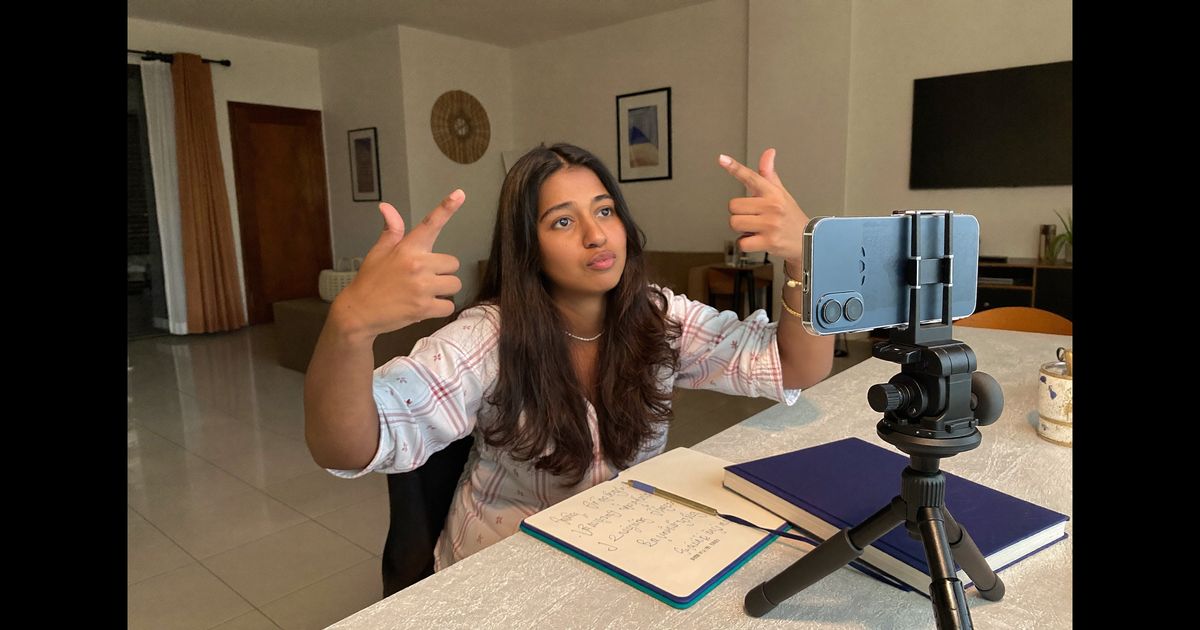
Most brands arrive at UGC with a script that runs three pages long. Product name repeated four times. Specific claim hierarchy. Approved hashtags. A shot list that rivals a TVC brief. Then they wonder why every video looks like a hostage reading cue cards, and why the comment sections fill up with "this feels so sponsored."
If you have already run two or three rounds of UGC campaigns, you have likely noticed the pattern: the videos where a creator went slightly off-brief, added their own anecdote, or switched to their regional dialect outperformed the carefully controlled ones. This article is about making that outcome repeatable rather than accidental, a structured way to loosen control without losing brand safety or compliance.
Why the Over-Briefed Creator Fails on Reels and YouTube Shorts
Instagram Reels and YouTube Shorts reward watch-time and replays. A creator reading from a mental teleprompter loses viewer attention within the first three seconds because the cadence is unmistakably recited. Indian audiences, particularly the vernacular-first viewer in Tier cities across India like Indore, Coimbatore, or Ranchi, are extraordinarily good at detecting performative enthusiasm. They have grown up watching cable TV ads and can smell a scripted endorsement from the first breath.
The neuroscience behind it is straightforward: genuine spontaneity produces micro-hesitations, natural laugh breaks, and authentic recoveries that the brain reads as real. A polished script strips all of that out. The paradox is that more brand control in the brief often produces less believable creative, which defeats the entire purpose of choosing UGC over a studio shoot.
The Briefing Architecture That Preserves Brand Intent Without Scripting
Loosening control does not mean handing creators a product and wishing them luck. It means shifting from a script brief to a parameters brief. The distinction matters at every stage of production.
A parameters brief defines:
- The single core claim: One sentence the creator must communicate, not six bullets. For example: "This sunscreen does not leave a white cast, even on deeper skin tones." That is the brief. Everything else is the creator's territory.
- Hard guardrails (non-negotiable): ASCI-compliant language (no "guaranteed results", no before/after health claims without substantiation), no competitor mentions, no pricing claims the brand cannot back up, mandatory disclosure of paid partnership via Instagram's branded content tool or a verbal "paid partnership" at the start.
- Tone guardrails (soft): A short mood board of three to four reference Reels, not to be copied but to signal energy level. Is this calm and tutorial-ish, or chaotic and fun?
- What not to do: Listing restrictions is often more useful than prescribing actions. "Do not show the product near food" or "avoid unboxing in moving vehicles" covers brand safety without strangling creative voice.
In our production briefs, we have found that cutting word count from 800 words to under 200, while retaining the single claim and hard guardrails, consistently produces first cuts that need fewer revision rounds, not more.
Structured Improvisation: The Technique Behind It
There is a theatrical concept called "yes-and" that improv performers use: accept the premise and add to it. The same logic applies to creator direction. Rather than telling a creator what to say, give them a situation and let them react.
Practically, this looks like scenario prompts instead of lines:
- Instead of: "Say: This moisturiser absorbed in 30 seconds and my skin felt dewy all day."
- Try: "You are a bridesmaid getting ready at 6 AM for a wedding in Jaipur's summer heat. Show us your skincare step and tell us what happened."
The scenario anchors the emotional context, which is what actually sells, without specifying words. A creator in Chennai will describe that situation differently from one in Delhi, and both versions will feel authentic to their own audience. You end up with two genuinely different assets, not two almost-identical recitations.
We use this format especially for multilingual briefs. A single scenario translates cleanly into Tamil, Marathi, or Bengali executions where a word-for-word script would sound unnatural in every language.
Managing ASCI Compliance in an Open Brief
This is where many brands hesitate to let go. ASCI's updated influencer guidelines (in force since 2021 and further tightened in 2023) require disclosure of material connections, prohibit misleading testimonials, and, under the health and wellness verticals, require substantiated claims. Noncompliance lands on both the brand and the creator.
The solution is not to script compliance into the video. It is to build a two-layer review process that happens after the creator delivers a first cut:
- Layer 1, Creator self-check: A short checklist you send with the brief. Four questions: Is the paid partnership disclosed in the first frame or first spoken sentence? Have you made any health or results claim? If yes, is it one the brand has substantiated in writing to you? Have you compared this product to a competitor by name?
- Layer 2, Brand review against claim registry: The brand maintains a short internal document listing every claim it can and cannot make, with the substantiation source. Reviewers check the first cut against this list, which takes five minutes, not a full creative round-trip.
This two-layer system lets the creative be completely free during the recording phase, and catches real compliance issues rather than over-correcting on tone and energy.
Knowing Which Creators Can Handle the Latitude
Not every creator thrives with open briefs. Newer creators, those under roughly 50,000 followers and with fewer than 12 months of brand collaboration history, often feel paralysed by a parameters brief. They want guardrails because they are still building their on-camera confidence.
The profile that handles creative latitude best:
- Demonstrated history of native storytelling, they regularly post unsponsored content that follows a narrative arc, not just aesthetic product shots
- Engagement quality: comments that respond to something specific the creator said, not just emoji reactions (a strong signal that the audience is actually listening)
- Willingness to do a test brief round: we send a scenario prompt with zero compensation and ask for a 15-second self-tape. Creators who produce something coherent and on-brand without hand-holding are the ones we deploy on open briefs at budgets of Rs. 15,000–40,000 per video asset
For high-spend campaigns (Rs. 5–8 lakh total production budgets with multiple creators), segment your roster: tight scripts for newer creators handling straightforward product demos, open scenario briefs for your proven three or four anchor creators who deliver the narrative-heavy hero content.
What to Measure When the Brief Is Open
Brands that loosen the script often feel they have lost measurement clarity. In practice, the metrics that matter most for UGC, hook rate (percentage of viewers who watch past three seconds), average watch percentage, and save rate, are all measurable regardless of creative freedom. Open-brief content tends to improve all three, because it does not front-load a scripted product mention that signals "ad, skip."
Track saves specifically on Instagram. A save on a Reel is one of the most expensive signals a user can give, it means they intend to return to that content. For skincare, food, and home goods brands we work with, save rates on scenario-prompt UGC are typically 2–4x higher than on scripted testimonial formats run in the same period.
On Meta Ads Manager, when running these as paid assets, watch your cost-per-thumb-stop (cost per 3-second video play) as the early leading indicator. Open-brief content almost always wins on this metric first, before downstream conversion metrics catch up through the learning phase.
The Practical Transition: Moving Your Existing Programme to Open Briefs
If you are already running a UGC programme with two or three campaigns behind you, the transition does not require a full reset. Run a parallel test in your next campaign cycle:
- Take your current tight-script brief and produce three videos the usual way
- Take the same product, distil it to a single claim, write one scenario prompt (100 words maximum), and produce three videos using that approach with creators you have already qualified
- Run both sets as dark posts on Meta for 10–14 days with identical budgets (Rs. 3,000–5,000 per set is sufficient for a directional read)
- Compare hook rate, watch percentage, and CPM, not just CTR, which is influenced by audience targeting more than creative quality
Most brands that run this test once do not go back. The data makes the case that control over creative voice was costing them performance, not protecting it.
If you are ready to restructure your UGC briefing process and want a framework tailored to your category, whether that is FMCG, D2C beauty, or SaaS, we can walk through exactly how this applies to your next campaign. Book a consultation with The UGC Agency and we will map it out together.