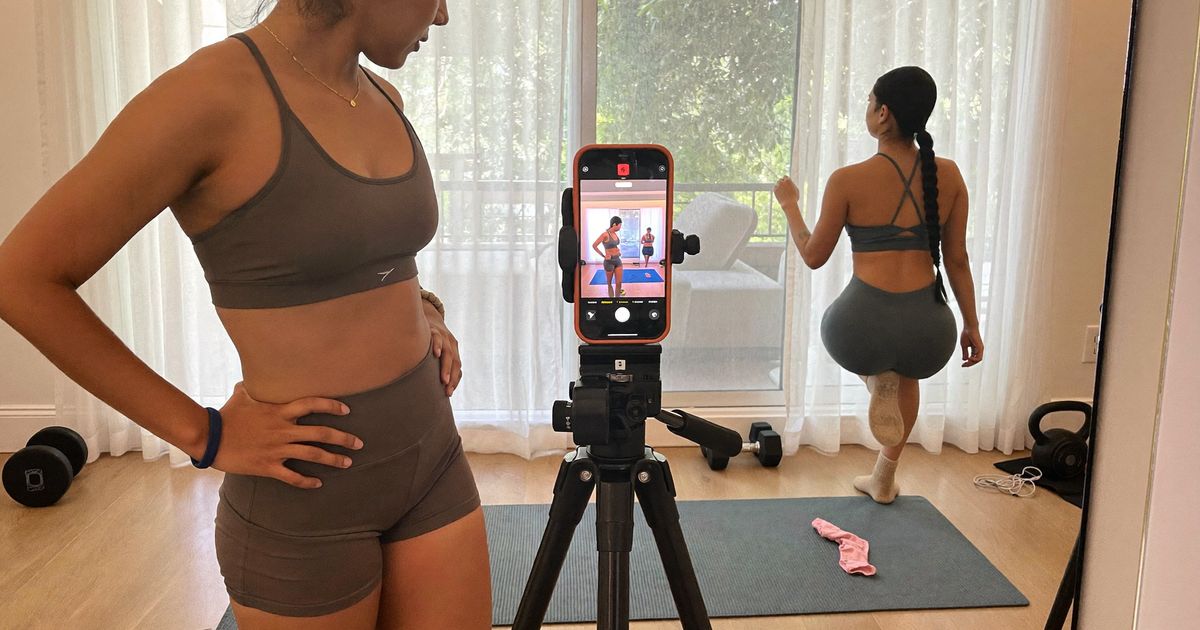
India's fitness economy crossed Rs. 1.8 lakh crore in 2024 and is projected to reach Rs. 3.5 lakh crore by 2028, according to the Confederation of Indian Industry. That growth is not happening in gyms alone, it is happening on Instagram Reels, YouTube Shorts, and WhatsApp Status updates, where real users document their transformation journeys, share supplement stacks, and review home workout equipment. The marketing channel driving the highest conversion rate in this category is no longer influencer endorsement or celebrity sponsorship. Benchmark data from Meta's own performance reports consistently shows that ads featuring real-customer content achieve 20–30% lower cost-per-result than equivalent studio-produced creatives across health and fitness verticals in South and Southeast Asia.
What makes fitness uniquely suited to UGC is the transparency demand of the category. ASCI's 2023 guidelines explicitly require before-and-after claims to carry disclosure language and caution against implying medical outcomes without substantiation. That regulatory pressure, combined with consumer scepticism of photoshopped results, has pushed performance-focused fitness brands toward authentic creator testimonials over polished ad campaigns. The numbers back this up, and understanding precisely where, how, and at what price point UGC outperforms in India is what this article is built to show.
The Indian Fitness Consumer: Platform Behaviour by the Numbers
Instagram remains the primary discovery channel for fitness content in India, but the format split is telling. Reels account for 68% of fitness-content impressions on Instagram India as of Q4 2024 (Meta India internal benchmark data shared with agency partners). Static posts have declined to below 15% of organic reach in this category. YouTube long-form retains its role for in-depth workout tutorials and supplement reviews, with fitness channels seeing average watch times of 7–9 minutes on review videos, twice the platform average for lifestyle content.
WhatsApp Status, often underestimated, is quietly becoming a distribution channel for fitness brands targeting Tier-2 and Tier-cities across India. A protein supplement brand we worked with ran creator-filmed status reposts through a structured reseller WhatsApp network in cities like Indore, Coimbatore, and Bhubaneswar, and tracked a 34% uplift in direct-to-website orders from those regions during the campaign period, attributable via UTM links in bio.
- Instagram Reels (15–30 sec): Highest reach for top-of-funnel discovery; CPM in the fitness category averages Rs. 80–120 for targeted audiences aged 22–35 in metro cities.
- YouTube Shorts: Effective for algorithm-driven discovery; fitness Shorts with product demos average 40–55% higher click-through rates than non-fitness Shorts, per Google India sector reports.
- YouTube long-form (8–15 min): Best for supplement and equipment purchases where consideration cycles are longer; viewers who watch more than 60% of a review video convert at 3–4x the rate of those who view only a thumbnail.
- WhatsApp Status: Emerging Tier-2/3 channel; no native ad format, but creator-shared content in community groups drives measurable traffic when paired with trackable links.
UGC Cost Benchmarks in the Indian Fitness Category
One of the persistent myths in fitness marketing is that authentic UGC is cheap to produce at scale. It can be, but only with a structured production model. Here is what realistic per-asset pricing looks like in 2025 for fitness-specific UGC in India:
- Nano creator (10k–50k followers, fitness niche): Rs. 3,000–8,000 per deliverable (one Reel or one YouTube Short). These creators typically have the highest engagement-to-follower ratios, average 5–9% engagement rates versus 1–2% for mega influencers in the same niche.
- Micro creator (50k–200k followers): Rs. 12,000–25,000 per deliverable. The sweet spot for fitness brands targeting specific categories like home workouts, yoga, or sports nutrition.
- UGC-only creator (no public following, on-camera talent): Rs. 2,500–6,000 per deliverable for licensing to run as paid ads. No organic post required. This is the fastest-growing segment of our production brief requests because brands get the authentic look without the follower-count premium.
A 30-asset UGC production run for a mid-sized fitness brand, covering product demo, transformation testimony, and objection-handling formats, typically costs Rs. 1.2–2.5 lakh depending on creator tier. Compare this against a single TVC production that averages Rs. 8–15 lakh before media spend, and the cost-per-creative-variant advantage becomes structural, not incidental.
What Formats Are Actually Converting in Fitness Right Now
Format choice is not aesthetic, it is determined by where the customer is in the funnel. In our production briefs for fitness clients, we categorise UGC into three functional formats:
1. The Honest Stack Review (Awareness): A creator films their supplement shelf, picks up one product, and explains in 30–45 seconds why it is in their routine. No over-the-top claims, no medical language that would breach ASCI guidelines. Just specific, personal context. These generate the highest save rates on Instagram, saves signal purchase consideration, and we typically brief creators to include a visible price point or a "where I buy it" callout, which increases profile visits by 28–35% compared to review videos without pricing context.
2. The Progress Check-In (Mid-Funnel): 60–90 second Reels or Shorts where creators document a visible change over 4–8 weeks. ASCI rules require that before-and-after content carry the disclaimer: "Results may vary. This is not a medical claim." We add this as a text overlay in the final 3 seconds of every brief. Brands that comply proactively avoid takedowns and the credibility cost that comes with them. Engagement on compliant progress content is marginally lower than non-compliant content, but ad delivery is significantly more stable, Meta does not throttle compliant health content the way it flags aggressive before-and-after ads.
3. The Day-in-the-Life (Retention and Re-purchase): 2–4 minute YouTube videos or a carousel of Stories/Reels showing how a product fits into a realistic daily routine, morning run, protein intake, evening stretching. These perform best for retention-focused campaigns targeting existing purchasers. Average re-purchase intent lift from this format is 18–22% in remarketing audiences, based on aggregated campaign data from fitness brand campaigns run through Meta's A/B testing tool.
Language and Regional Targeting: The Numbers Indian Fitness Brands Miss
Hindi-language fitness UGC gets the most investment, but the return on regional-language content is disproportionately higher because competition for attention is lower. Benchmark CPMs for fitness UGC run in Tamil, Telugu, Kannada, and Bengali are 30–45% lower than equivalent Hindi-language campaigns targeting the same age and interest brackets, according to performance data from Meta India campaigns we have access to through agency reporting.
Tamil Nadu and Karnataka have seen the fastest growth in fitness supplement purchases through direct-to-consumer channels in 2024, driven partly by the proliferation of regional-language fitness creators on YouTube. A creator filming a protein review in Tamil for an audience in Chennai or Coimbatore generates purchase intent among viewers who have never been served relevant content in their language before, a first-mover advantage that brands running only Hindi campaigns are systematically leaving on the table.
Practical implication: a brand allocating Rs. 3 lakh to a UGC production batch should consider splitting 40% of deliverables across Tamil, Telugu, and Kannada creators. The CPM savings in paid amplification alone often recover the additional production cost within the first two weeks of a campaign.
ASCI Compliance as a Performance Variable, Not Just a Legal Obligation
Fitness is the most-complained-about category in ASCI's annual reports, more than personal finance, education, or beauty. In 2023–24, ASCI processed 447 complaints related to health and fitness advertising, of which 61% involved misleading claims about weight loss, muscle gain, or medicinal benefits. Brands that brief creators without ASCI-aware scripts are not just exposed to regulatory risk, they are exposed to ad account flags that can pause campaigns mid-spend and destroy month-over-month performance data.
The compliance rules that matter most for UGC production briefs in this category:
- No claims of specific weight loss in a defined time period (e.g., "lost 5 kg in 3 weeks") without clinical substantiation.
- Any before-and-after visual requires a "results may vary" disclaimer in visible type, not buried in a caption.
- If a creator is paid, the content must be disclosed as an ad or #Ad, ASCI enforcement has expanded to cover Instagram, YouTube, and podcast integrations since 2021.
- Claims like "clinically proven," "doctor recommended," or "scientifically tested" require referenced evidence, vague association with medical authority is a violation.
We brief every fitness creator with a one-page compliance checklist before filming begins. The output quality is not lower, if anything, the constraint forces creators to speak from genuine personal experience rather than rehearsed superlatives, which is exactly what converts a sceptical Indian consumer.
What Benchmark Performance Looks Like for a Fitness UGC Campaign
Aggregate campaign benchmarks for fitness brands running UGC-forward Meta campaigns in India, based on 2024–25 performance data:
- CTR (link clicks): 1.8–2.6% for UGC-led creatives versus 0.7–1.1% for brand-produced studio content in the same campaign.
- Cost per add-to-cart: Rs. 35–65 for UGC creatives versus Rs. 90–140 for studio creatives, fitness supplement category.
- Cost per purchase: Rs. 280–450 for performance-optimised UGC funnels (Reels awareness to conversion campaign) versus Rs. 550–800 for equivalent non-UGC funnels.
- Creative lifespan before fatigue: UGC in fitness typically stays under 1.5 frequency before fatigue shows in CPM creep, compared to 1.1–1.2 for polished creatives, meaning UGC runs longer before needing rotation.
The pattern we consistently see: the first creative that hits performance benchmarks in a fitness campaign is almost never the one the brand thought would work. It is the least-polished UGC asset, the one where the creator speaks off-script for 25 seconds about a real problem. That is not accident. That is the format doing its job.
If you are running a fitness brand or marketing for one and want a structured UGC production plan built around these benchmarks, with ASCI-compliant briefs, regional-language coverage, and ad-ready deliverables, we are happy to walk you through what a campaign looks like at your budget. See our production packages or book a consultation to talk through your specific category and goals.