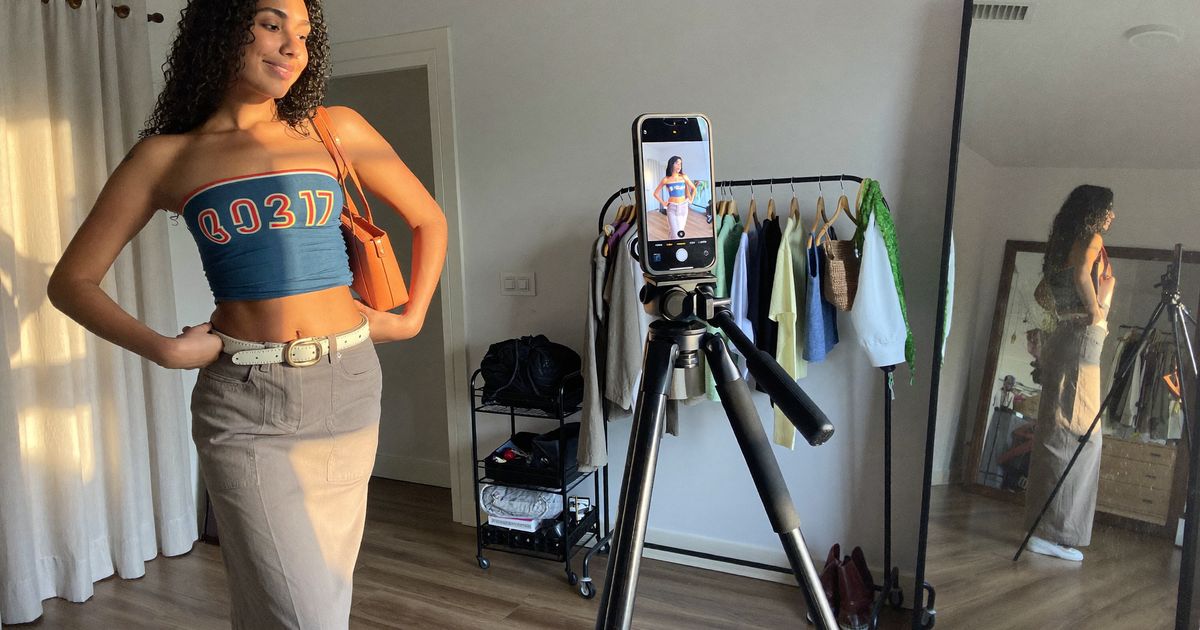
Fashion brands in India pour serious money into UGC, Rs.5 lakh on creator partnerships, another Rs.2 lakh on paid amplification, and then watch conversion rates flatline because the content looks exactly like the polished campaign videos they were trying to move away from. The problem is rarely budget or creator quality. It is almost always a set of structural mistakes that have become standard practice in the industry, repeated because nobody has stopped to question them.
This piece is about those mistakes. If you run or market a fashion label, ethnic wear, athleisure, D2C sneakers, kurti brands selling on Meesho and Nykaa Fashion, the patterns below will be familiar. More importantly, they are fixable.
Mistake 1: Treating UGC as a One-Time Activation, Not a Content Engine
The most common briefing failure we see is when a fashion brand commissions UGC for a single launch, say, a festive collection for Diwali, gets 15 videos, runs them for three weeks, and then goes quiet. By the time the next season arrives, they are starting from scratch with new creators, a new brief, and no accumulated social proof.
Fashion is a category where recency signals matter enormously. A shopper browsing a lehenga on Instagram in October 2025 is not reassured by glowing reviews from October 2023. The content must feel current. Brands that win on Instagram Reels and YouTube Shorts in India, Snitch, Bewakoof, Urbanic, maintain a near-continuous cadence of creator content, not episodic bursts. The UGC pipeline needs to be treated like inventory replenishment: always moving, never depleted.
The fix is a rolling creator roster rather than project-by-project commissions. Even at Rs.60,000–80,000 per month for a small batch of videos, a steady flow consistently outperforms a single Rs.3 lakh activation spread thin across one calendar quarter.
Mistake 2: Briefing Creators on the Product Instead of the Feeling
Fashion is one of the most emotionally driven categories in consumer marketing, yet most UGC briefs we receive from fashion brands read like a product spec sheet. They tell the creator: "Highlight the fabric quality, the embroidery detail on the neckline, the colour options available." What they do not say: "Show me what it feels like to walk into a shaadi wearing this kurta and have your aunt ask where you got it."
Indian fashion consumers, particularly in Tier cities across India like Mumbai, Bengaluru, and Hyderabad, shop for identity signalling as much as utility. They want to see the reaction, not the product. UGC that performs best in fashion consistently leads with a social scenario, a college fest, a family function, a date, and then lets the clothing play a supporting role. Creators who are briefed on features will describe features. Creators briefed on feeling will perform emotion, which is what makes a viewer stop scrolling.
In our production work, we brief fashion creators with a simple reframe: "You are not reviewing a product, you are sharing a moment." The product detail follows naturally; it does not need to be the opening.
Mistake 3: Ignoring ASCI Guidelines Until an Ad Gets Flagged
The Advertising Standards Council of India updated its influencer and digital advertising guidelines in 2021 and has tightened enforcement since. Fashion brands that use UGC as paid ads, boosting creator Reels or running them as Meta whitelisted content, frequently get caught out by two specific rules:
- Disclosure labelling: Any content where a creator received payment, free product, or any other material benefit must carry a visible "#Ad" or "#Collab" disclosure. Burying it in the caption is insufficient if it is not visible in the first two lines without expanding the post.
- Misleading claims about fit, skin tone, or sizing: UGC that implies a garment will "make you look slimmer" or that uses heavy filtering to alter how fabric drapes or how colour appears on skin can trigger ASCI complaints. The fashion vertical specifically gets scrutiny here.
The practical consequence is not just reputational, Meta's ad delivery system will also flag and restrict non-compliant creatives, throttling reach at exactly the moment you have paid to boost them. Build the disclosure into the brief, not as a last-minute caption addition.
Mistake 4: Homogenising Creators Across a Diverse Market
India's fashion market is not a monolith. A Rs.1,800 printed cotton kurta sells very differently in Chennai than it does in Chandigarh. Saree brands that run exclusively Hindi-language UGC and then wonder why their Tamil Nadu ads underperform are answering their own question. Similarly, a modest-wear brand briefing only creators from Delhi-NCR will produce content that feels culturally off-key for its Kerala or West Bengal audience.
Language is the first filter, Hindi, Tamil, Telugu, Kannada, Bengali, and Marathi-speaking creator pools exist and are accessible. But beyond language, there are genuine visual and stylistic differences: the colour palettes that resonate in Rajasthan are not the same as those in Bangalore's startup crowd. A kurti that reads as "office wear" in one market reads as "casual at-home" in another.
Brands that allocate even 20–30% of their creator budget to regional or vernacular content consistently see stronger performance in those markets. The production cost difference between a Hindi and a Tamil UGC video is minimal; the relevance gap it closes is substantial.
Mistake 5: Over-Editing the Authenticity Out of the Content
This one is counterintuitive because brands are paying for the content and naturally want it to look "good." The problem is that fashion teams, accustomed to lookbook photography and studio shoots, apply those aesthetic standards to UGC and edit it until it looks indistinguishable from a brand ad. Stabilised footage, colour-graded to brand palette, music swapped for a licensed track, captions reformatted. The result is content that loses the raw credibility that made UGC worth commissioning in the first place.
Audiences on Instagram and YouTube Shorts are sophisticated about this. They can see the difference between a creator genuinely excited about a jacket they received and a scripted video that has been cleaned up to remove every trace of spontaneity. When a comment section reads "this is clearly an ad" on an organic-looking post, that is the tell.
The rule we follow: do not edit anything out of the video that you would keep in if a creator's friend had filmed it for them. The slight camera wobble, the pause before they say "okay so," the natural lighting variation, that is the texture that makes UGC convert.
Limit post-production interventions to adding a disclosure label, trimming dead air at the head and tail, and captioning for silent viewing. That is enough.
Mistake 6: Measuring UGC Performance Only on Reach
Fashion brands that report UGC success in terms of views and impressions are measuring the least useful signal. Reach tells you how many people saw the content. It does not tell you whether it moved anyone toward purchase. The metrics that actually matter for fashion UGC, and that most teams either do not track or track inconsistently, are:
- Save rate on Instagram Reels: Saves indicate purchase intent far more reliably than likes. A viewer saves a Reel when they want to come back to it, which in fashion typically means "I want to buy this."
- Profile visits from the video: If the creator's bio link drives traffic to a brand page, or if the brand is tagged and viewers click through to the brand profile, that click-through rate is a direct measure of content relevance.
- Add-to-cart rate on product pages featuring UGC: If the same UGC is embedded on a product listing on your D2C site or used as a thumbnail in a Meta catalogue ad, the downstream conversion difference versus non-UGC creative is where the ROI calculation lives.
- Comment-to-view ratio: High comment volume relative to views, particularly questions like "where to buy?" or "what's the price?", is a stronger signal of purchase readiness than passive engagement.
Brands that shift their reporting from reach to these downstream signals usually discover that their best-performing UGC creators are not their highest-follower collaborators. Mid-tier creators with engaged, category-specific audiences routinely outperform mega-influencers on every conversion metric that matters.
The Common Thread Behind All Six Mistakes
Each of these mistakes traces back to the same root: fashion brands approaching UGC with the mental model they built for traditional advertising. Traditional ad production optimises for polish, brand control, and broad reach. UGC is effective precisely because it operates on different principles, specificity, authenticity, and the social credibility of a real person's endorsement. When you manage UGC like a brand shoot, you strip out the mechanism by which it actually works.
The brands gaining the most ground in Indian fashion right now, particularly the D2C labels building direct relationships with customers in Tier cities across India, are the ones that have internalised this distinction. They are not producing "UGC-style ads." They are building genuine creator relationships, briefing for feeling over features, and measuring the signals that indicate real purchase intent.
If your fashion brand's UGC spend is not converting the way it should, the issue is almost certainly in one of these six areas. Book a consultation with us and we will audit your current creator content against these benchmarks, no charge, no obligation, and show you specifically where the gap is.